Michigan’s New State Budget Promises Educational and Economic Shifts
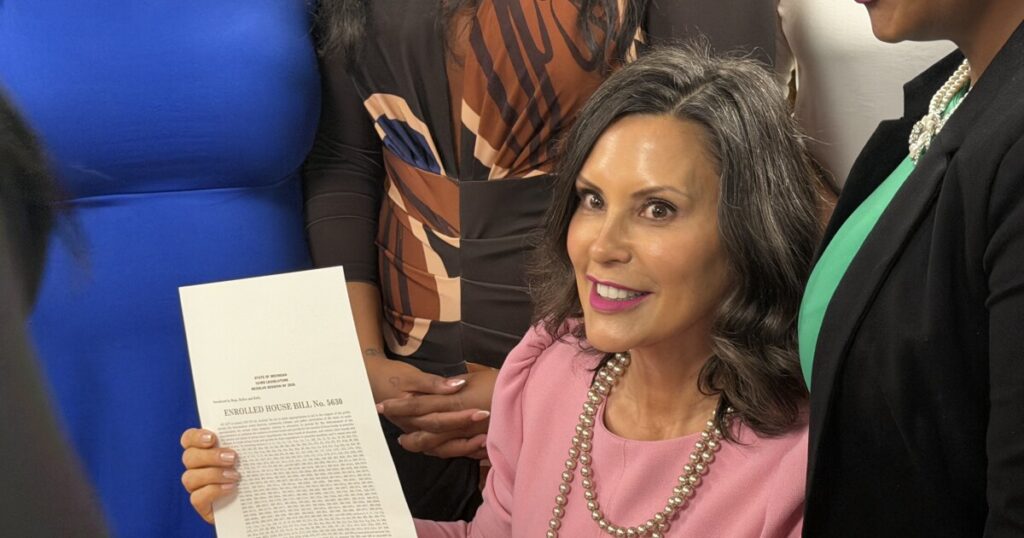
Governor Gretchen Whitmer has officially enacted a new state budget, marking significant changes for Michigan’s education and economic landscape. The budget, signed Tuesday, introduces sweeping reforms, particularly in the realm of K-12 education, and aims to address broader economic concerns.
Although the new fiscal year for school districts began nearly a month ago, Whitmer expressed satisfaction with the education budget, which features universal free school lunches, enhanced literacy programs, and expanded tuition-free community college options. A notable element is the revised K-12 funding formula, designed to increase resources for districts with higher numbers of at-risk students.
Improving literacy remains a focal point for Whitmer, who views the enhancement of student literacy skills as a lasting impact of her administration. “We all want results for our kids and none of us is patient about it, nor should we be,” she stated. “We want those results fast. But here’s what we know: literacy is a marathon, not a miracle.”
The budget signing ceremony took place at a Southfield school, attended by students, educators, and legislative leaders. House Speaker Matt Hall (R-Richland Township) emphasized the bipartisan nature of the endeavor, highlighting the return to phonics-based teaching, or “the science of reading,” as a proven strategy to boost reading skills among students.
Despite the delay in signing the K-12 bill, which ideally would have been completed before the July 1 start of the fiscal year for schools, the state’s fiscal year commencing October 1 remains the primary target. Last year, missing this target created challenges for school districts.
In addition to education, the broader state budget, also signed on Tuesday, steers clear of new taxes or drawing from the state’s “rainy day” fund. While some spending reductions were necessary, Democrats lauded the preservation of safety net programs. Whitmer acknowledged the difficulty of balancing the budget amid economic challenges and federal reductions in Medicaid, food assistance, and similar programs.
Economic concerns extend beyond state borders. Whitmer voiced apprehension about the adverse effects of the Trump administration’s recent tariffs on Michigan’s economy, particularly in manufacturing and agriculture sectors intertwined with Canada. “We are feeling the brunt of all the continuing fluctuation in tariff policy, the chaos that has been coming out of Washington D.C. since the beginning of this administration,” she remarked during a press briefing.
With new tariffs on Canadian goods announced, some reaching up to 50%, Michigan businesses and workers face an uncertain future as these changes are set to take effect in approximately a month. The ongoing trade policy shifts present significant challenges for the state’s economic stability.