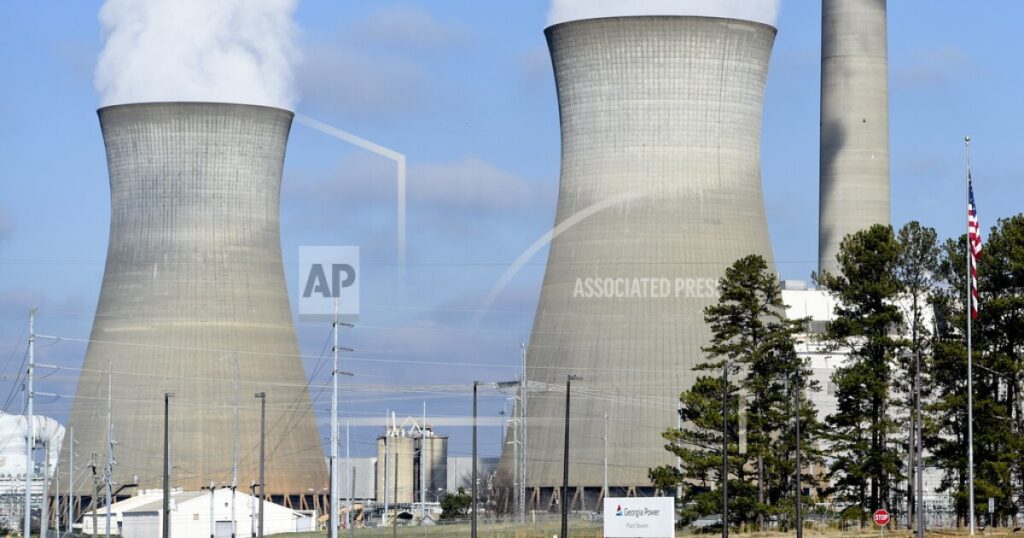
The state of Georgia is at a crossroads as utility regulators deliberate a significant proposal from Georgia Power Co. The company seeks approval to invest over $15 billion in expanding its electricity capacity by 50% within the next six years. This expansion aims to accommodate the burgeoning demand from data centers, driven by advancements in artificial intelligence. However, there are concerns regarding potential overbuilding and the financial burden it could impose on other ratepayers.
If approved, this initiative would rank among the most extensive in the U.S. to support the growing electricity needs of AI developers. Georgia Power, a subsidiary of Southern Co., headquartered in Atlanta, emphasizes that this development would bolster the state’s economy and enhance Georgia’s role in the global digital economy.
Company representatives highlighted the importance of progressing with this opportunity, citing the interest from numerous businesses willing to establish operations in Georgia. They stated, “Given the number of companies interested in doing business in Georgia and the amount of customer load with signed contracts or in advanced discussions, it is important to continue moving forward with support for this great growth opportunity.”
However, the potential rise in electricity bills has become a contentious political topic both in Georgia and nationwide. The apprehension stems from fears that the electricity demands of large tech companies might be subsidized by other customers.
Charles Hua, the executive director of Powerlines, a nonprofit advocating for public participation in utility regulation, remarked, “I think what’s happening in Georgia is in some sense a perfect microcosm of what’s happening nationwide. You’re seeing electricity demand grow at the fastest rate in decades, and you’re seeing electricity prices rise at the fastest rate in decades.”
A Growing Political Concern
The issue of electricity costs has recently played a crucial role in gubernatorial elections in states like New Jersey and Virginia, both prominent data center hubs. In North Carolina, Governor Josh Stein expressed opposition to a 15% rate hike proposed by Duke Energy, partly due to concerns surrounding data centers.
In Georgia, the decision on Georgia Power’s proposal will be made by the five-member Public Service Commission, all of whom are Republicans. This comes shortly after voters expressed dissatisfaction with the GOP leadership by electing two Democrats, who campaigned against the frequent rate increases approved by the commission, to replace incumbent Republicans.
Despite requests to defer the decision until the newly elected Democrats assume office, the current commission plans to vote on December 19. Brionte McCorkle from Georgia Conservation Voters voiced concerns that the vote could favor Georgia Power unduly, stating, “It would be a slap in the face for the commission to rush through this proposal, and give the power company everything it wants. It’s just not listening to what the people have said loud and clear.”
Implications for Ratepayers
Georgia Power forecasts a significant increase in electricity demand, second only to Texas, necessitating 10,000 megawatts of new capacity, with 80% earmarked for data centers. This is on top of the 3,000 megawatts approved in 2024. The core of the debate is the accuracy of this forecast and the potential financial impact if the expected data center customers do not materialize.
New rules mandate that data centers cover the costs of new infrastructure. Yet, concerns remain about possible overbuilding and the resultant costs falling on other customers. Hua explained, “The whole argument is premised on the idea that if we get all these new customers, then we can take costs and spread it out over more people and therefore put downward pressure on prices. Well, if you don’t actually end up getting all those customers and you built all this new infrastructure, then you could see a scenario where you actually drive bills through the roof even more.”
The financial implications are uncertain as Georgia Power has not disclosed some estimates, claiming trade secrecy. The $15 billion figure only includes construction costs for the current request and excludes borrowing costs. Due to a rate freeze, precise costs won’t be known until 2028.
Public Service Commission staff project that Georgia Power will require an additional $3.4 billion annually by 2031, potentially adding $20 per month for residential customers. Georgia Power disputes this, asserting, “These customers pay upfront the full costs of serving them, commit to long-term contracts, and provide financial guarantees.”
Staff recommendations suggest that Georgia Power should only build new capacity after securing contracts for 3,100 megawatts, with potential extensions up to 7,400 megawatts. This approach aims to mitigate unnecessary construction of costly natural gas-fired plants, given current manufacturing challenges.
Georgia Power criticized this recommendation, arguing it could hinder economic growth and customer acquisition. As the commission’s decision looms, McCorkle emphasized that customer protection should be the priority, warning against “a form of corporate welfare, where individual citizens are paying for the benefit of big mega corporations like Meta and Amazon.”