Trump’s Tariffs: One Year On
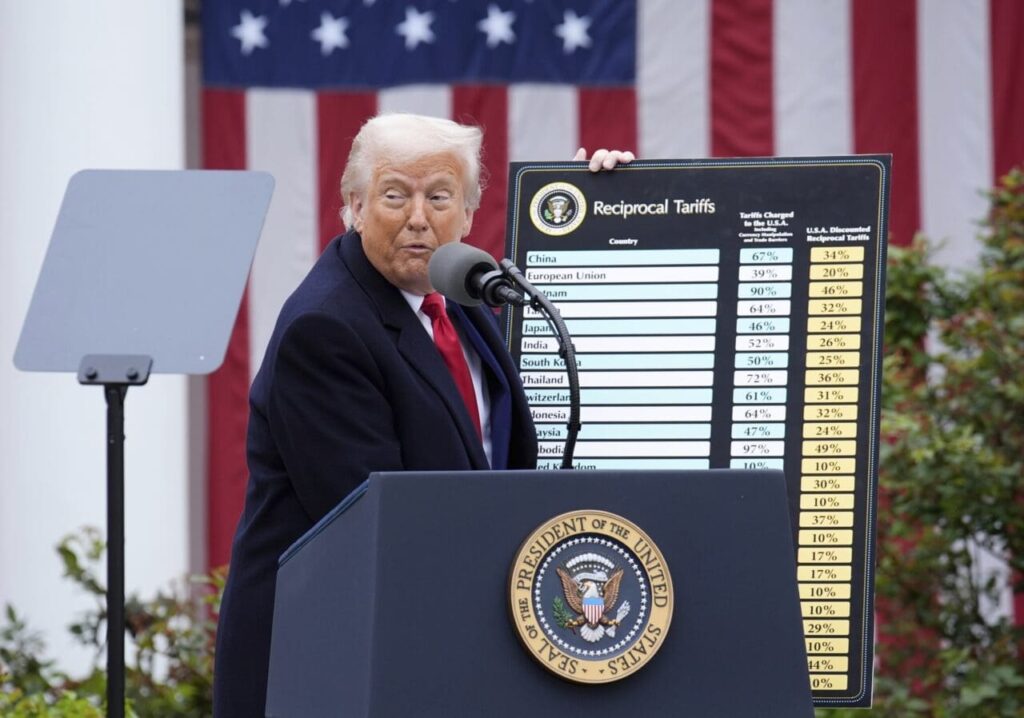
April 2 marked the first anniversary of former President Donald Trump’s declaration of ‘Liberation Day’ when he implemented extensive tariffs affecting multiple countries. Initially met with support from House Republicans, these tariffs are now a topic few wish to discuss publicly.
American Journal News attempted to contact 27 vulnerable GOP congress members facing reelection to gauge their current stance on Trump’s tariff policy. At the time of reporting, none had responded.
The reluctance to comment may be linked to the economic impact of these tariffs. Contrary to Republican promises of reduced costs, a Tax Foundation study indicates a 7% increase in retail prices for goods such as cars, clothing, toys, and furniture over the past year.
Legal challenges have plagued the tariffs, culminating in a February ruling by the U.S. Supreme Court deeming the legal basis for the tariffs unlawful. However, the court left open the possibility for reimplementation through alternative methods.
The tariffs, some of which have been lifted or replaced, have resulted in complexity for businesses and consumers trying to adapt to the ongoing changes.
Gabe Vasquez, a Democratic congressional candidate in New Mexico, criticized the approach, stating on social media, “An international trade policy based on bullying and BS isn’t helping anyone.” He emphasized the need for a strategy that doesn’t inflate costs or threaten national security.
Among those contacted were Arizona Reps. Eli Crane, Juan Ciscomani, and gubernatorial candidate David Schweikert, along with Colorado Rep. Gabe Evans. In swing states, Michigan’s Bill Huizenga and Tom Barrett, Pennsylvania’s Ryan Mackenzie, Rob Bresnahan, and Scott Perry, and Wisconsin’s Bryan Steil and Derrick Van Orden also did not comment.
While Mackenzie has shown some openness to revisiting the tariffs, he voted against lifting tariffs on Canada in February. Others, like Huizenga, Barrett, Perry, and Steil, initially supported the ‘Liberation Day’ tariffs.
Huizenga remarked in April 2025, “Is there going to be some adjustments? Absolutely. Is it going to be easy? Not necessarily. Is it the right thing to do? Absolutely it is.”
Bresnahan, meanwhile, faced scrutiny over stock trades made around the tariff announcements, despite pledging not to trade stocks if elected.
Economists argue that these tariffs have worsened the affordability crisis, exacerbated by inflation and corporate profits. The situation has deteriorated following the U.S. invasion of Iran, spiking gas prices to over $4 a gallon for the first time in three years.
Democratic Rep. Suzan DelBene told Semafor that the anniversary serves as a reminder of the hardships these policies have introduced.
Other lawmakers who did not respond include California Reps. David Valadao, Young Kim, and Ken Calvert; Florida Reps. Anna Paulina Luna and Maria Elvira Salazar; Iowa’s Mariannette Miller-Meeks; Kentucky’s Andy Barr; Missouri’s Ann Wagner; New Jersey’s Tom Kean Jr.; New York’s Mike Lawler; Ohio’s Max Miller and Mike Carey; Tennessee’s Andy Ogles; Texas’s Monica De La Cruz; and Virginia’s Rob Wittman and Jen Kiggans.