A planned immigration detention center in the Phoenix suburb of Surprise, Arizona, could cost the federal government more than $8 million in water and infrastructure payments to the city — and that’s before the first detainee ever arrives. A newly released government environmental report reveals just how significant the facility’s footprint could be on a community that wasn’t designed to absorb it.
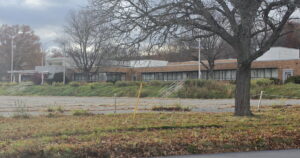
The Department of Homeland Security released the first draft of its environmental assessment for the proposed ICE detention center, which would be housed in a converted warehouse the agency purchased earlier this year. The report outlines plans to run the facility around the clock, holding up to 1,500 detainees alongside 676 staff members.
The assessment was required after Arizona Attorney General Kris Mayes filed suit against DHS, arguing the agency fast-tracked the warehouse conversion without following federal environmental protection laws. Mayes contended the building was never designed to house people and lacks adequate water and plumbing infrastructure, and that converting it would strain the surrounding neighborhood through increased traffic, light pollution, and pressure on local services.
Water Use at the Center of the Debate
The city of Surprise’s biggest concern is water — a resource that’s already precious in the desert Southwest. According to the draft report, the facility would consume roughly 190,000 gallons of water per day, with peak usage climbing to 215,000 gallons. That level of demand would force the city to bring a new groundwater well online in its Rancho Gabriela Pressure Zone a full five years ahead of schedule.
To cover the cost of that accelerated timeline, Surprise asked DHS to pay more than $6.1 million for the expedited development of the new well. The city is also requesting nearly $1.8 million to expand its wastewater and water treatment capacity, according to a September 22 memo from city officials. Additionally, DHS would be required to either provide water rights for 1,512 acre-feet of water or pay the city $1 million — and would need to install an 800,000-gallon on-site water storage tank.
DHS appears prepared to meet those demands. The draft report states:
“Although these improvements would be implemented through the City’s municipal infrastructure program, the facility would be responsible for satisfying the associated funding and water-resource obligations.”
Beyond Water: Traffic, Safety, and Community Impact
Water isn’t the only community concern the report addresses. DHS acknowledged in the assessment that the facility would
“also increase demand for law enforcement, fire protection, emergency medical response, and healthcare services relative to the existing warehouse use.”
On the question of safety, the report offered reassurances:
“With compliance with applicable safety requirements, staff training, and coordination with local emergency-response providers, health and safety effects are not anticipated to be significant.”
Traffic is another flashpoint. The report found that detention operations would increase congestion, particularly during afternoon shift changes that overlap with nearby school traffic. However, DHS does not plan to invest in roadway improvements. Instead, the agency says it will manage the problem through scheduling and access controls.
“Onsite vehicle queuing, controlled access, and scheduling of discretionary large-vehicle movements to minimize conflicts with school-related traffic would reduce potential operational effects. With these measures, significant adverse roadway and traffic impacts are not anticipated,”
the report states.
That approach is unlikely to satisfy the many residents and neighbors who have raised objections to the project. Despite releasing what it called a draft “mitigated finding of no significant impact” — a document indicating the agency believes the project won’t dramatically harm the surrounding environment — the same report acknowledges the facility
“would substantially increase demand for municipal water, wastewater, electrical, and other utility services relative to the existing industrial use.”
What Comes Next
The draft documents are open for a 30-day public comment period before DHS issues a final environmental assessment. Richie Taylor, a spokesman for Attorney General Mayes, confirmed the office is still working through the newly released materials.
“We are still reviewing,”
Taylor said. Mayes had agreed to pause ongoing litigation against the facility while DHS completed its environmental review.
A spokesperson for the city of Surprise did not respond to questions about whether the city plans to submit public comments during that window.
The Surprise detention center is part of a broader federal push to expand immigration detention infrastructure. ICE has spent billions expanding immigration detention under the second Trump administration, though a watchdog audit found that tens of millions of those dollars were wasted. A Government Accountability Office report found that ICE’s detention expansion efforts lacked planning and wasted millions in taxpayer funds — including under a program that spent over a billion dollars purchasing 11 warehouses nationwide, with Surprise among them. More recently, ICE has pursued a separate billion-dollar plan to expand detention facilities on federal land in Arizona, signing contracts worth up to $7.3 billion across five states.
Separately, Arizona communities are navigating other water pressures. Arizona cities could tap into a water savings account to help with Colorado River cuts, with officials describing the approach as digging in the “couch cushions” for conservation commitments. And in unrelated West Valley news, residents have filed action to remove an Arizona legislator from office, claiming a residency violation involving Republican state Sen. Janae Shamp.