In a significant step toward enhancing infrastructure on the Walker River Paiute Tribe reservation, tribal leaders and community members have officially commenced the construction of a long-awaited closed-loop water system. This initiative is set to pave the way for new housing developments and economic growth within the 32,000-acre reservation.
The water project, which has been in the planning stages for a decade, addresses a critical need for more housing options. Many tribe members have expressed a desire to live on the reservation but have been unable to do so due to the lack of available homes.
Genia Williams, who returned to the reservation ten years ago to become the housing director for the Walker River Paiute Tribe, aimed to promote development but encountered insurmountable infrastructure challenges. “The repercussions of not being able to build housing, when you think you’re going back as a housing director, you think ‘okay, you can build houses and do things’ and you find out that wasn’t going to happen, that there had to be a moratorium,” she explained.
Securing infrastructure funding for a reservation is notoriously challenging.
It wasn’t until 2024 that the federal government approved a $20 million grant for the Walker River Paiute Tribe to fund the water recirculation system, a community building, job creation, and stocking their food pantry. However, these funds were later retracted by the Trump administration, nearly jeopardizing the housing project.
The reservation’s remote location, with the nearest municipalities over 34 miles away in both directions, limits economic opportunities. The tribe primarily generates revenue through land leases, a gas station, and a cannabis dispensary.
Tribal Chairperson Melanie McFalls recognized the importance of securing funding for the water system despite financial challenges. “You know, it was pretty hard to give up three million just like that, but we had to do it, or we would have lost the whole project,” McFalls stated.
Upon completion, the tribe anticipates adding 35 new homes to the reservation, along with enhanced economic opportunities.
Approximately 40 miles to the north lies Fallon, home to the Fallon Shoshone-Paiute Tribe, a community spread over 8,200 acres within urban boundaries.
In Fallon, more than 60% of households earn $50,000 or less annually, according to UNR Extension. Even with a $75,000 income, buyers have a purchasing power of about $220,000.
Currently, only one-third of homes in Fallon are valued around $200,000. By the end of September, just three homes were available in that price range on Redfin.
The housing shortage affects not only the state but also the reservations. Russell Dyer-Redner, development manager for the Fallon Shoshone-Paiute Tribe’s housing program, has personally witnessed the difficulty of acquiring a home.
“From personal experience, you didn’t have a chance to have housing,” said Dyer-Redner. “It was either that or submit an application and basically end up on a waiting list, and it seemed like you were waiting for someone to die to even have a chance.”
When Dyer-Redner sought to return to the reservation, he faced the same issue as many others: no available housing. The alternative is buying a home, which many tribal members cannot afford due to their income levels.
“We’ve done a really good job creating jobs, we always have vacancies,” Williams noted. “It would be wonderful if people could come and fill those opportunities.”
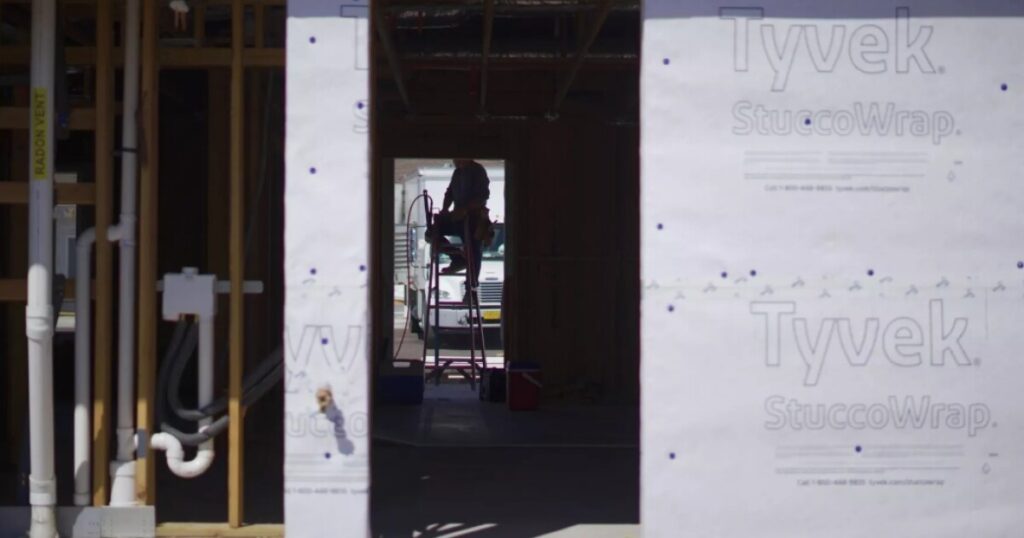
To combat the housing shortage, the tribe is undertaking a 22-unit construction project. Workers are currently on-site for the first development in 20 years, partially funded by the low-income housing tax credit.
The Pyramid Lake Paiute and Washoe Tribes of Nevada and California are also planning similar projects.
The housing shortage even affects hiring, according to Williams.
These projects are incrementally increasing the housing supply on the reservation, supported by federal funds. However, there are thousands of members waiting for their turn on the housing list.
These federal funds come from a singular pool accessed by all 574 federally recognized tribes. Each year, this fund diminishes.
Federal allocations, such as the Indian Housing Block Grant, have decreased over decades because they haven’t kept pace with inflation or population growth, according to a study from the Center on Budget and Policy Priorities released this year.
“There will always be a shortage, but if we can meet most of our needs, then we fulfill our responsibility, and hopefully, people can return,” Williams said.
Ultimately, tribal leaders across the state hope their members can come back home.
This story was originally published by Nevada Public Radio and produced by Jimmy Romo-Buenrostro.