Polar Bear in Canada Exhibits Rare Adoption Behavior
December 18, 2025
In a remarkable event captured by researchers in northern Canada, a polar bear mother has been observed adopting a cub that was not biologically hers. This rare occurrence took place near Churchill, Manitoba, during the annual migration of polar bears along Western Hudson Bay.
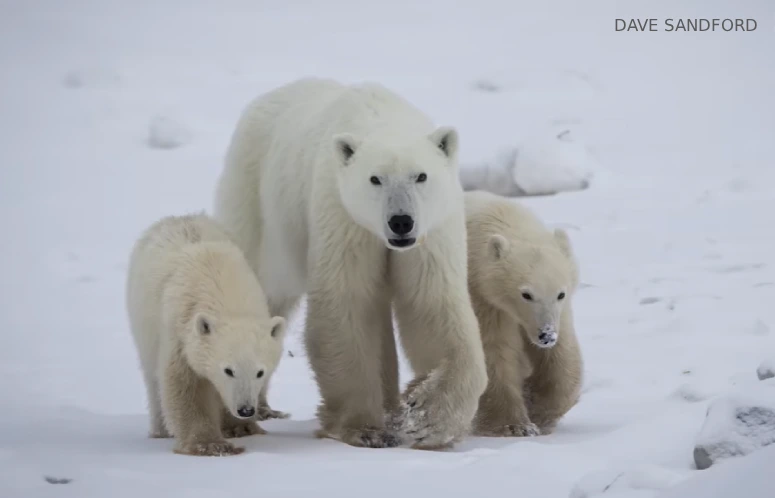
Credit: Dave Sandford
Scientists noted the unusual sight of a five-year-old female polar bear traveling with two cubs, each approximately 10 to 11 months old. While one of the cubs was her biological offspring, the other was not. This observation was confirmed when researchers, who had previously tagged her and her biological cub earlier that year, noticed the presence of an untagged cub with her in the fall.
Data analysis confirmed the adoption, marking only the 13th case recorded in the western Hudson Bay region over nearly five decades, involving more than 4,600 polar bears.
Dave Sandford, a photo ambassador for Polar Bears International, captured this family unit on camera. His documentation played a crucial role in confirming the adoption and provided insight into this unique behavior. Sandford expressed, “It gave us the opportunity to photograph them and submit the evidence and story,” which added “even more reason to root for this beautiful polar bear family.”
Alyssa McCall from Polar Bears International highlighted in a media video, “It doesn’t happen often at all… when we confirmed this was an adoption, it gave us a lot of hope. It’s another reminder of how fascinating and incredible these animals are.”
Survival prospects for polar bear cubs without maternal care are dire, with a significant drop in survival rates if orphaned. The presence of a nurturing mother to provide essential care and survival instruction dramatically enhances their chances of reaching adulthood.
The cubs, presently in good health, are anticipated to stay with their adoptive mother for an extended period. This duration is crucial for them to gain the necessary skills for survival, such as hunting seals, before they eventually venture onto the sea ice independently.