The University of Michigan has made notable strides in its sustainability efforts and carbon neutrality objectives over the past year, as detailed in the latest Campus Sustainability and Carbon Neutrality Update. Released by the Office of the Associate Vice President for Campus Sustainability, the report showcases the university’s dedication to reducing its environmental footprint while expanding its facilities and academic initiatives.
MORE INFORMATION
Highlighted in the report are efforts in renewable energy, building efficiency, and transportation, alongside initiatives to manage indirect emissions. These efforts reflect the university’s growth trajectory in research and academia. Shana S. Weber, associate vice president for campus sustainability, noted, “We are making steady, tangible progress across our campuses while modernizing the systems that support our academic and research mission.” She emphasized that these investments bolster energy resilience and reduce emissions.

Expanding Renewable Energy and Modernization
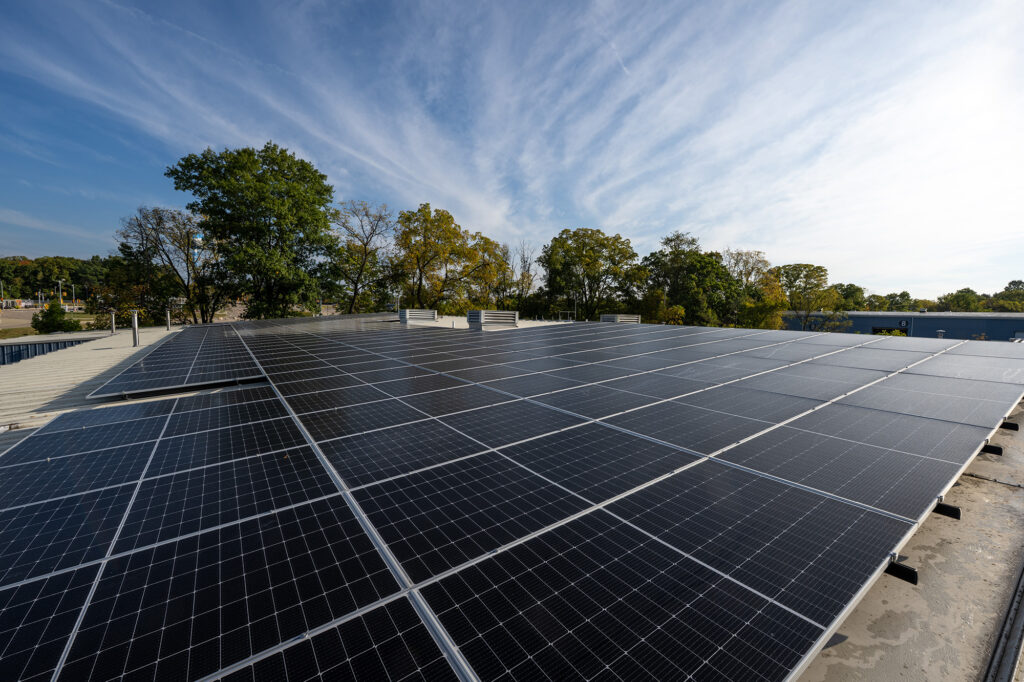
One of the year’s key milestones was the launch of Maize Rays, a solar initiative aimed at increasing renewable electricity on campus and beyond. This aligns with U-M’s target of net-zero emissions from purchased electricity by 2027. The university is set to achieve approximately 25 megawatts of solar capacity across its campuses, including Michigan Medicine and Athletics, with the first two solar arrays on North Campus already producing energy. Maize Rays also supports local solar projects benefiting community-serving organizations.
Alongside solar expansion, U-M made progress in developing heat pump and geoexchange systems, which are energy-efficient and reduce reliance on fossil fuels. A notable step was the drilling of a 1,200-foot test bore on Central Campus to explore deeper geoexchange potential. Systems are also being integrated into new and renovated buildings, such as the Leinweber Computer Science and Information Building.

Enhancing Campus Building Efficiency
In fiscal year 2025, U-M allocated $1.1 million from its central revolving energy fund to boost energy efficiency. This included lighting and HVAC improvements, expanding on previous LED updates covering over 13 million square feet. “These projects make good business sense and reduce energy use today while positioning the university for deeper efficiencies over time,” Weber stated.
Low-Carbon Transportation Initiatives
The university’s transportation sector saw expansion with the addition of four battery-electric buses, totaling 12 in service. These buses have collectively traveled over 52,000 miles, reducing CO₂-equivalent emissions by 159,000 pounds. The electric vehicle infrastructure now includes 230 charging stations and 56 university-owned electric vehicles. Planning for a potential Automated Transit System continues, aligned with Campus Plan 2050’s multimodal transportation goals.
Reducing Waste and Enhancing Environments
Efforts to cut waste involved partnerships with various campus teams, resulting in the Lab Swap Shop, which diverted over 17,500 pounds of laboratory materials from landfills. The Zero Waste Program supported over 1,000 events, and a new collaboration with Campus Farm processed compostable waste from Michigan Stadium locally. Composting infrastructure has expanded, and student move-outs diverted more than 12 tons of reusable materials.
U-M also maintained its Bee Campus USA status, enriched its landscapes with native plants, and updated its Resilient Grounds goals to improve land management, biodiversity, and stormwater management.
Addressing Scope 3 Emissions
The update outlines foundational work on Scope 3 emissions, dealing with indirect impacts from goods, services, and travel. Collaborating with external experts and campus partners, U-M focused on enhancing data quality and tracking, involving over 350 community members. The university partnered with Delta Airlines to explore sustainable aviation fuel, aiming to cut emissions from air travel.
These foundational efforts lay the groundwork for future goal-setting, expected to conclude in 2026 following leadership changes.
Utilizing Operations for Learning
Operational investments at U-M are also seen as educational opportunities. Cross-functional working groups were established to align energy, infrastructure, and resource management projects with research and learning. Weber highlighted the university’s commitment to using its operations as a “living-learning lab” to support interdisciplinary research and real-world problem solving.
Future Plans
The university plans to continue its solar projects, advance geoexchange systems, enhance energy efficiency, expand low-carbon transit, and finalize Scope 3 goals. A more detailed update is anticipated in the upcoming spring release by the Sustainability Leadership Council.