Former Dyson Engineer Invents Revolutionary Off-Grid Washing Machine
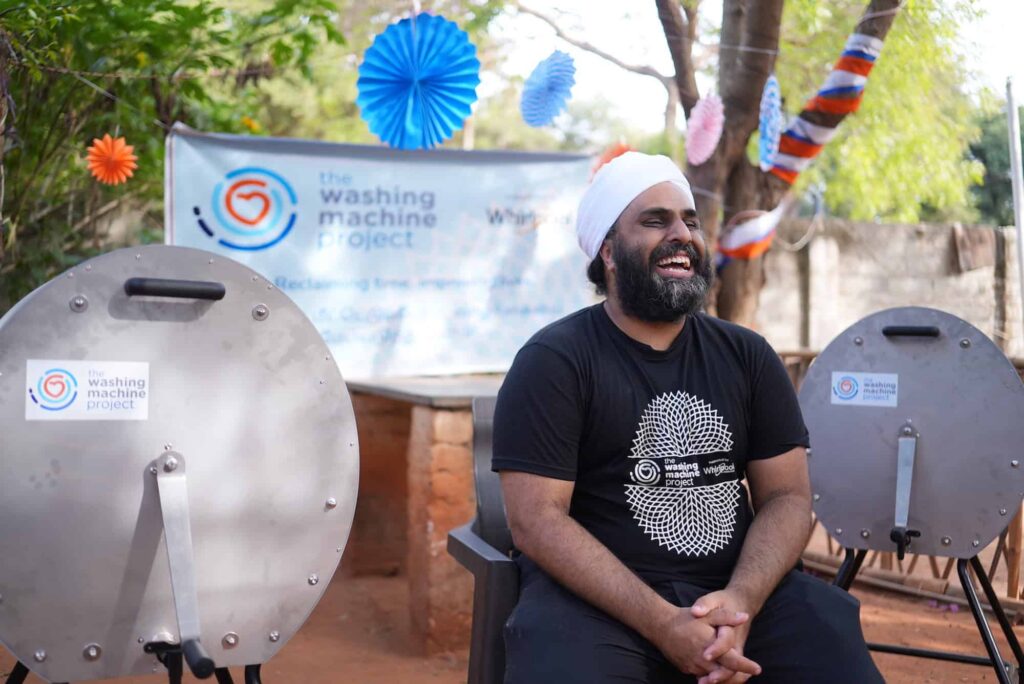
Navjot Sawhney, a former Dyson engineer, has sparked a revolution in household chores for deprived communities with his invention of an off-grid, flat-pack washing machine. This innovation is set to significantly ease the burden of hand-washing clothes, a task that consumes up to 20 hours per week for women and young girls in developing regions.
Through his UK-based social enterprise The Washing Machine Project (TWMP), Sawhney has already distributed nearly 500 of these flat-pack washing machines, named Divya, to 13 countries including Ghana, Iraq, and the US. The Divya appliance operates a 30-minute wash cycle for a 5kg load, requiring just a few minutes of manual turning.
The operation of the Divya washing machine is fairly straightforward. After loading the clothes, detergent, and water and allowing it to sit for 10-15 minutes, users simply have to close the lid and turn the handle for two minutes, repeating this process twice more following ten-minute intervals. This method reduces water consumption by half and saves up to 75% of time for its users, transforming a previously exhausting and time-consuming task into a manageable and time-saving one.
The development of the Divya project didn’t stop after the machine was invented. The organization’s R&D Lead, Laura Tuck, emphasized that the team listened carefully to the people they were designing for, taking into account the context in which they lived. This user feedback led to substantial changes in the design and operation of the machine.
One key consideration was ensuring that the Divya machines were suitable for the locations where they would be used. For instance, in Uganda, machines were delivered to a small island on Lake Victoria via a fishing boat. Given the difficulty of delivering repairs or replacements, the TWMP team had to reconsider how the originally complex gear-system machine could work under these conditions. The solution was a simpler, more intuitive design that could be repaired locally using the available skills and infrastructure.
Guided by feedback from real users during workshops and focus groups, the TWMP team improved the machine’s durability, reduced physical strain, and enhanced usability. This resulted in more robust metal frames, simplified workflows, and improved seals and taps. These improvements have already impacted the lives of nearly 50,000 people, and this is just the beginning.
The Washing Machine Project’s Future Plans
The Washing Machine Project aims to reach a million people by 2030, but acknowledges that this goal cannot be achieved alone. The organization is building a network of partners including NGOs, UN agencies, and local communities, with assistance from the charity wing of the US-based home appliance firm, the Whirlpool Foundation.
Plans for localized production are set to begin in early 2026, with a new generation of machines being manufactured in India. The project also aims to establish ‘Hubs’ where machines can be assembled and distributed. These Hubs will also provide training, workshops, and educational activities, amplifying the impact of the time saved by using Divya machines.
In a bid to enhance water, sanitation, hygiene, and gender equality strategies, The Washing Machine Project is also seeking policy engagement to integrate laundry access. These efforts will further extend the influence and reach of this ground-breaking project, leading to an improved quality of life for many in developing regions.