The Montana Environmental Quality Council approved a letter on Dec. 2 seeking federal funding for extracting rare earth and critical minerals from legacy mining sites. The request, directed to Secretary of Defense Pete Hegseth, aims to secure funds from the Army’s Research, Development, Test and Evaluation account for the Montana Mining Association’s demonstration project. Passed with a 14-1 vote, some legislators suggested limiting the projects included in the request.
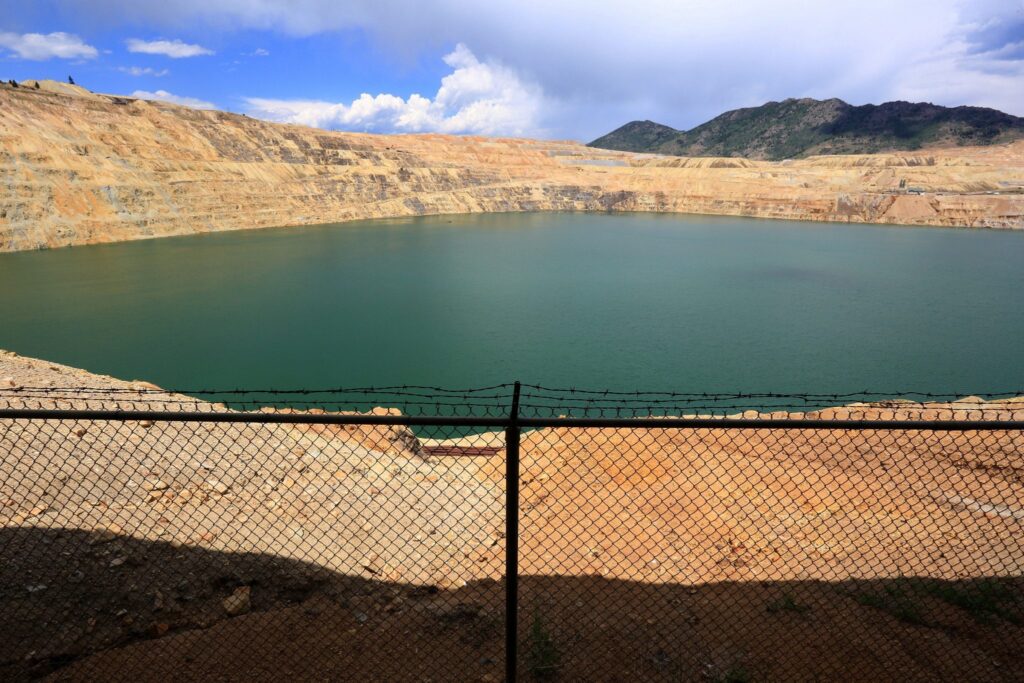
As part of efforts to strengthen domestic critical mineral supply chains, the federal government supports mining projects and technological advancements within the U.S. Montana, with its rich mining history, is focusing on revitalizing old mines to extract valuable minerals from waste sites, including the Berkeley Pit in Butte.
“There’s billions of gallons of metals lying in the water in the Berkeley Pit and hundreds of millions of tons of smelter waste (near Anaconda) all bearing appreciable levels of metals with many of those being critical in those two sites,” said Montana Mining Association director Matt Vincent during a presentation at the EQC’s October meeting.
Vincent emphasized the importance of elements like zinc, germanium, copper, cobalt, and tungsten. Research by Montana Tech University has explored extracting rare earth elements from coal waste, mining wastewater, and the Berkeley Pit, estimating 40 tons of rare earths could be extracted annually.
The Montana Mining Association is involved in projects at sites like the Anaconda smelter waste complex, Sibanye-Stillwater mine, Black Butte mine, and Antonioli-Contact mine. “The sites that we select are based on legacy sites and operating permit sites where they have conducted initial sampling that’s identified, what the critical elements are, that they’re appreciable amounts of that would lend themselves to being priority target sites,” Vincent told the EQC.
Rep. Josh Seckinger, D-Bozeman, noted concerns about the lack of specific sites in the letter, fearing misunderstandings about the projects the EQC supports. Conservation groups supported repurposing existing mines but expressed concerns about new operations. Julia DalSoglio of the Montana Sierra Club said, “We too think that looking at critical minerals and rare earth elements in places such as the Berkeley Pit and the Anaconda smelter site makes sense.”
Recent opposition to a new exploratory operation in the Bitterroot Valley highlighted public concern, drawing hundreds of members and prompting Montana’s federal delegation to oppose fast-tracking the project. Ben Cotton of MEIC suggested more specific language in the letter to prevent misinterpretations. Ultimately, the letter was approved, listing five priority projects and “future legacy sites.”