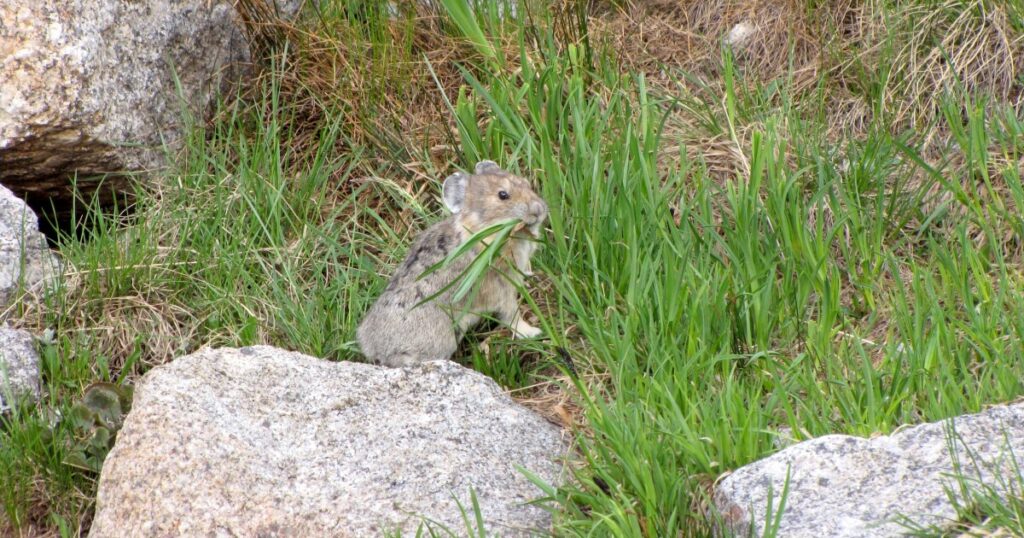
High in the Mountain West, a small creature with large ears and the size of a baked potato navigates the rocky slopes, signaling the health of its environment. Known as the pika, this animal is facing a challenging future due to changing climate conditions.
Chris Ray, a long-term pika researcher from the University of Colorado Boulder, has spent years studying these creatures at the Niwot Ridge research site. She describes pikas as “about the size and color of a baked potato,” but notably with “Mickey Mouse ears.” Her team’s recent study reveals a troubling decline in the survival rate of young pikas.
Pikas thrive in cold, high-altitude environments, but warmer temperatures are making it harder for them to traverse their native habitats. This difficulty is exacerbated by climate change, which increases the temperatures of south-facing slopes and lower elevations.
In addition to rising summer temperatures, inconsistent snowpack is posing another threat to pikas. Historically, a thick snow cover provided insulation during harsh winters, but this protective layer is becoming less reliable. Moreover, changes in alpine vegetation could be impacting their food sources.
Recognized as an indicator species, pikas offer insights into broader environmental changes occurring in fragile mountain ecosystems. Ray suggests tracking their populations can yield valuable data on how climate change is reshaping high-elevation landscapes across the western United States.
This report was brought to you by the Mountain West News Bureau, which includes KUNR, Wyoming Public Media, Nevada Public Radio, Boise State Public Radio in Idaho, KUNC in Northern Colorado, KANW in New Mexico, Colorado Public Radio, KJZZ in Arizona, and NPR. The Mountain West News Bureau receives funding from the Corporation for Public Broadcasting and Eric and Wendy Schmidt.