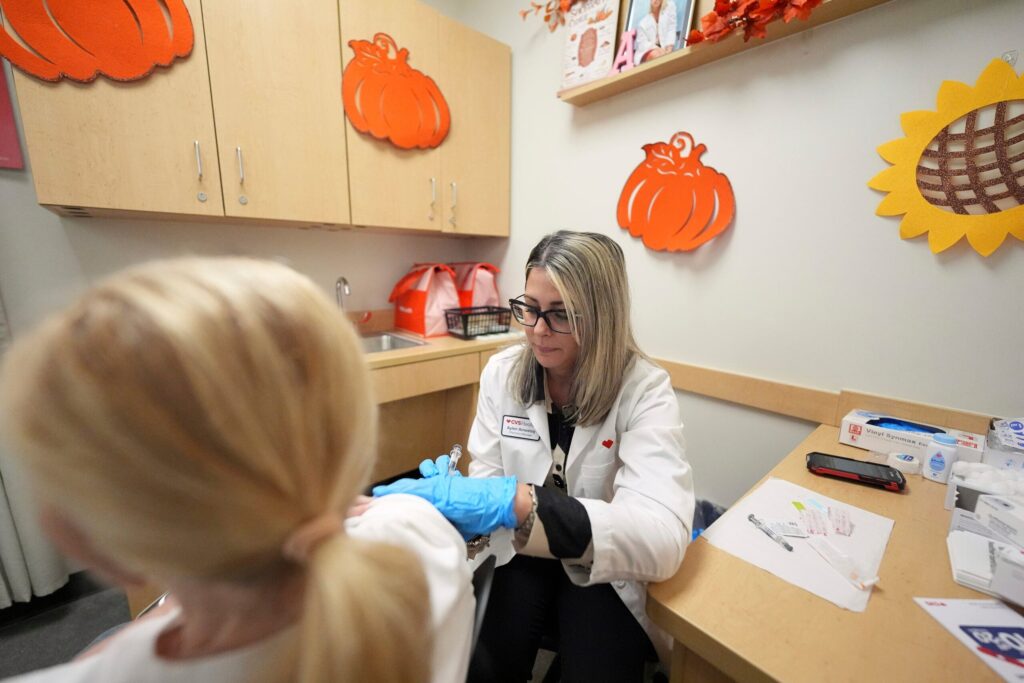
Wisconsin has seen a significant decline in COVID-19 vaccinations, with a 33% drop in the number of people receiving the vaccine in September compared to the same time last year. This comes amid ongoing discussions about the vaccine’s effectiveness in preventing not only severe illness but also the spread of the virus itself.
A groundbreaking study by a University of Wisconsin-Madison economist has provided real-world evidence supporting the vaccine’s role in reducing the transmission of COVID-19 among vaccinated individuals and their immediate contacts.
Dan Sacks, an associate professor specializing in risk management and insurance at the Wisconsin School of Business, has focused his research on health economics. In his recent study, Sacks discovered that the COVID-19 vaccine decreased infections by 80% among children in Indiana who received it. Additionally, he observed that every two vaccinated children prevented one additional COVID-19 case within their households.
Sacks’ findings are slated for publication in the American Economic Journal in January. He discussed his research on WPR’s “Wisconsin Today,” sharing insights on how the findings can influence health decisions this season.
The interview has been edited for brevity and clarity.
Exploring the Vaccine’s Indirect Effects
Kate Archer Kent: What highlights did the research reveal about the indirect benefits of the COVID-19 vaccine?
Dan Sacks: Our research began by examining the impact on households when children get vaccinated, particularly since they were the last group eligible in Indiana. We compared families with newly eligible children to those with younger, ineligible kids. Vaccinated children not only protected themselves but also reduced COVID-19 cases by half among other family members. This was especially evident in families where parents were already vaccinated, resulting in fewer breakthrough infections.
Vaccine Protection in Schools
KAK: What did the study find about the vaccine’s impact in school settings?
DS: Though my children’s vaccines protect me at home, we investigated whether having more vaccinated kids in schools offered a protective effect. Surprisingly, we found no significant impact. This might be due to the already existing COVID-19 mitigation measures or the low vaccination rates in Indiana schools, which might not have been enough to achieve herd immunity.
Implications for COVID Boosters
KAK: How might your research influence decisions regarding COVID boosters this season?
DS: Many people experience temporary side effects from the vaccine, which might deter them from getting it. However, the health benefits, such as avoiding a severe illness, are significant. Our study confirms the vaccine’s effectiveness in real-world settings, especially among children. The current guidance focuses on personal risk, but it’s crucial to consider the communal benefits of vaccination, like protecting family and close contacts.
Policy Implications from Research
KAK: What policy recommendations could emerge from your study on the COVID-19 vaccine’s effects?
DS: Our research shows significant effects within households, suggesting a similar impact among closely interacting coworkers. This supports the importance of vaccination in groups that work closely together. Some states have proposed laws against employer vaccine mandates, but our results suggest such bans could have negative health implications for employees.