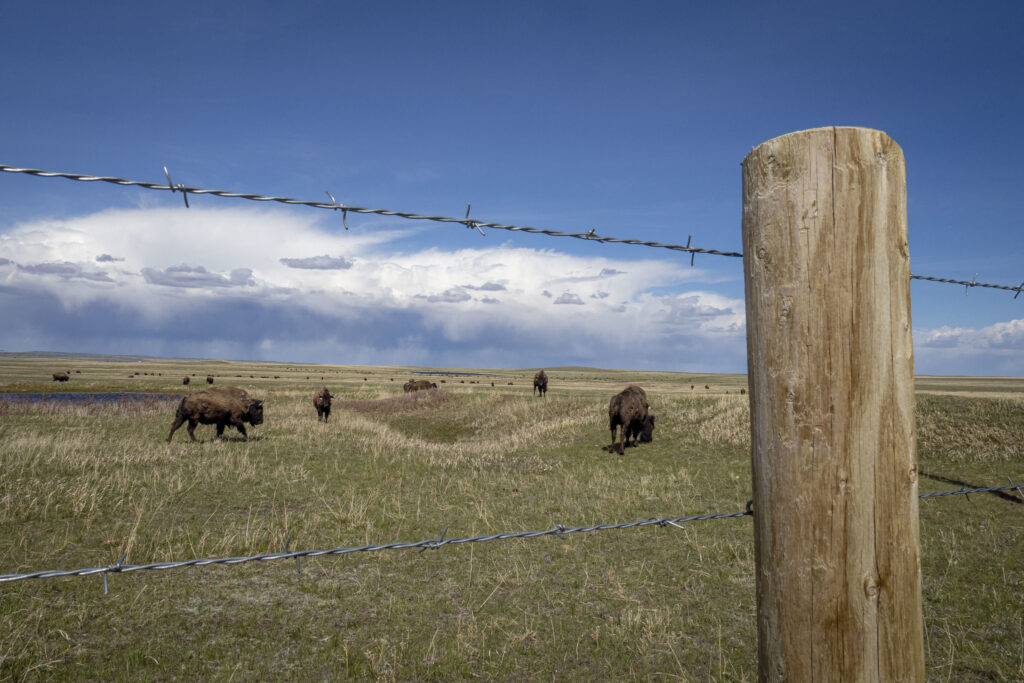
Montana Governor Greg Gianforte and the state’s federal delegation recently signed a letter opposing American Prairie’s bison restoration project, stating it conflicts with Montana’s economy. The letter, addressed to Interior Secretary Doug Burgum, highlights concerns over grazing rights on Bureau of Land Management land, which American Prairie was granted in 2022. Ranchers and livestock groups have appealed this decision due to the potential spread of brucellosis, a costly disease affecting cattle.
The letter claims the decision “will re-shape the entire landscape of our state,” emphasizing agriculture as Montana’s economic and cultural cornerstone. Despite this, agriculture ranked 12th in the state’s GDP in 2022, generating approximately $4.6 billion in cash receipts. The delegation argues that removing large tracts from agriculture harms the economy, while granting grazing rights to American Prairie threatens the vitality of a key industry.
American Prairie owns over 500,000 acres in Montana and manages 900 bison across 46,000 acres, leasing land to support 7,000 cattle and 25 ranchers. Spokesperson Pete Geddes refuted the economic threat claims, citing $7 million in payroll since 2020, which supported 23 jobs and infused $17 million into local economies. Despite these benefits, ranchers like Gilles Stockton express concerns about brucellosis costs, especially as 60% of female bison in Yellowstone test positive for the disease.
Brucellosis, introduced by cattle in the early 1900s, affects the reproductive systems of cattle, elk, and bison. While Montana is brucellosis-free, the “Designated Surveillance Area” helps monitor and test for the disease. According to State Veterinarian Dr. Tahnee Szymanski, brucellosis eradication efforts continue, with 100,000 tests conducted annually. The state’s compliance maintains its Brucellosis Class Free status, essential for livestock exports.
Grazing permit violations are another issue, with the letter alleging American Prairie contravenes federal law, specifically the Taylor Grazing Act. This 1934 act governs cattle grazing, but American Prairie argues it allows conservation grazing. Geddes states, “American Prairie qualifies as both a ‘stock owner’ and ‘engaged in the livestock business.'” The organization aims to restore the land to its pre-colonization state, when bison roamed free. Ranchers like Stockton feel the Bureau of Land Management oversteps its authority, adding frustrations over grazing rights and brucellosis risks.