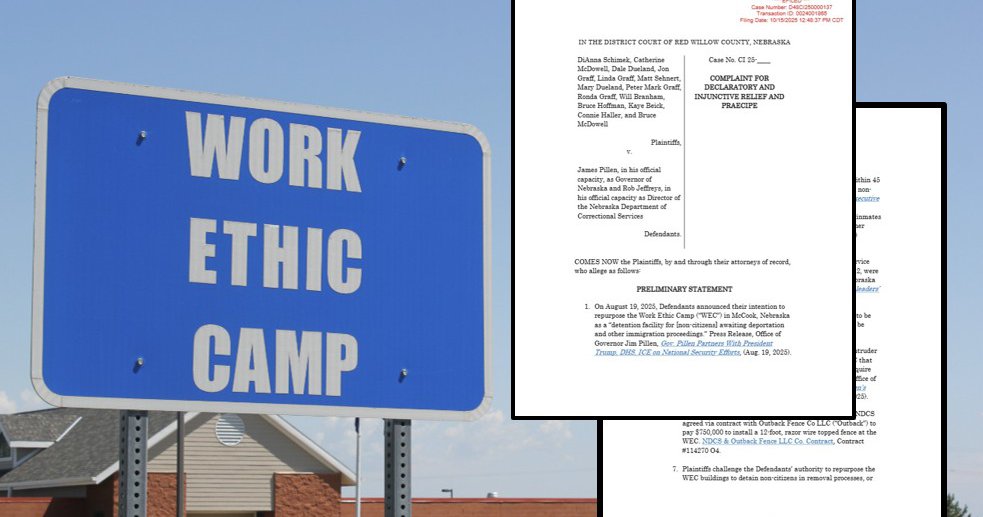
In a courtroom filled with onlookers and outside protesters, the contentious debate over a new immigration detention facility in Nebraska took center stage. Among those present was Gary Power, chair of the Red Willow County Democratic Party, who noted, “I think the plaintiffs got an awfully strong argument. But, I don’t know. Money talks.”
Recently, Governor Jim Pillen announced Nebraska’s collaboration with the Department of Homeland Security to establish an immigration detention center at the former Work Ethic Camp in McCook. This facility, akin to Florida’s “Alligator Alcatraz,” has been nicknamed the “Cornhusker Clink” by Pillen and DHS.
The partnership, formalized on September 20, was publicly disclosed last week. Under the terms, Nebraska will receive approximately $2.5 million monthly to accommodate up to 300 immigration detainees until 2027. Additionally, the state is set to receive $5.7 million to cover the cost of modifications made to the facility.
A lawsuit has emerged challenging the agreement, citing constitutional concerns. The plaintiffs argue that the deal infringes on the Nebraska Legislature’s authority, which, as per the Nebraska Constitution, grants the power to manage penal institutions to designated entities, specifically the Nebraska Department of Correctional Services in this instance.
However, the Nebraska Attorney General’s Office, defending Pillen and Jeffreys, contends that the vested power allows the department the discretion to engage in such agreements. Attorney Lincoln Korell stated, “They just have to have discretion. It’s core to their executive function to determine how to use their facilities, and statute gives them that discretion. And ultimately, if plaintiffs don’t care for how that discretion is exercised, they can voice their concerns at the ballot box.”
The plaintiffs counter that using taxpayer money for the facility’s modifications and operations, even if reimbursed by the federal government, is a violation of state law. As plaintiff attorney Nicholas Grandgenett argued, “This case is not about immigration, it’s about our constitutional republican form of government. [The defendants are] undermining our structure of government. They’re disrupting the balance of power between the three branches, and they’re overstepping their own authority.”
Defense attorneys for Pillen and Jeffreys have called for the lawsuit’s dismissal, arguing that not all necessary parties were named as defendants. They emphasized that the Department of Homeland Security and a contractor paid $750,000 for a security fence should be included in the case. Furthermore, they questioned the plaintiffs’ standing to sue.