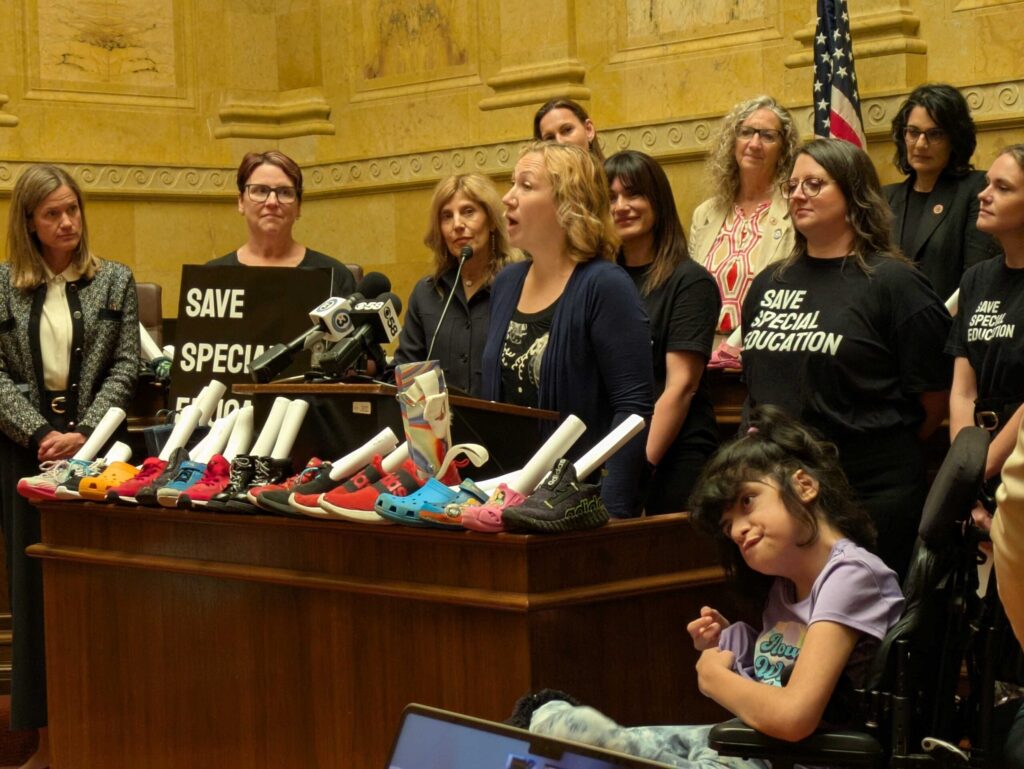
Concerns Grow Over Impact of Federal Layoffs on Wisconsin’s Special Education
Wisconsin’s special education community is voicing concerns regarding recent layoffs within the U.S. Department of Education, specifically affecting the offices that manage special education programs.
The Trump administration recently initiated a reduction-in-force that has significantly reduced the staff at the Office of Special Education and Rehabilitative Services. This move, part of a broader layoff strategy impacting 466 employees across the Education Department, aims to transfer more educational control to states.
Heidi Siebert, who works with the Wisconsin Special Education Mediation System and directs special education at CESA 7 in the Green Bay area, expressed her apprehensions to WPR’s “Wisconsin Today.” She fears that the reduced federal workforce might hinder the enforcement of the Individuals with Disabilities Education Act, essential for ensuring access to special education.
“These layoffs, coupled with the other cuts that have been made, could potentially be devastating to the oversight and the ability of parents and schools to remedy when things arise,” Siebert remarked.
The office plays a crucial role in managing the federal budget for special education and developing Individual Education Programs (IEPs) that outline each student’s educational needs.
While the Wisconsin Department of Public Instruction remains uncertain about the exact effects of these changes, it confirmed that federal funding for special education is still in place. Despite this, Siebert acknowledged Wisconsin’s own legal frameworks but worries about the national implications.
“It’s a civil rights law, and so while Wisconsin might step up, what about the other 7.5 million students in our country that have disabilities?” Siebert emphasized. “I’m not worried about Wisconsin, but I am worried about each and every student across the country.”
One of the beneficiaries of the special education system, Sydney Badeau, who now chairs the Wisconsin Board for People with Developmental Disabilities, shared her concerns as well. She attributes her success in nonprofit advocacy to the support she received from special education and hopes future generations receive similar opportunities.
“It is going to be devastating for kids who are receiving special education services,” Badeau stated. “Especially if things aren’t followed through with IEPs or accommodations that need to happen, and they don’t have anyone at the federal level to go to.”
Additional worries for Wisconsin stem from a recent withdrawal of federal grant funding for the Special Educator Induction Program, which focuses on recruiting and training special education teachers. The Department of Education ended the grant in August, citing concerns over the program’s diversity, equity, and inclusion goals.
Siebert, who oversees the program at CESA 7, highlighted the challenges these cuts pose. “It’s crisis-level,” she commented. “Twenty years ago, a lot of (special education teachers) were coming out of traditional programs. They’re not anymore.”