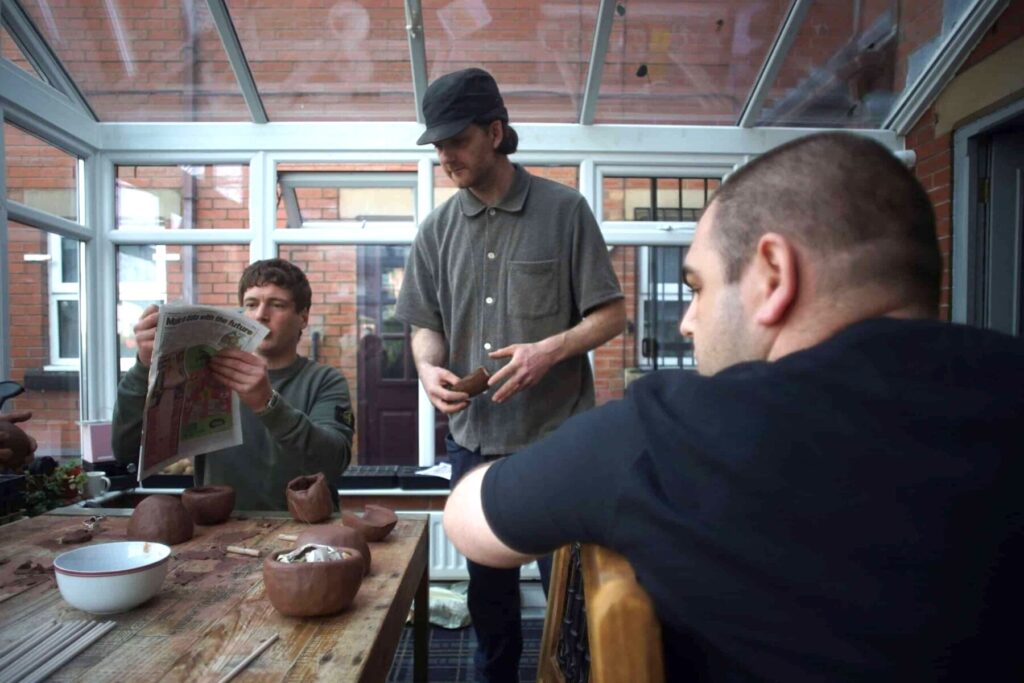
In Greater Manchester, a unique exploration has been undertaken to explore how the arts can assist in recovery from substance abuse. Manchester’s Castlefield Gallery has formed a unique partnership with Anew, a Greater Manchester based non-profit residential therapeutic community, to delve into ways that creative activities can facilitate recovery journeys.
This pioneering project was orchestrated by Portraits of Recovery, a contemporary arts organization in the UK that works with individuals on their recovery journey from substance use. Dominic Pillai, the curator of social engagement at Portraits of Recovery, elucidated their ethos involves viewing arts and culture as integral parts of people’s recovery journey, and instigating social change through arts and culture.
Pillai went on to explain their unique philosophy termed ‘recoverism’, which approaches recovery from a cultural and activist perspective. According to Pillai, the recovery community is often marginalized and surrounded by stigma. Hence, Portraits of Recovery aims to increase visibility, work with marginalized voices, and strive towards breaking down barriers to foster inclusion.
In what could be a first in the UK, the project included an artist residency in a treatment and recovery center. Designer Joe Hartley made bi-weekly visits to Anew, interacting with about 60 individuals. With the fluid dynamics of Anew, Hartley worked with people at different stages of recovery across disciplines like ceramics and photography.
During the early sessions, Hartley conducted a bonding exercise where participants created teapots—a significant symbol of the recovery process. This exercise was designed to prevent possessiveness or undue ownership. “One person would make the body, pass it on, the next would make a handle, the next a spout. All the pots were made by everyone, not by one person,” Pillai explained. This approach aimed to foster community, connection, and create a joyous atmosphere during the recovery process.
Art has the power to bring people together, build community, and instill a renewed sense of purpose, especially for those who often feel isolated due to their lived experiences with addiction. Pillai believes art is an essential medium that reflects our world view and can have diverse and profound meanings for the recovery community.
The project held especial significance for Hartley, who suffered the loss of his younger brother to substance abuse four years ago. He described the experience as highly emotional but overall positive, illustrating that struggles with substance abuse don’t always have to end tragically.
As the six-month residency draws to a close, the creative works generated during the project will be displayed at Manchester’s Castlefield Gallery until 19 October. Hartley, center, can be seen in the main image with two members of the Anew recovery community during a ceramics workshop, a testament to the transformative power of art in recovery.