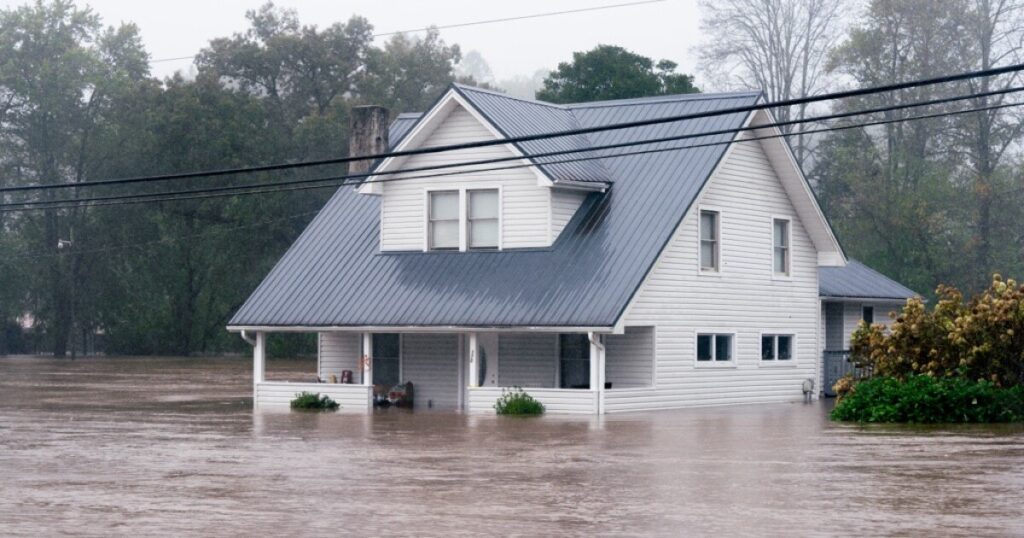
Homeowners across the nation may be facing uncertainty due to the expiration of the largest federal flood insurance program. The National Flood Insurance Program (NFIP), which accounts for a significant portion of the country’s flood insurance policies, has been inactive since September 30, following a Senate inaction to pass a budgetary measure to keep the government operational.
This development could potentially stall numerous home purchases, as highlighted by the National Association of Realtors. The impact of the government shutdown may leave current policyholders without coverage as their policies expire.
For properties in Special Flood Hazard Areas, carrying flood insurance is mandatory, especially if the purchase involved a federally backed mortgage. However, typical homeowners insurance policies do not provide flood coverage, and private insurers rarely offer alternatives, making the NFIP a crucial resource for many.
Anthony Smith, a senior economist with Realtor.com, emphasized the potential stagnation in real estate transactions in flood zones, stating, “Without the NFIP, home sales essentially are gonna be shut down in those markets.”
Western North Carolina’s housing market faces uncertainty, with approximately 1% of properties insured through the NFIP. For instance, Buncombe County has 941 NFIP policyholders, as per FEMA data. The coastal regions of North Carolina may experience more severe effects, where up to 44% of properties depend on the NFIP.
NC Insurance Commissioner Mike Causey advised consumers to explore private flood insurance options through their property insurance agents. “Private flood insurance options may be available to meet the requirement to purchase flood insurance for a real estate transaction,” he said. Homeowners with active claims are encouraged to file them promptly to avoid potential delays due to depleted funds.
Despite the lapse, ongoing reconstruction efforts in Western North Carolina following Hurricane Helene should not be hindered, as noted by Stephanie McGarrah of Renew NC. The organization, funded by the U.S. Housing and Urban Development, is dedicated to addressing long-term recovery needs in the region.
McGarrah mentioned, “If this issue is not resolved at some point then it could [have an] impact when we get to the closing process and we try to buy the policies. But we can work on the building and rehab before we get to that point.”