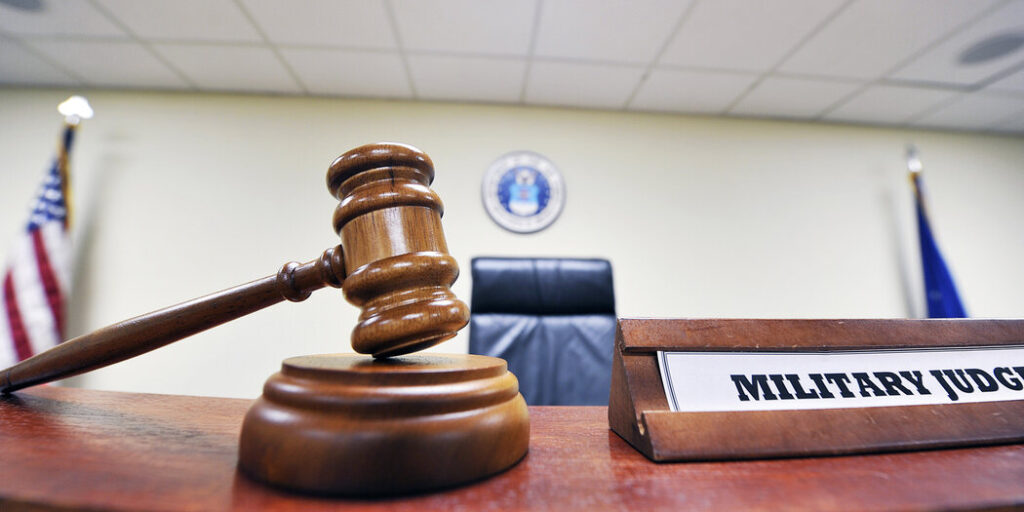
Concerns Rise Over Military Lawyers Appointed as Immigration Judges
In a move drawing considerable scrutiny, the Trump administration has reportedly authorized 600 military lawyers, known as judge advocate generals (JAGs), to serve as temporary immigration judges. Critics argue that this decision could compromise the fairness of immigration hearings and blur the distinction between military roles and civilian governance.
Immigration judges, part of the Department of Justice (DOJ), are specialized administrative judges responsible for conducting deportation hearings. A recent DOJ rule change now allows “any attorney” to be appointed as a temporary immigration judge, bypassing previous requirements for extensive adjudicatory, litigation, or immigration expertise. This modification has raised alarm among many observers.
The administration asserts that JAGs are essential for addressing the backlog of immigration cases. However, skepticism grows as the DOJ has dismissed over 80 career immigration judges this year, raising questions about the department’s true intentions. Observers suggest that these changes could be aimed at aligning the judiciary with the president’s policy objectives rather than ensuring impartial adjudication.
Understanding immigration law, which the Supreme Court describes as a “complex” and “legal specialty,” is critical for judges. Traditionally, immigration judges undergo six weeks of training, a year of mentorship, and two years of quarterly reviews. However, temporary judges, potentially serving for only six months, may receive just two weeks of training, according to reports.
Military and immigration judicial ethics further complicate the situation. While immigration judges must remain impartial, JAGs are trained to follow the Uniform Code of Military Justice, including obeying lawful orders. This requirement could pose ethical dilemmas, particularly when military lawyers, typically acting as prosecutors or advisors, are temporarily positioned as neutral adjudicators.
The complexity of ensuring fair hearings is compounded by constitutional concerns. The Fifth Amendment guarantees due process to everyone, including immigrants, as reaffirmed by the Supreme Court. Appointing JAGs with potentially limited knowledge of immigration law and procedures, selected by defense and justice officials, could undermine this principle.
Moreover, assigning JAGs to such roles may detract from their primary military duties, potentially affecting military readiness. Defense Secretary Pete Hegseth has previously dismissed senior JAGs he perceived as barriers to the administration’s agenda, though military lawyers play a vital role in maintaining legal standards.
This novel approach also raises questions about compliance with the Posse Comitatus Act, which limits federal military involvement in law enforcement activities without explicit congressional authorization. Historically, military attorneys have assisted the DOJ in government representation but have not served as impartial civilian adjudicators.
Concerns about legality extend to the lack of clarity on the legal grounds for such appointments, including whether JAGs will report to military or civilian authorities, and how funding for these roles will be managed. The DOJ’s budget constraints and the cap on immigration judges further limit the feasibility of appointing a significant number of JAGs.
Amidst legality concerns, the initiative also faces criticism for potentially eroding public trust in both the immigration and military systems. The president’s past deployments of military resources for immigration purposes have already raised concerns, and this latest move is perceived by many as a continuation of that trend.