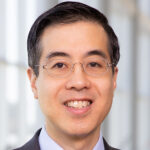
Thomas J. Wang Appointed as New Dean of U-M Medical School
In a significant leadership change, Thomas J. Wang, a distinguished figure in the medical academic community, is set to become the new dean of the University of Michigan Medical School starting September 15, 2025. His responsibilities will also include a professorship with tenure within the Department of Internal Medicine.
This appointment is scheduled to be formally presented to the Board of Regents on September 18.

Wang will be taking over from Marschall Runge, who has been the dean since 2016. Runge, who is stepping down from his roles and returning to faculty, has made his mark by being the first individual at the university to simultaneously hold the positions of dean, executive vice president for medical affairs, and CEO of Michigan Medicine.
Lauri McCauley, provost and executive vice president for academic affairs, along with David Miller, the current executive vice president for medical affairs and CEO of Michigan Medicine, acknowledged Runge’s contributions and thanked the search advisory committee in a community letter. Miller remarked, “We are thrilled to welcome Dr. Wang to our leadership team. His vision for interdisciplinary collaboration, scientific innovation, and transformative education aligns seamlessly with our mission to train the next generation of physicians, scientists, and healthcare leaders.”
Wang will report to both the provost and the executive vice president for medical affairs, as per the integrated structure of Michigan Medicine.
Laurie McCauley emphasized Wang’s capabilities, stating, “His scholarship encompasses the continuum from fundamental research to clinical application, but it is his ability to orchestrate complex academic enterprises that makes him uniquely qualified for Michigan Medicine. He is the visionary leader our Medical School requires as we address the most critical health challenges facing society.”
Currently, Wang is a professor and chair of the Department of Internal Medicine at the University of Texas Southwestern Medical Center, where he also holds the Donald W. Seldin Distinguished Chair. He joined UT Southwestern in February 2020, leading the Internal Medicine Department through the challenges of the COVID-19 pandemic, which included managing nearly 500 hospitalized COVID-19 patients daily across three hospitals during peak periods.
Expressing his enthusiasm, Wang stated, “I’m truly honored to join the University of Michigan and Michigan Medicine. I’m very familiar with the medical school’s legacy of outstanding patient care, discovery, and education, and it has been great to learn about all the ways the institution is building on that tradition. I’m excited to have the opportunity to contribute to this incredible community as the next dean.”
Wang’s credentials stem from an impressive academic background, having graduated summa cum laude from Harvard College, followed by a medical degree from Harvard Medical School. His postgraduate training includes residency and cardiovascular fellowship at Massachusetts General Hospital and a postdoctoral research fellowship at the Framingham Heart Study.
His career from 2003 to 2013 involved faculty roles at Massachusetts General Hospital and Harvard Medical School, where he advanced patient-oriented research in heart failure and transplantation. Later, from 2013 to 2020, he directed Cardiovascular Medicine and was physician-in-chief at the Vanderbilt Heart and Vascular Institute.
Wang’s research is centered on the natriuretic peptide system, cardiovascular biomarkers, and prevention. He has maintained consistent funding from the National Institutes of Health and has made the Clarivate/Web of Science Highly Cited Researchers List for six consecutive years.
As the seventh chair at UT Southwestern’s Department of Internal Medicine, Wang has overseen a growth in clinical volume and research expenditures by nearly 50%, and expanded training programs making the internal medicine residency the second largest in the country.
Nationally, Wang is the president-elect of the Association of Professors of Medicine and serves on several key committees, including the FDA Endocrinologic and Metabolic Drugs Advisory Committee and the NIH Human Studies of Diabetes and Obesity study section. He is also an elected member of the American Society of Clinical Investigation and the Association of American Physicians. His dedication to education has been recognized with awards such as the American Heart Association Genomics and Precision Medicine Mentoring Award in 2024 and the Outstanding Mentor Award from Mass General Brigham in 2012.
— Beata Mostafavi of the Michigan Medicine Department of Communication contributed to this report