Construction Halts Amid Cultural Concerns in Nevada
The quiet desert landscape of Mason Valley was interrupted by the sounds of protest and prayer as Indigenous activists stood firm against the construction of NV Energy’s Greenlink West project. On November 2, cell phone footage captured the moment when construction equipment was removed from the site, a temporary victory for the demonstrators.
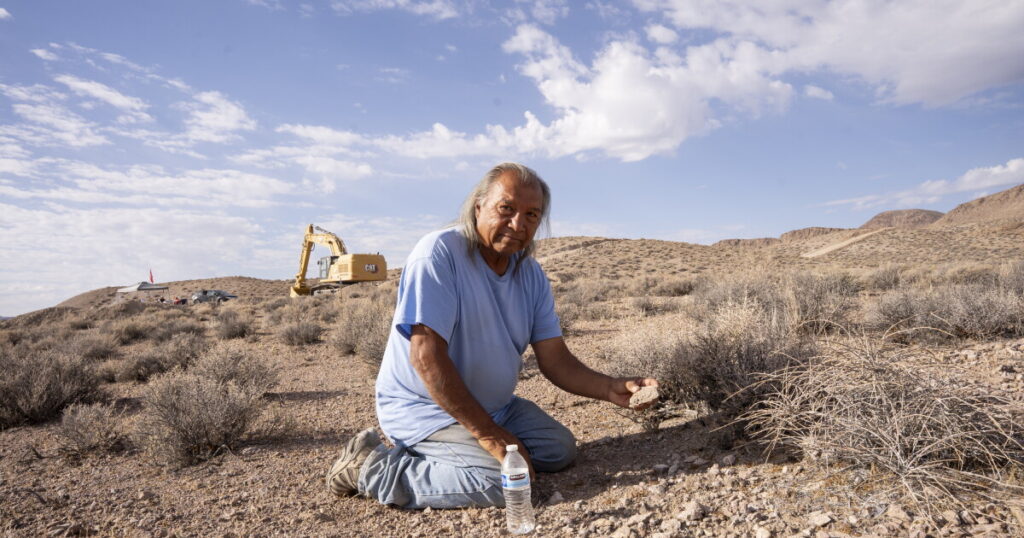
NV Energy initiated construction north of Yerington on September 29, but activities were quickly stalled by members of the Yerington Paiute Tribe and other Indigenous communities. Leading the charge was Vernon Rogers, a tribal elder, who emphasized the cultural significance of the area, which he described as a burial ground that should be protected.
“We’re here as, let’s say, protectors of the land, protectors of the water — to stop the desecrations of our area,” Rogers stated during a morning ceremony.
While the site appears to be a typical desert landscape, Rogers shed light on its historical importance, noting, “This is Wabuska and the river used to run through [here,] so that’s a [sic] old river bed right there. And our people used to live all along here.”
Planned to host NV Energy’s transmission lines, the area is part of the larger Greenlink Nevada initiative aimed at connecting Las Vegas with northern Nevada. Despite federal cultural and archaeological assessments, Rogers discovered overlooked artifacts such as a broken grinding rock and obsidian fragments, indicative of the area’s past human activity.
These artifacts, along with discolorations in the earth, suggest the presence of burial sites, where tools were often buried with the deceased. “So we have fragments all over through here where the ground is discolored and on top of them you see these broken pieces like this,” Rogers explained, highlighting the cultural heritage at risk.
In response to the disturbance, the Yerington Paiute Tribe, led by Chairman Ginny Hatch, demanded thorough consultation with decision-makers from NV Energy and the Bureau of Land Management (BLM). Hatch insisted, “Consultation with the tribe is actually decision makers meeting with decision makers and that hasn’t happened.”
A meeting did occur on October 14 with representatives from the BLM and NV Energy, but neither party provided comments for further inquiry by KUNR. Public records reveal that engagement letters had been sent to tribes since 2021, with several virtual meetings held prior to the project’s approval, although the Yerington Paiute Tribe did not attend these sessions.
The tribe formally protested against the project in 2024, but these objections were dismissed. In a decisive move, the tribal council adopted a resolution on October 21, opposing the Greenlink West across their traditional lands in Nevada.
Despite the removal of construction equipment, Rogers remains vigilant, fearing a resumption of the project. “We’re going to stay here and guard this area. Like I said it’s [a] burial area, so we don’t want to leave and then have them tear it up,” he affirmed, committed to preserving the site’s sanctity.