Wisconsin Faces Measles Surge: Health Officials Urge Early Vaccination for At-Risk Infants
Wisconsin is grappling with its most severe measles outbreak in 35 years, prompting state health authorities to advise early vaccinations for infants at risk of exposure. This recommendation comes after the tragic death of an infant in Grant County, marking the first measles-related fatality in the state since 1990.
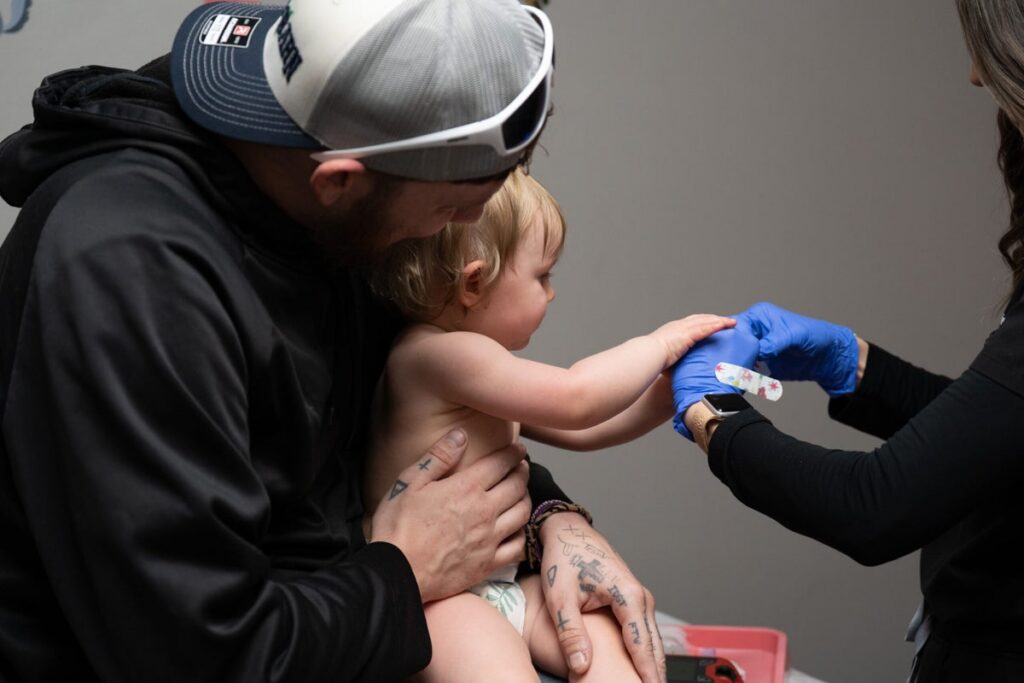
To combat the outbreak, the Wisconsin Department of Health Services has released new guidelines suggesting that infants aged 6 to 11 months should receive the measles, mumps, and rubella (MMR) vaccine, particularly if they belong to communities likely to encounter the disease. The Centers for Disease Control and Prevention supports this by noting the vaccine can be administered to children as young as 6 months.
While the first MMR dose is typically given between 12 and 15 months, Dr. Ryan Westergaard, chief medical officer and state epidemiologist for communicable diseases at DHS, emphasizes that early vaccination is not universally necessary. “We don’t do that for everybody because we’ve learned through lots of research that the vaccine doesn’t work as well when we give it before the first birthday,” Westergaard explained on WPR’s “Wisconsin Today.” He added, “But compared to no protection at all, it makes a lot of sense to give it at a younger age.”
This year, Wisconsin has witnessed 477 confirmed measles cases across 15 counties, predominantly in Grant and Lafayette counties. The outbreak is attributed to low vaccination rates, with Wisconsin holding the third-lowest measles vaccination rate in the nation.
Westergaard highlighted, “This is what measles does when it gets into a population where vaccination rates are low. It’s one of the most contagious infections we know of — it spreads very efficiently among people who aren’t immune.” He stressed the importance of getting the MMR dose to children before kindergarten to effectively eliminate measles.
In response to the outbreak, local health authorities, like Grant County’s Kessa Klaas, are proactively raising awareness and administering vaccines. Klaas reported receiving frequent calls and dispatching nurses promptly to administer vaccinations, emphasizing the gap in awareness among young parents due to the disease’s previous elimination in the U.S. in 2000, as noted by the CDC.
Despite a potential public exposure at the Marshfield Medical Center’s Weston emergency department, most cases remain within close-knit communities, including the Amish and Mennonite. Westergaard advises those suspecting measles exposure to verify vaccination status and contact healthcare providers by phone rather than visiting clinics directly.
Optimistic about controlling the outbreak, Westergaard stated, “I’m very confident we can get back to where we were before by getting out and strengthening all those systems of care.”