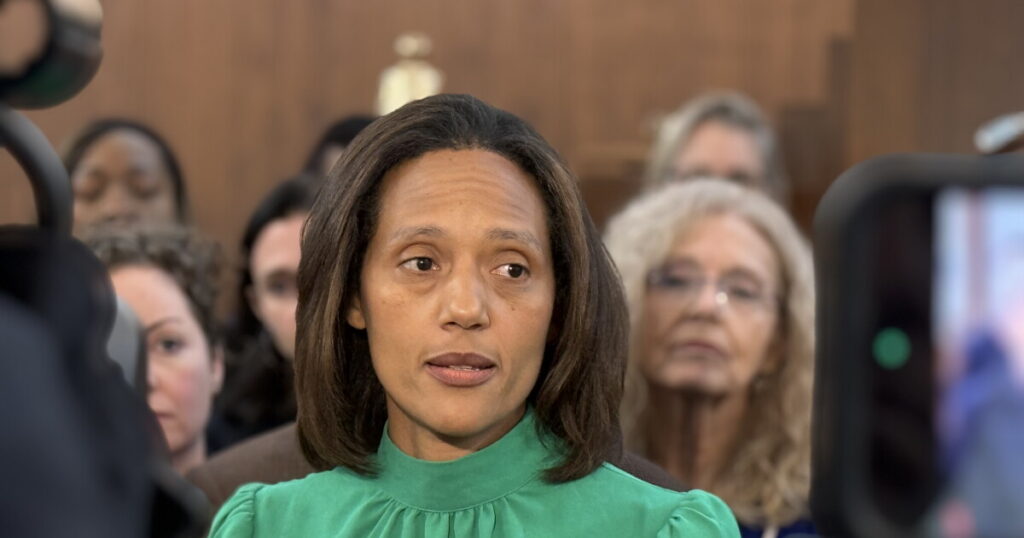
As the political landscape shifts, expectations for increased collaboration in the state legislature are on the rise. In the wake of last week’s election results, a closely divided Senate may lead to more bipartisan efforts, according to top Democrat, Sen. Sydney Batch.
Anticipating Bipartisanship in a Divided Senate
Sen. Sydney Batch, representing Wake, shared with WUNC News her anticipation of a more collaborative legislative environment. With a near-even partisan split, Republicans might find it challenging to pass legislation without Democratic input. Batch noted, “There are 10% of the bills that are actually Culture War bills, but the vast majority of issues like hemp, like healthcare, like education, don’t fall on partisan lines.”
Leadership Dynamics and Election Outcomes
Batch is aiming for another term as the leader of Senate Democrats, while Rep. Robert Reives, D-Chatham, has already secured support to become the next House speaker. Meanwhile, the Senate presidency is in flux pending the outcome of a tight race in the Lumberton area. Republican Sen. Danny Britt currently holds a slim lead over Democratic contender Catina Ham, with provisional ballots yet to be counted in Robeson and Scotland counties.
Batch commented on the election dynamics, highlighting the competitiveness of several races and the narrow margins that have surprised many. “Sen. Britt’s vote count has actually shrunk (since election night), but I don’t know that we’ll be able to overcome it,” Batch remarked.
The Financial Disparities in Campaigns
In terms of campaign finances, there was a stark contrast between the candidates. Britt raised $600,000, largely supported by the Republican Party, whereas Ham’s campaign was modest, amassing just $6,000. Batch reflected on resource allocation, stating, “With regards to the resources that we had, we spent them in the districts that we needed to make sure that we had the best opportunity to win.”
Future Leadership and Potential Policy Alignments
The Republican leadership selection remains undecided after Sen. Phil Berger’s primary loss. Candidates Todd Johnson, Brent Jackson, Ralph Hise, and Jim Burgin are all in contention. Despite the potential changes, Batch maintains positive relationships within the Republican caucus and foresees potential for new leadership styles.
The potential for bipartisan policy efforts in areas like independent redistricting is also on the table. Batch expressed hope that the changing political dynamics might advance efforts to curb gerrymandering, which remains a contentious issue: “I would hope that they would realize that if you’re not going to do it because that’s what the vast majority of North Carolinians want … then I would hope they would do it because they selfishly want to make sure that some of them come back.”