When natural disasters strike just before Election Day, the challenge of keeping democracy running becomes as urgent as the emergency response itself. Northern Arizona communities are learning that lesson firsthand after historic flooding swept through the region Sunday, raising questions about how voters will reach the polls amid damaged roads and ongoing safety concerns.
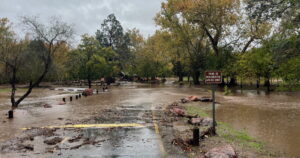
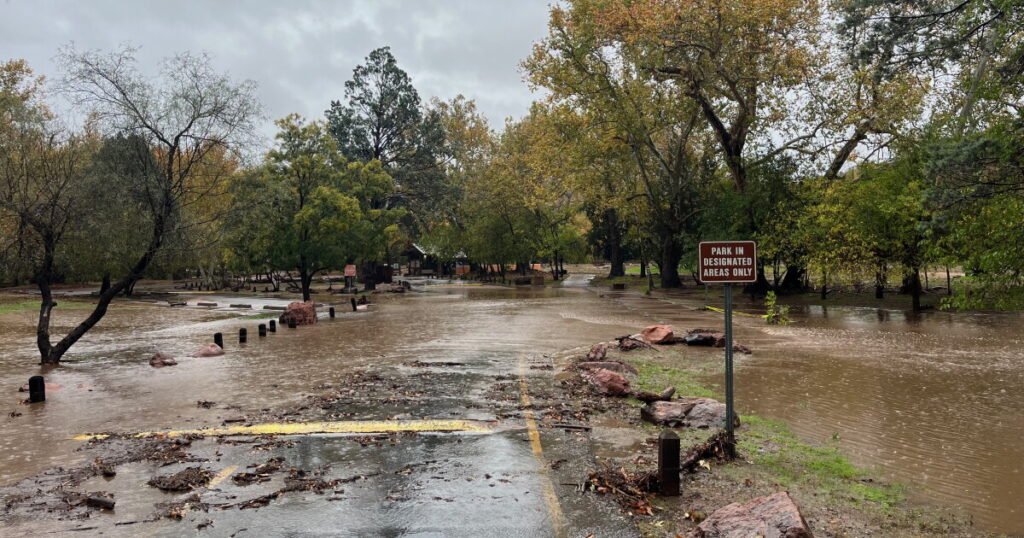
Heavy rainfall triggered widespread flooding across northern Arizona, forcing evacuations in Sedona, Camp Verde, Cottonwood, Winslow, and dozens of other communities. In Sedona, Oak Creek’s water level surged from roughly 3 feet to 18 feet, forcing more than 100 homes to evacuate. Some residents had to be airlifted from their rooftops by helicopter, as DPS conducted rooftop rescues in the hardest-hit areas.
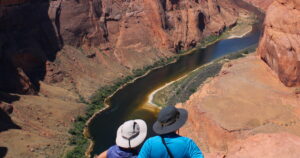
According to the National Weather Service, water flowing through Oak Creek reached 20,000 cubic feet per second on Sunday evening — more than double the typical maximum release from Glen Canyon Dam into the Colorado River, which usually peaks at 8,000 cubic feet per second. For context, Oak Creek’s normal flow is just around 200 cubic feet per second. The scale of this flood is genuinely extraordinary.
In Flagstaff, relentless rain overwhelmed storm drains and flooded roads throughout the city. Authorities are still searching for a man who fell into fast-moving floodwaters and did not resurface on the city’s southside. City administrative buildings and non-essential facilities are closed Monday, and residents have been urged to avoid unnecessary travel.
Officials Describe the Flooding as “Unprecedented”
Coconino County Emergency Management Director Tim Carter said officials are still working to understand the full scope of the damage, which will only become clear as floodwaters drain from affected areas.
“The one word that keeps coming through is unprecedented,” Carter said. “Some folks have said they’ve been working in their positions and their areas for 20, 25 years, and I’ve never seen flooding like this before.”
Carter said the county may pursue a local emergency declaration once the full impact is assessed. He also asked the public to be patient as roads slowly drain and conditions improve.
Beyond Sedona and Flagstaff, the flooding has affected communities across a wide stretch of northern Arizona. Yavapai County issued evacuation orders for Rim Rock, Camp Verde, and Clarkdale. In Navajo County, Winslow officials evacuated residents in the Ames and Bushman Acres neighborhoods along the Little Colorado River. The White Mountain Apache Tribe evacuated communities along Cibecue Creek and in Cedar Creek, East Fork, and along River Road.
In Prescott, heavy rainfall caused Watson Lake to swell and overflow Granite Dam. City crews had already opened several outlets from the lake before the storm arrived to create room for incoming stormwater. Officials say the dam is built to handle up to 10 feet of water flowing over it and that personnel are monitoring the situation closely.
The American Red Cross opened emergency shelters in Sedona, Show Low, Camp Verde, Prescott, and Payson. Evacuation shelter locations include Cibecue Elementary School, Blue Ridge High School in Pinetop-Lakeside, and the Show Low City Campus Gym. Storms also knocked out power to thousands of APS customers in Williams and Bellemont Sunday afternoon.
Election Day Access Becomes a Priority
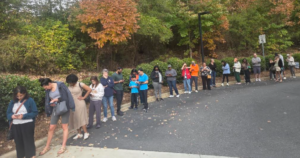
With Tuesday’s Election Day just around the corner, local officials are working to ensure that damaged and flooded roads don’t become a barrier to the ballot box. Schools in Camp Verde, Sedona, Oak Creek, Show Low, and Window Rock canceled classes Monday to allow roads to improve. Schools in Flagstaff and some other communities delayed opening by two hours, giving students, families, and staff safer travel conditions.
Emergency management officials say clearing roads for voters is being treated with the same urgency as the recovery effort itself. Carter was direct about this commitment.
“We know where the polling places are and we’re focusing heavily to make sure we can provide the voters access to those polling places,” Carter said. “Really ensuring that there’s as little to minimal interruption to the election process as possible.”
This is a critical reminder of how unexpected events — whether natural disasters, infrastructure failures, or other emergencies — can threaten voters’ ability to participate in elections even when every other safeguard is in place. Ensuring that polling places remain physically accessible is a foundational part of running a fair election, and officials in northern Arizona are treating it as such.
The National Weather Service says rain is expected to move out of the region by Monday, but warns that rivers and creeks will continue running high, meaning flood risks haven’t fully passed. Officials are reminding residents never to drive through flooded roadways — a warning reinforced after public safety teams had to rescue occupants of at least one vehicle stuck in floodwaters in Munds Park on Sunday. Coconino County also saw flooding impact Munds Park, Kachina Village, and communities across tribal lands, in addition to the Flagstaff area.
Reporting contributed by Adrian Skabelund, Bree Burkitt, Chris Clements, Ryan Heinsius, and KNAU Staff.