This is the first of two profiles of Asheville’s mayoral candidates. The second features incumbent Esther Manheimer.
Kim Roney’s journey from reporting the news to making it signifies her profound commitment to Asheville’s community. As a founding member of community radio station Asheville FM, Roney previously managed a news show that delved into local government affairs. Today, she stands as a two-term member of the Asheville City Council, challenging incumbent Mayor Esther Manheimer for a second time.
Roney emphasized the need for a shift in leadership, stating, “It’s time for change. And I feel honored to hold the container for hope.” Her political involvement began a decade ago, motivated by a desire to influence headlines. Her initial foray into public service included roles on the city’s Multimodal Transportation Commission and Transit Committee, leading to her successful bid for a council seat in 2020.
In her previous mayoral run in 2022, Roney fell short by about 3,000 votes. This time, her campaign strategy focuses on grassroots engagement, with a notable increase in door-to-door outreach, reaching over 10,000 homes.
Roney remarked, “At minimum, we’re having conversations with our neighbors, deepening relationships, changing hearts and minds and knowing each other better. And so that’s already a win.” This approach mirrors her vision for governance, which prioritizes public involvement in decision-making processes.
A More Affordable Asheville
Roney’s campaign heavily focuses on affordability, a personal issue given her upbringing in “deep poverty in the rural south.” Her professional background includes music teaching and bartending at local venues, where she gained recognition as the “Best Bartender” in a local award.
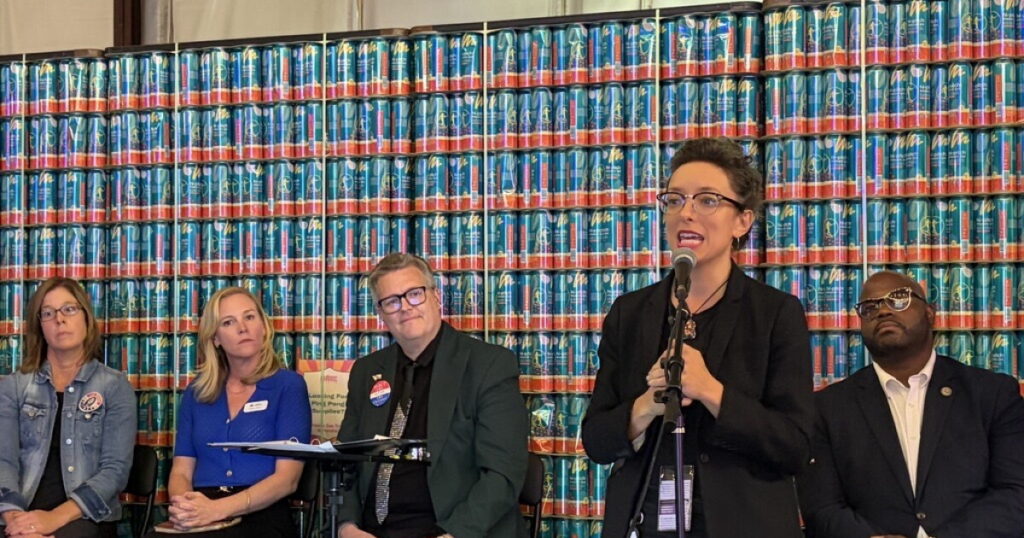
At a Leadership Asheville candidate forum, Roney stated, “When we ensure that Asheville is a safe, affordable, sustainable home for the people who live and work here, we can protect the very soul of our city.” Public transportation is a cornerstone of her affordability strategy. She advocates for enhancing the transit system, having relied on public options since donating her car to charity in 2008.
Roney explained, “Transit is at the intersection of economic mobility, equitable access and environmental stewardship. And it is really kind of absurd that we don’t do it better.” Although her plans for a fare-free transit system have yet to materialize, she continues to push for regional collaboration to enhance transit options.
“What we can do to make our transit service better is partner with the county. I think we should have a regional transit system,” she echoed at a recent forum. Roney also advocates for strategic housing development near transit corridors and targeted housing for workers in various sectors.
A Different Outlook on Policing
Roney’s vision for Asheville’s public safety involves reimagining policing strategies, often questioning expansions in the Asheville Police Department’s budget and authority. She has consistently opposed measures like surveillance technology and restrictive ordinances against panhandling.
Roney champions a model similar to Durham’s HEART initiative, which integrates mental health professionals into emergency responses. Asheville has made strides in this direction, albeit on a smaller scale. Roney urges further investment in such programs, advocating for the establishment of an Office of Community Safety.

Doing the “People’s Work in Public”
Roney endorses public involvement in governance to prevent costly oversights, citing the Weaver Park renovation as a cautionary tale. She advocates for transparency by ending “three-by-three check-ins,” private meetings among council members that, while legal, lack public documentation.
“If we’re ending the private, behind-the-scenes, borderline illegal meetings of Council right now that are fully staffed with no minutes and do the people’s work in public, I think we’ll get better outcomes,” she asserted. However, Mayor Manheimer disputes this view, highlighting the city’s efforts to enhance transparency through various public engagement initiatives.
“I Am Not Alone in Community”
Roney’s ability to build coalitions has been questioned, but she emphasizes her community support and collaborative successes within the council. Her motion to end the Flock camera contract, which passed with majority support, exemplifies such coalition-building efforts.
“So the mayor’s one vote on council. What I can do is set the table for success,” Roney stated. She believes that involving the public more directly in governmental processes will lead to better outcomes.