Debate Over Fairness of EV Road Fees Sparks Discussion
As electric vehicles become more prevalent, the question of how to equitably fund road maintenance is driving a debate among EV owners and policymakers. Some drivers of electric vehicles (EVs) in Sparks, Nevada, are advocating for a fairer approach to road maintenance fees, questioning the proposed flat fee system.
Rob Delia, a Sparks resident and former commuter, opted for an electric Chevy Bolt to avoid the pain of traffic. Delia criticizes the flat fee as “lazy,” suggesting that fees should be based on actual mileage driven.
Lucia Starbuck / KUNR Public Radio
“It will pass mostly because people are really mad about the price of gas right now, and if they can make somebody else pay too, I think a little Schadenfreude there might be on their agenda, but I don’t blame them,” Delia said.
Currently, 42 states impose special registration fees for EVs, according to the National Conference of State Legislatures. Some states, such as Utah, offer alternatives like mileage-based fees.
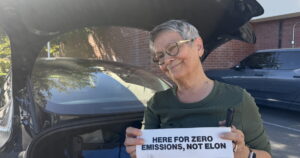
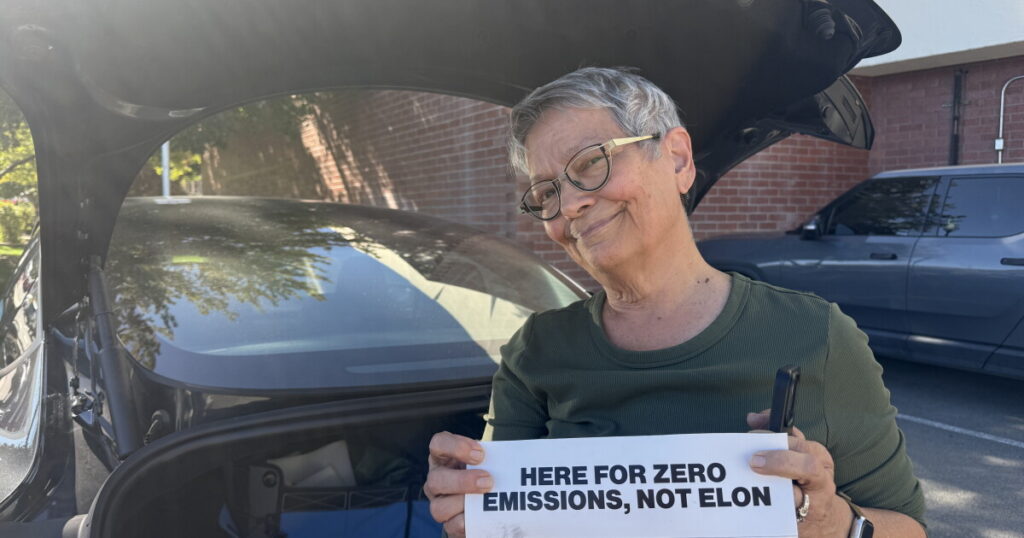
Cindy Ryan, a Tesla driver, supports mileage-based fees, suggesting an odometer check as a fair method for determining road fees. “You can take a picture of your odometer when your registration comes due if you’re afraid of Big Brother spying on you. I think the flat fee is manifestly unfair, especially to someone like myself who’s retired; I don’t drive very many miles a year,” Ryan said.
Proponents of flat fees assert that heavier EVs contribute more to road wear, though research indicates that trucks and buses are the primary culprits. Meanwhile, Ken Andrews, a Tesla and Subaru EV owner in South Reno, worries that a flat fee could discourage EV purchases, arguing for incentives to promote cleaner air and combat climate change.
Lucia Starbuck / KUNR Public Radio
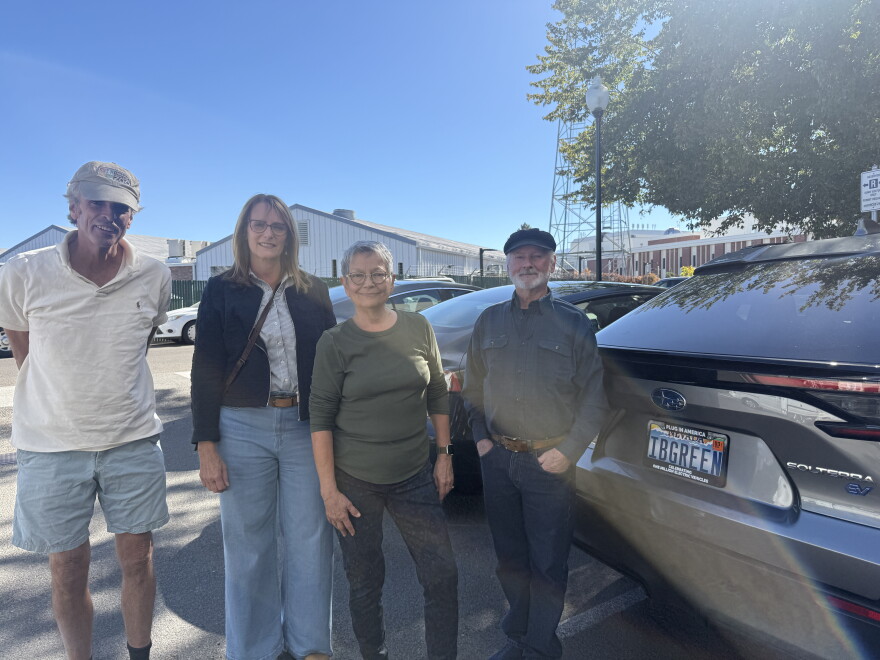
The U.S. Environmental Protection Agency states that electric vehicles generate fewer emissions over their lifetime. However, not all EV owners oppose the flat fee proposal. Bob Alessandrelli, driving a Ford Mustang Mach-E, believes in paying his share for road usage, stating, “I drive the roads. I should pay for the roads, and if they’re going to tax me, I’ll pay it.”
How much will it cost?
The Washoe County Regional Transportation Commission (RTC) initiated the ballot question, with county commissioners approving its presentation to voters. If approved, the measure will head to the state legislature. Government Affairs Officer Paul Nelson explained that a Guinn Center report found an annual fee to be the swiftest and most economical solution, though no specific cost was provided.
Nelson anticipates an annual fee of $250 for EVs and $125 for hybrids, aligning with national state registration fees ranging from $50 to $270. This fee would be slightly more than half of what gasoline vehicles typically pay in gas taxes in Washoe County.
Lucia Starbuck / KUNR Public Radio

Washoe County levies the highest county gas tax in Nevada, with drivers contributing about $1.08 per gallon. Approximately 58 cents of this goes to the county, funding road projects. However, RTC faces a projected $1.4 billion shortfall over the next decade due to inflation, aging infrastructure, and decreased gas sales driven by fuel-efficient vehicles and EVs.
Electric and hybrid vehicles constitute nearly 6% of Washoe County’s registrations, with numbers growing dramatically in recent years. “Over the last five years, we’ve seen the revenue lost because of the fuel tax not collected is right around $15.5 million, and that can go a long ways for projects and pavement preservation and things like that,” Nelson noted.
What do lawmakers and candidates say?
The political climate plays a crucial role in the future of this proposal. While Democratic lawmakers and Gov. Joe Lombardo have refrained from commenting before the vote, the governor previously suggested a gas tax suspension that did not advance. “If there’s a chance that he’ll sign it, it would be in his second term, because he doesn’t have the political fallout; in essence, this is a tax, and he did promise no taxes,” Nelson said.
At a recent forum, Democratic candidate Aaron Ford expressed openness to the idea, emphasizing the need for fairness in determining EV contributions to road maintenance. Republican Washoe County Commissioner Clara Andriola, an EV owner herself, supports the measure, acknowledging her vehicle’s road usage without corresponding fees.
Lucia Starbuck / KUNR Public Radio
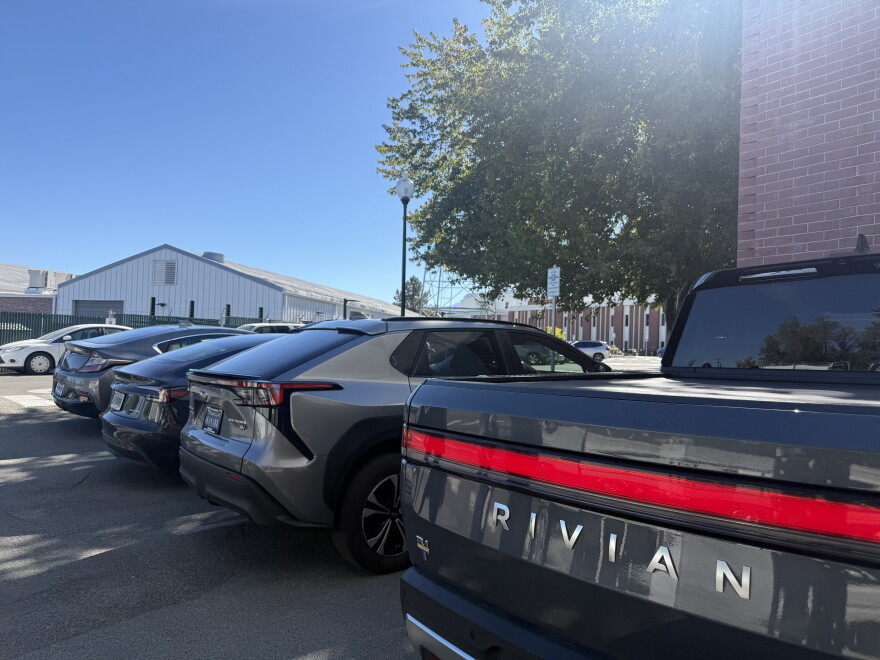
If approved, the measure could be presented during the 2027 Nevada Legislative Session for potential modification or state-wide application. The long-term aim is to transition to a mileage-based fee system for all vehicles.