Every election cycle, questions swirl about whether voting machines can be trusted to count ballots accurately. In Michigan — a state with major races on the ballot — local election officials are taking a transparent, public-facing step to answer those questions before a single vote is cast.
Michigan is holding one of its biggest election years in recent memory. Voters across the state will choose a new governor, U.S. senator, attorney general, and secretary of state, among other critical offices. With so much at stake, and with public concern about election security running high, the integrity of the vote-counting process has never been more scrutinized.
What Is a Public Accuracy Test — and Why Does It Matter?
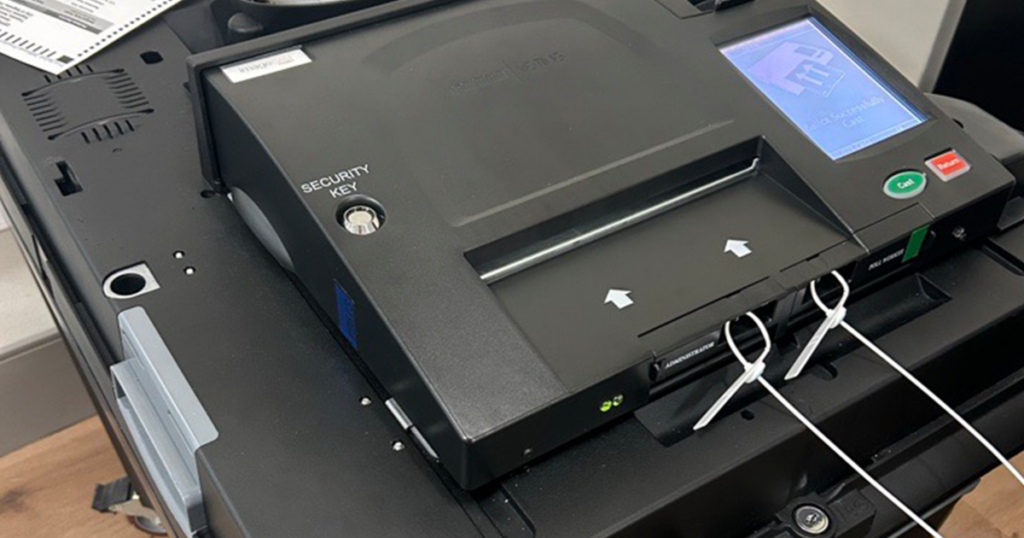
Before election day, Michigan law requires local election officials to test their voting equipment in public settings. These tests are designed to verify that tabulation machines are working correctly and not carrying over any erroneous data from previous elections or testing periods.
One visible part of this process is the printing of what’s known as a “zero tape” — a printout from the vote tabulator that confirms no votes have been counted before ballots are processed. It’s a straightforward but important safeguard: election workers and any members of the public who attend can see, on paper, that the machine starts from zero.
Reporter AJ Jones from WCMU Public Radio attended one of these public accuracy tests in Saginaw on October 13, 2026, documenting the process firsthand. The test offered a close-up look at how election administrators work to build public trust through transparency — letting observers watch the machines perform before any real ballots are run through them.
This kind of pre-election testing is a routine but essential part of election administration. It gives citizens, candidates, and oversight organizations the opportunity to witness the process directly, rather than simply taking officials’ word for it. In an era when misinformation about elections spreads rapidly, these public demonstrations serve as a concrete, verifiable record that machines are functioning as intended.
Election Security in Focus
The testing process in Michigan reflects a broader national effort by election administrators to demonstrate that voting systems are reliable and tamper-resistant. As more Americans express doubt about election outcomes — often fueled by unverified claims circulating online — officials are increasingly opening their processes to public observation as a way to rebuild confidence in the system.
Michigan’s major statewide races this cycle make the stakes especially high. When voters head to the polls, they need to trust that their choices will be recorded and counted correctly. Public accuracy tests are one of the tools election officials use to make that case — not just with words, but with documented, observable action.
Coverage of this story and other issues affecting central and northern Michigan communities was reported by the team at Between the Lakes, WCMU’s flagship podcast, produced with the support of Rick Brewer and other members of the WCMU newsroom. Local journalism that covers election administration — explaining how these systems work and why they matter — plays a vital role in keeping voters informed and engaged.
If you value this kind of on-the-ground election coverage, you can support it by making a gift to WCMU. You can also subscribe to the Between the Lakes newsletter, delivered every Saturday morning, or find out how to listen to your local WCMU radio station. Additional stories from WCMU journalists are available on the WCMU website.
WCMU is a public media organization affiliated with Central Michigan University. For more information, visit their contact page, review their Privacy Policy, Transparency and Financial Reports, Public File, or find ways to support local public media.