When a psychology student loses the chance to shadow a mental health provider, or a medical researcher is blocked from a critical fellowship, the ripple effects reach far beyond a single campus — they touch the future of patient care, community health, and the pipeline of professionals that American families depend on. A new federal court battle is drawing attention to just how deeply immigration enforcement decisions can shape the healthcare workforce and the well-being of communities across the country.
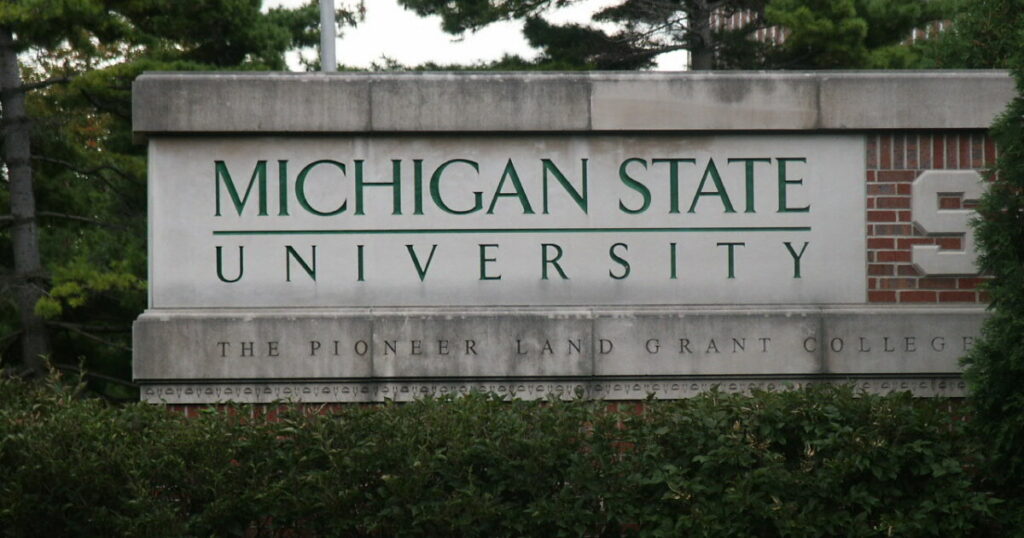
Michigan State University filed a declaration in federal court Monday backing a lawsuit brought by four higher-education organizations that challenges the Trump administration’s sudden crackdown on work and training opportunities for international students. MSU is a member of two of the four groups behind the suit.
At the center of the dispute are rules governing F-1 visas — the visa category used by students attending academic institutions in the United States — and their access to internships, clinical placements, practicums, and other hands-on learning experiences. These aren’t just résumé-builders. For students training to work in healthcare, mental health, research, and other fields that directly serve American families, these placements are often where learning becomes practice and practice becomes patient care.
A 35-Year Policy, Changed Overnight
The lawsuit, which MSU is now supporting, claims that the Department of Homeland Security
“abruptly changed a position that the federal government had held for more than thirty-five years … while simultaneously threatening college and university officials with criminal prosecution.”
Under longstanding policy, immigration enforcement rules allowed international students to participate in experiential learning that was “an integral part of an established curriculum.” Historically, that meant both elective opportunities taken for academic credit and experiences required to complete a degree — including clinical rotations, research fellowships, and field placements in healthcare and social services settings.
That changed in August, when Immigration and Customs Enforcement issued two broadcast messages instructing universities to only approve a work experience
“if its absence would make the attainment of a degree an impossibility and if the work associated with [the experience] is required for all students pursuing that degree.”
In practical terms, the lawsuit argues, this erases a wide range of clinical and community-based learning opportunities — the very placements that train future doctors, mental health counselors, researchers, and other healthcare professionals. The suit offers pointed examples of what the new standard would eliminate:
“a psychology student shadowing a mental health provider”
or
“a law student interning in a judge’s chambers.”
For communities already facing mental health provider shortages, losing even one cohort of clinical trainees has real consequences for the families who will one day need those services.
Real Students, Real Losses — and Real Gaps in Community Care
Krista McCallum Beatty, director of MSU’s office for international students, filed a declaration alongside leaders and administrators from 11 other colleges and universities, putting human faces on what might otherwise seem like an administrative dispute.
“MSU has welcomed international students to campus for over 150 years and benefited greatly from their many contributions,”
McCallum Beatty wrote.
“Fewer international students will be a loss felt by the entire MSU community.”
In a typical year, MSU approves experiential learning placements for roughly 500 of the 4,000 students on the East Lansing campus who hold F-1 visas. The new ICE directives arrived the week before fall semester classes started — a moment McCallum Beatty called
“a critical time.”
Her office was forced to deny 62 pending applications almost immediately.
“Experiential learning opportunities, such as internships, practicums, and clinic or field placements, are a critical part of MSU’s educational mission,”
McCallum Beatty wrote.
The human toll documented in her declaration is striking — and carries long-term implications for healthcare and research capacity in communities that depend on university-trained professionals:
A doctoral student in chemistry was forced to turn down
“two prestigious fellowships that would have allowed them to lead research projects”
— the kind of medical and scientific research that can lead to breakthroughs in treatment and patient care. An undergraduate computer science major was unable
“to complete a competitive internship with a Fortune 500 company.”
And a doctoral music student who was scheduled
“to teach a class at a nearby university”
not only lost
“a valuable learning experience, but … left the university without an instructor and having to cancel the course.”
According to McCallum Beatty’s declaration, the new eligibility requirements
“are causing ongoing harm to MSU”
— harm that extends outward to the communities, hospitals, clinics, and schools that benefit from the work these students do.
This legal challenge comes amid broader trends in declining international enrollment at Michigan universities, with experts noting that Trump administration policies have deterred international students from choosing American schools. Earlier, international students at Michigan universities had their visas revoked without warning — a pattern that further erodes the trust that brings globally talented researchers and future healthcare workers to American campuses in the first place.
Threats of Criminal Prosecution Hang Over University Officials
The lawsuit doesn’t just challenge the policy change itself — it challenges how that change was delivered. ICE framed its August 12 broadcast as a
“reminder”
of existing requirements, claiming it had noticed an increase in authorizations
“that do not meet regulatory requirements”
and was
“increasing its scrutiny … to ensure compliance with federal regulations.”
But the lawsuit describes this framing as a substantive policy overhaul disguised as a routine clarification — passed off
“as mere ‘reminders’ of existing obligations, as if its new standards had been the rule all along.”
The broadcast also warned that schools failing to comply could lose the ability to enroll F-1 students at all, and underscored that administrators who approve training programs do so
“under penalty of perjury.”
As a result, the lawsuit contends, administrators
“now face threats of criminal liability for authorizations that complied fully with the government’s own rules,”
and institutions
“have had no choice but to comply immediately, given the government’s threat to strip their ability to enroll international students at all.”
The coalition of higher-education groups is asking a federal judge to strike down the new eligibility requirements laid out in ICE’s broadcasts and to affirm that eligible training opportunities can include elective experiences taken for credit — including the clinical, research, and community placements that prepare the next generation of healthcare providers. ICE told Michigan Public that the agency
“does not comment on pending litigation.”
The outcome of this lawsuit could shape the educational and professional futures of thousands of international students — and, in turn, the healthcare workforce, research capacity, and community health resources that American families rely on every day. Other significant stories unfolding in Michigan and beyond include a look at Michigan Supreme Court candidates, an update on Charlotte teachers negotiating over grievance procedures, threats to Flint water crisis settlement claims, a native grassland seed collecting initiative, a story on how the affordability crisis is hitting young voters, and reporting on how a ‘Medicare for All’ message is resonating with voters burdened by medical bills.