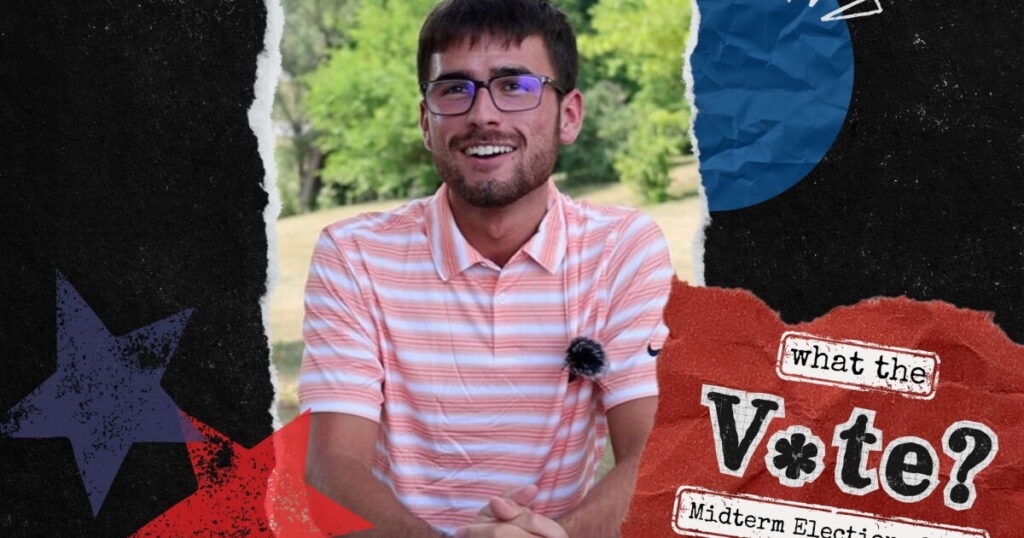
For millions of young Americans, the 2026 midterms aren’t an abstract political exercise — they’re a direct response to the rising cost of simply getting by. The affordability crisis has become one of the defining forces shaping how Gen Z voters view elections, and why some are choosing to show up at the polls.
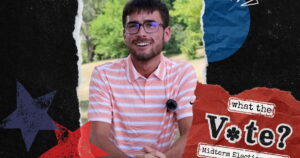
Cody Bannick knows both worlds of Michigan well. He grew up in Bad Axe, a small town in Michigan’s Thumb region where conservative politics run deep, and now attends Wayne State University in Detroit as a junior, where he’s involved with the campus civic engagement group Warriors Vote. That journey between two very different communities has sharpened his understanding of how political identity forms — and how economic pressure shapes real lives.
Bannick reflects on the 2024 election results from his hometown with a mix of honesty and frustration.
“If you look at the map, in 2024, when Trump got elected, it’s very red. I think there’s only a couple people that voted for the candidate Kamala Harris. And, it was very disheartening, you know, because I feel that — where I’m from — everyone is persuaded by their parents.”
As someone whose political views lean Democratic, Bannick says he often feels like an outlier among family and friends back home.
“It’s kind of like I’m the black sheep of the family, but that’s what makes me different.”
A Generation That Feels Unheard
Beyond political disagreements, Bannick points to a broader frustration that he believes keeps many young people away from the ballot box: the feeling that their voices simply don’t register with older adults. He argues that this disconnect has real consequences for voter participation among his peers.
“It’s like adults don’t see us younger adults as adults. And I think that we’re all very smart. We’re all very educated. We all believe in different things. And I think that’s why some students don’t feel like they want to vote, because their vote doesn’t matter.”
That sense of being dismissed matters for democracy. When eligible voters — especially new voters entering the political process for the first time — believe their participation is meaningless, civic engagement suffers. Understanding what drives young people toward or away from the polls is a key part of ensuring broad, representative participation in elections.
When the Cost of Living Becomes a Voting Issue
For Bannick, one issue cuts through all the political noise: affordability. He’s not speaking in policy abstractions. He says
“it’s tough out there,”
and he means it personally.
“I was gonna go find an apartment myself and rent was $900. I know my friends are doing it, but their parents are helping them a little bit.”
Coming from a single-parent household, that parental financial backup isn’t available to him. Instead, Bannick has taken on those responsibilities himself, working long hours alongside his mother to keep their household afloat.
“We don’t have that second income that’s coming in. That’s why my mom has to work those 12 hours, and that’s why I’m working 80 hours to help support my mom.”
This kind of economic reality — where young adults are working extreme hours just to cover basic expenses — is part of what’s motivating 2026 midterm election participation among Gen Z voters across Michigan. When day-to-day survival is shaped by policy decisions, elections stop feeling distant and start feeling urgent.
Bannick is clear about what’s bringing him back to the polls this cycle.
“The reason I’m voting this term, and that I voted last term, is to see change. I really want to see change in the world, because I want our world to go back to how it was three years ago. You know, where things are affordable, families are enjoying life.”
His story is part of a broader Stateside series from Michigan Public reporter Jaden Jefferson, which has been tracking young Michigan voters ahead of November. Other installments have featured a Grand Rapids voter unafraid to break party lines, reported by Nicholas Alumkal and Michelle Jokisch Polo; a young conservative at Michigan State University who sees the American dream “withering away,” reported by Isabella Jacob and April Van Buren; and a Kalamazoo artist calling for more opportunities for young people, reported by Yeaniva Seisay.
Across the state, related coverage continues to examine how economic and health care concerns are driving voter behavior. A separate report explores how a ‘Medicare for All’ message is attracting midterm voters buckling under medical bills, while Michigan voters are also tracking key statewide races including a gubernatorial debate between James and Benson, a U.S. Senate debate between Barrett and Lawrence, and the Michigan Supreme Court race featuring Chief Justice Megan Cavanagh. Michigan’s top election official has also sought to address public concern, as Attorney General Nessel reassured Michiganders of voting security ahead of November. Locally, Ann Arbor City Council voted to oppose a proposal that would create a municipal utility board, adding another layer to the civic decisions facing Michigan residents this election season.
Bannick’s faith also shapes the way he approaches these differences — he believes that remaining open to new perspectives is essential, even when communities resist change. For him, casting a ballot is not just a civic right. It’s one of the few tools he has to push back against a system that he feels isn’t yet listening to people like him.