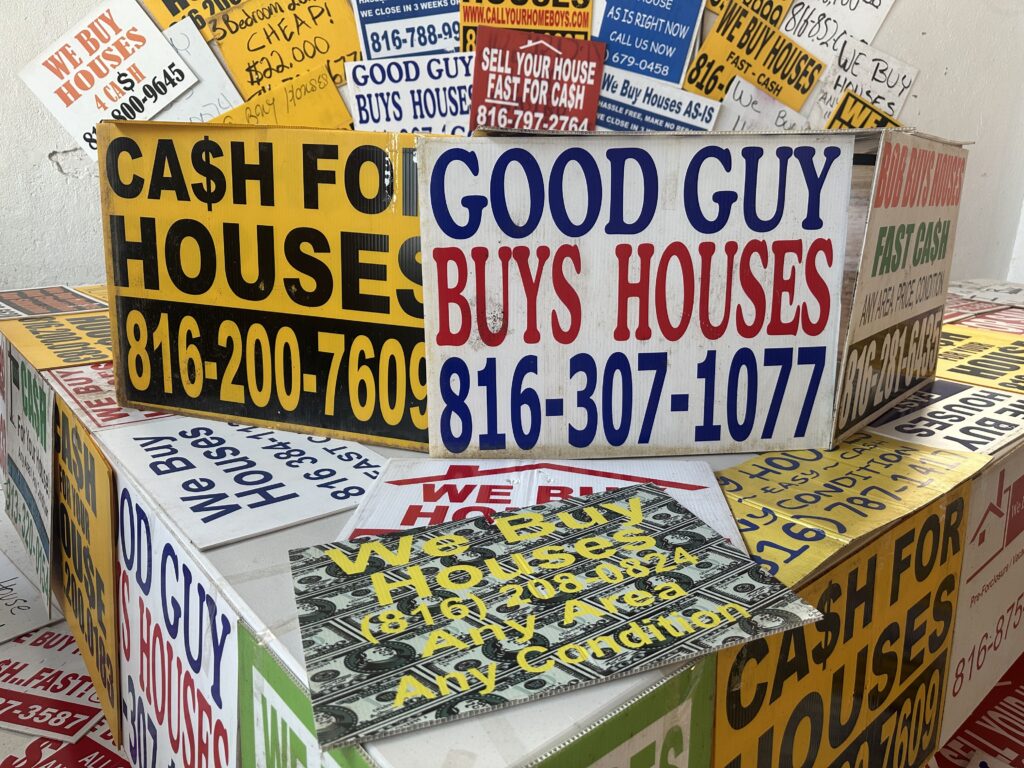
WE BUY HOUSES. CASH 4 HOMES. FA$T CA$H.
These enticing offers for quick cash and seamless home sales can mislead homeowners, stripping them of equity. Advocates are raising concerns, prompting states to clamp down on these cash-for-home operations. Real estate wholesaling is distinct from traditional home sales, focusing on unlisted properties and acting as intermediaries. Critics say this practice often deprives homeowners of full property value.
Increased scrutiny from state lawmakers reveals worries about homeowners’ understanding of the wholesaling process. At least 15 states, such as Missouri, have introduced regulations requiring wholesalers to disclose details to sellers. Missouri’s new law mandates a written disclosure 14 days before closing, informing sellers of potential below-market offers and encouraging legal consultation.
Missouri Rep. Chris Brown emphasizes transparency, stating, “We’re just trying to make sure that there’s transparency there, and that the seller of the property is in fact educated and fully informed as to what the wholesaler plans to do with the property.” He notes wholesalers often target financially troubled homeowners who underestimate their property’s worth, leading to significant equity loss.
Critics argue that wholesaling targets minority, low-income, and elderly homeowners. Terrell Walls, president of the Greater Kansas City Association of Real Estate Brokers, likens predatory wholesaling to historical redlining. States like Maryland, Ohio, and Texas now require wholesalers to disclose information to sellers, while others mandate real estate licenses for wholesalers, ensuring regulatory oversight.
‘Stop trying to hide’
Jeff Watson of the National Real Estate Investors Association emphasizes the need for ethical business practices in wholesaling. Honest wholesalers provide valuable services, especially for distressed properties. However, Watson acknowledges that transparency and ethical conduct are not widespread in the industry.
With new laws, wholesalers must better explain their role and value to sellers. Jerry Norton, a real estate investor, encourages openness, stating, “Stop trying to hide what you’re doing. Address the elephant in the room.” Wholesalers have acknowledged the industry’s shifting landscape, aiming for greater transparency.
Consumer confusion
The AARP has promoted legislation to regulate real estate wholesaling, advocating for licensing, appraisals, and restrictions on aggressive marketing. Jenn Jones of AARP stresses the importance of protecting homeowners’ wealth, especially for older adults relying on home equity for financial security.
Jones highlights the need for sellers to understand potential buyers and have time for independent valuations. She recounts instances of homeowners selling properties for far less than their worth due to pressure from wholesalers.
Rhode Island Sen. Robert Britto, backed by the Rhode Island Association of Realtors, introduced a law requiring wholesalers to hold real estate licenses, ensuring state oversight. Rebekah Wagoner of the trade group underscores the importance of transparency, noting that consumers often mistake wholesalers for licensed professionals. Licensing would provide a regulatory framework to protect consumers from unfair practices.