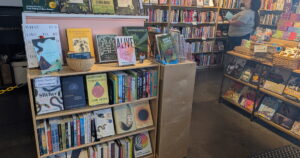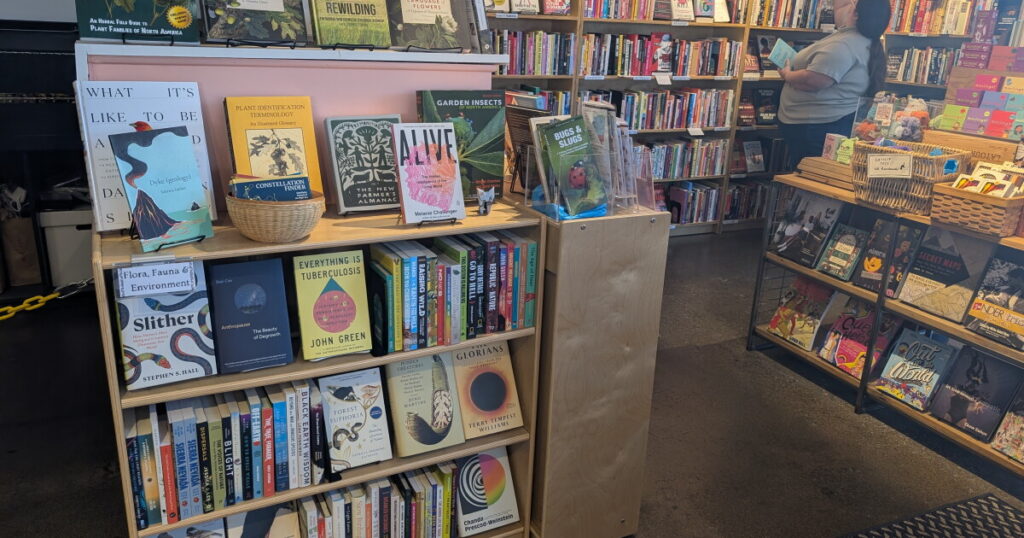
Across the country, a quiet revolution is taking place on Main Streets and in strip malls — independent bookstores are opening at a pace that surprises even industry insiders. In the Reno, Nevada area alone, at least four new indie bookshops have launched in the past year, mirroring a national surge that has added over a thousand new stores to the American Booksellers Association‘s rolls over the last five years.
Six hundred and five new independent bookstores opened nationwide in 2025 alone. That growth is striking given the very real headwinds facing small booksellers — from Amazon’s dominance and rising operating costs to a labor shortage and a national reading-for-pleasure rate that dropped to just 16% in 2023.
A Local Snapshot of a National Trend
In Reno, the recent additions include Hollow and Quill, Moss and Midnight, Between the Covers, and Bub’s Bookstore — all joining Thistle and Nightshade, which opened in 2024, and The Radical Cat, which has been serving the community since 2022.
Alyx Harrigian, co-owner of Thistle and Nightshade, says the store carries books across all genres alongside items like candles and stickers. A newly opened community room has expanded what the store can offer its neighbors.
“Now we have a dedicated community room that’s always open, and so book clubs can go anytime we’re open. We’re also planning lots of craft days and trivia nights and stuff like that,”
Harrigian said.
Why Open a Bookstore Now?
Given the challenges, what’s driving so many people to take the plunge? Rob Fuller, co-owner of Bub’s Bookstore in Carson City, points to a cultural shift away from big-box retail and digital subscriptions.
“I think one of the biggest ones is this current pushback against these gigantic corporations — Amazon, Walmart, Target. And people are tired of subscriptions, and people are tired of not actually physically owning things,”
Fuller said.
Ilya Arbateman, co-owner of The Radical Cat, believes curated selections give indie stores a meaningful edge over both online giants and large chains.
“Frankly, we’re just a better bookstore than Barnes and Noble is. They might have a lot of stuff, but because it’s totally uncurated and uninteresting, you know, like your chance of discovering something is actually pretty low,”
Arbateman said.
The Radical Cat takes community-building a step further — its space doubles as a place for customers to interact with resident cats who are available for adoption.
Community at the Core
Beyond books, indie store owners consistently point to community as the driving purpose behind their businesses. Fuller said that building local connection is among his highest priorities at Bub’s Bookstore.
“My wife is actually more of a reader than I am, but I really feel strongly about the community aspect that a bookstore, especially an indie bookstore, can offer to a community,”
he said.
There’s also a tangible economic argument for shopping local. According to a 2022 report by the American Booksellers Association and Civic Economics, 29% of all revenue at independent bookstores goes directly back into the local economy — twice the local economic impact of shopping at Barnes and Noble, and four times that of buying from Amazon.
For shoppers who want the convenience of online ordering while still supporting indie stores, Bookshop.org lets customers buy books online and direct profits to the independent bookstore of their choice. Allison Hill, CEO of the American Booksellers Association, said the platform has been a meaningful lifeline for struggling stores.
Real Challenges Remain
Despite the encouraging numbers, Hill is candid about how difficult the business remains. She cites routine small-business pressures compounded by industry-specific ones.
“You take into consideration the typical challenges of running a small business, and of running independent bookstores specifically. And you’ve got Amazon’s chokehold on the book industry. You’ve got rising costs. You’ve got the labor shortage,”
Hill said.
She’s also familiar with the industry’s self-deprecating humor about the economics of bookselling.
“I mean, the joke in the industry is how do you make a small fortune in the book business? You start with a large fortune, right?”
Hill said.
Some in the industry view the current wave of openings as a short-term phenomenon. Hill, however, holds out hope that the numbers signal something more lasting — that Americans are actively seeking community through reading and choosing to invest in the places where they live.
Arbateman shares a similar outlook, though he believes long-term success will depend on sustained public support.
“When the culture is vibrant, like the book culture is vibrant, you know, I think there’s actually room for as many bookstores as possible, basically, if people have the energy to do it,”
he said.