Delay in DACA Renewals Sparks Concerns Among Recipients
For Erika Marquez, the anticipation of her Deferred Action for Childhood Arrivals (DACA) renewal approval, which finally came through in August 2026, was a source of constant stress and tears. She spent each day of that month worried about her future.
Data from United States Citizenship and Immigration Services (USCIS) in March 2026 indicated that the average wait time for DACA renewals was about three months. However, Marquez’s application experienced a significant delay, taking 205 days, which extended her wait by 115 days. As of September 23, 2026, USCIS completed 80% of cases within seven months, reflecting an increase in processing times.
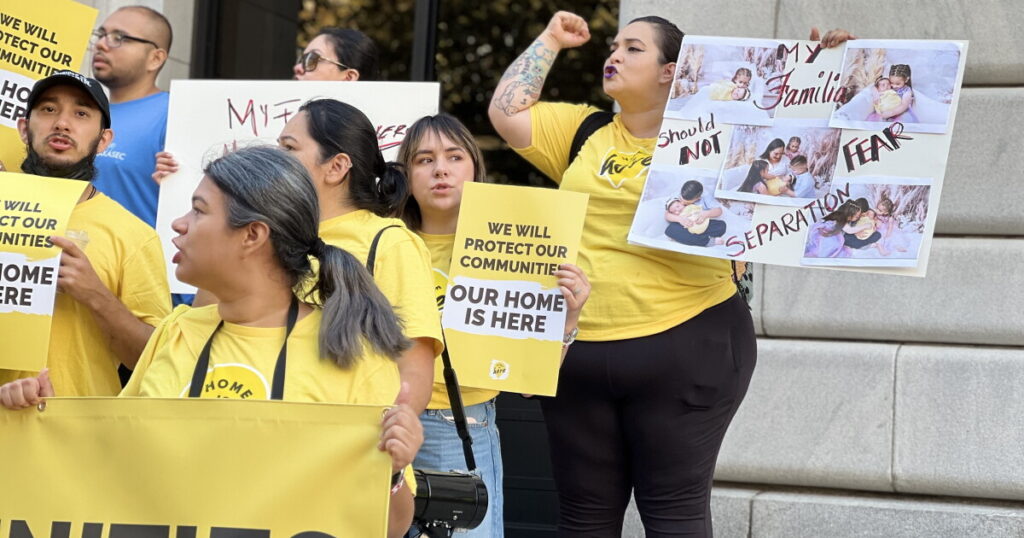
Marquez, who advocates for immigrant rights with Make the Road Nevada, found the delay emotionally exhausting. “I was scared that I [could] get pulled over … especially when my children were with me, because what would have happened if I got pulled over?” she expressed her fears.
Kevin Johnson, a law professor at the University of California, Davis, suggested that the DACA program might be intentionally disintegrating. “It strikes me that President Trump’s administration isn’t committed to the DACA policy,” Johnson said. “It’s slowly allowing it to wither away by not accepting applications, by removing some DACA recipients and delaying as long as possible renewals of DACA.”
The Heritage Foundation’s Project 2025 deemed DACA illegal, and although President Donald Trump distanced himself from this plan during his 2024 campaign, he later embraced it as a framework for governance. Trump’s attempts to repeal the program date back to 2017.
Northern Nevada immigration attorney Kyle Edgerton acknowledged the enduring issues within the DACA renewal process. “The other piece is that USCIS is funded by its service fees, and so it’s always been underfunded. It’s always had more demand than resources available to meet that demand,” he explained.
The National Immigration Law Center (NILC) notes that delays can also be attributed to factors such as the recipient’s country of origin or the reinstatement of biometric requirements, which had been paused during the COVID-19 pandemic. A memorandum from the U.S. Department of Homeland Security advised USCIS to halt processing renewals for nationals from specific countries, as outlined in Presidential Proclamations 10949 and 10998. This pause has since been lifted.
For Marquez and many others, the loss of DACA status means the potential loss of work authorization and income, which would be devastating for her family. “If I were to have lost my job, I think I wouldn’t be the only one impacted. I think a lot of people would have been impacted,” Marquez remarked.
Edgerton advises his clients to apply for renewals earlier than usual, despite potential drawbacks. “There’s a tactical or pragmatic incentive to apply as late as you can while still being on time, because you don’t want to basically steal six months of status from yourself,” he noted.
However, working without authorization during a lapse poses risks. Johnson highlighted, “I don’t want to suggest that all employers are this way because I don’t think it’s true. But some employers may exploit undocumented immigrants,” taking advantage of their desperation.
Before receiving her DACA status in February 2014, Marquez faced challenging work environments. “I had to work a lot of under the table jobs, jobs where consistently the owners would tell me, ‘Oh, we hire your people because it’s cheap labor,’” Marquez recalled.
With the renewal delays, recipients are confronted with tough decisions about their livelihoods. Johnson noted, “Some of them have to decide whether to work unlawfully. They’re in a horrible situation … they have to decide: should I rely on food banks and shelters, or should I work and get paid under the table?”
Renewing applications earlier might prevent status lapses but also adds financial pressure, with costs ranging from $500 to $600, plus additional fees. Despite receiving her DACA status in 2014, Marquez sees ongoing issues with the program and calls for a permanent solution. “I personally think that DACA and TPS and any sort of visa are temporary. They’re temporary fixes. They’re band-aids, well known, just to cover a big wound,” she said, advocating for a pathway to citizenship.