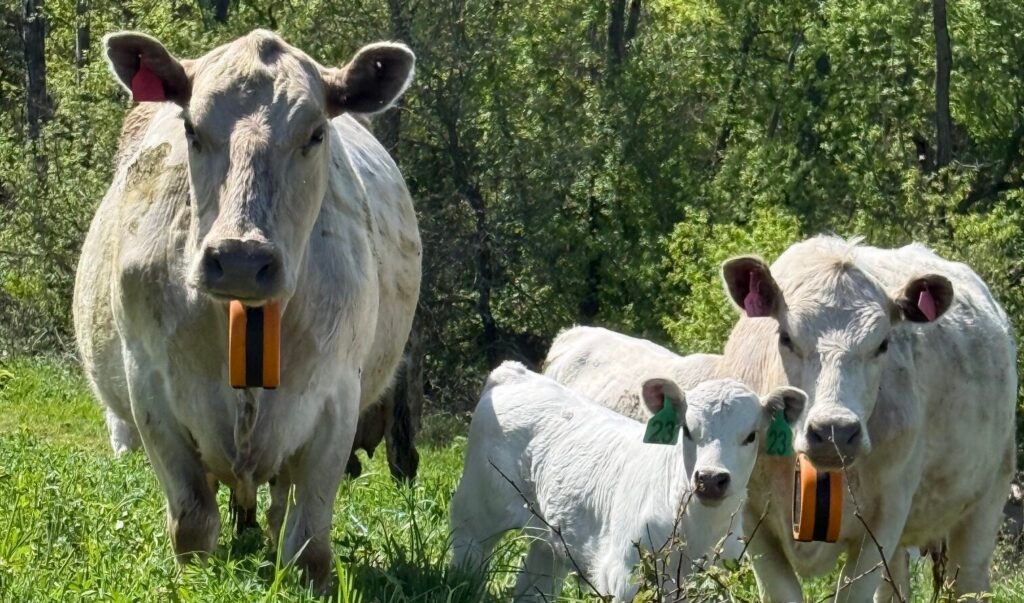
In the lush landscapes of Wisconsin’s Driftless region, a technological revolution is quietly transforming traditional farming practices. At Seven Seeds Farm, cows are now equipped with solar-powered collars, allowing farmer Michael Dolan to monitor and manage his herd with unprecedented precision.
The virtual fence system, introduced by Dolan in February, enables him to set invisible boundaries for his cows via his phone or computer. The collars emit audio cues to guide the cows’ grazing behavior, and if a cow crosses the boundary, it receives a mild electric shock. “Instead of getting shocked on its nose or on the tail, it’s right around the neck of the animal,” Dolan explained, noting that the cows have adapted quickly. Now, 95% of the time, they avoid the shock by staying within their designated grazing zones.
While the system might sound new, the concept of invisible fencing is familiar to many pet owners. However, its application in agriculture is gaining traction as farmers like Dolan embrace rotational grazing—a practice praised for its environmental benefits. “We found ourselves spending a lot of time building poly wire fences, so that we could rotate our cows every day,” Dolan said, expressing optimism about the virtual fencing’s potential to streamline operations.
Since adopting the technology, Dolan has been able to focus more on marketing and managing the farm store. The shift has been facilitated by financial assistance from the Natural Resources Conservation Service (NRCS), which covered 70% of the initial cost of 100 Gallagher eShepherd collars, priced at $220 each.
Cost vs. Benefit of Virtual Fencing
Despite the benefits, Dolan acknowledges some challenges with the virtual fencing system. Issues like poor cell service can limit the system’s effectiveness, and the collars, which weigh about five pounds, might discomfort the cows, especially when they rub against trees. “You have a five-pound hunk of batteries and solar panels and plastic around a cow’s neck, so there can be issues there,” he noted.

Nonetheless, Dolan remains committed to fully utilizing the virtual fencing system, planning to deploy all 100 collars throughout the winter. As the first in Wisconsin to receive NRCS cost-sharing for the collars, Dolan is at the forefront of a movement that could reshape the future of livestock management in agriculture.