Gas Prices and State Taxes: Nebraska’s Economic Road Ahead
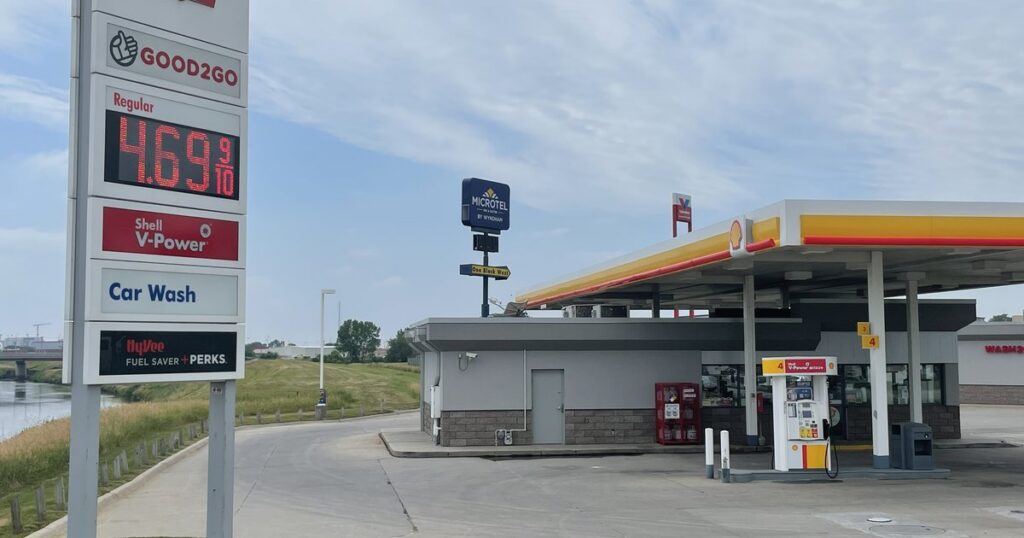
Hugh McDermott, a retired educator from Lincoln, recently found himself surprised at a local gas station when filling up his Prius. While he typically could count on $20 to fill his tank, this time the amount barely covered half of it.
“There’s a reason I drive a Prius. I want to get better gas mileage,” McDermott explained as he watched the numbers climb at the pump. “And I try to fill up when I’m only half full, because it just feels better.”
McDermott’s experience comes amidst a backdrop of rising fuel costs in Nebraska. A recent conflict involving the United States and Israel’s bombing of Iran has contributed to a nearly 25-cent increase per gallon in the state, as reported by AAA. This surge compounds Nebraska’s existing fuel tax, which is just under 32 cents per gallon, impacting the monthly budget of drivers covering 1,000 miles by an additional $16, according to estimates from the Nebraska Department of Transportation.
“I’m fortunate,” McDermott said, acknowledging his retirement planning. “I’ve kind of planned for my retirement, but there’s a lot of folks that I can see are struggling.”
The gas tax in Nebraska is structured around various factors, including the wholesale fuel value and a variable rate determined by the budgetary needs of the Nebraska Department of Transportation (NDOT). Fluctuations in the state’s tax rate have been consistent since 2020, with a notable increase in 2023 when Governor Jim Pillen assumed office. The rate leaped by over four cents, bringing it to 29 cents per gallon, placing Nebraska third among states for the highest gas tax hikes, as per the U.S. Energy Information Administration.
This tax increase coincided with substantial state income and corporate tax cuts, leading to a decline in state revenue. Despite legislative efforts, including reallocating cash funds and raising departmental fees, the state faces a budget shortfall exceeding $200 million, with an additional $800 million needed over the next two years. In response, Governor Pillen requested a 5% budget cut across state departments in July.
As the upcoming legislative session approaches, Nebraska lawmakers are again tasked with balancing a budget deficit for the third consecutive year. To mitigate these financial challenges, fee increases have been implemented across various state departments.
The Legislature sanctioned numerous fee hikes earlier this year. For example, the Department of Revenue introduced new delinquent tax and assessment fees of $25 or 10% of tax liability. The Department of Water, Energy, and Environment increased fees related to water well registrations from $40 to $200. Furthermore, as of August 1, the Department of Labor raised contractor registration fees to the maximum allowable $40, while marriage license fees through county clerks increased from $25 to $50.
Lee Will, director of the state Department of Administrative Services, defended the fee adjustments, stating, “Before this year, people were paying $25 for a marriage license. And if you look at the states around us, they’re paying much more for a marriage license. So we have to look at our competitors or surrounding states to say, ‘Are we charging the amount of the service provided to Nebraskans?'”
State Senator Kathleen Kauth, representing parts of Omaha, has been involved in these budget discussions and supports smaller government initiatives. She is working on legislation to facilitate fee increases at the county level, as the state continues to negotiate with county lobbyists over state aid.