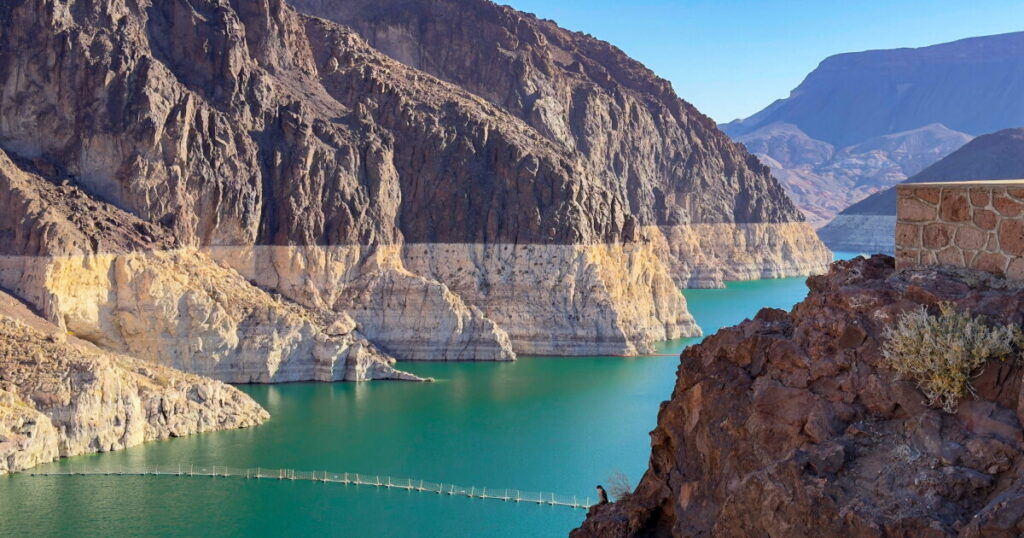
The American Southwest experienced unprecedented heat this summer, with several states breaking historical temperature records. Nevada recorded its hottest August ever, while Arizona matched its previous high for the hottest summer. Similarly, New Mexico, Utah, and Colorado faced their warmest summers on record, according to the latest data from the National Oceanic and Atmospheric Administration (NOAA).
Throughout the Southwest, average daytime temperatures soared to 90.9 degrees, surpassing the norm by 5.6 degrees and eclipsing the previous record set in 2020 by nearly a degree. Meanwhile, Wyoming experienced a record-breaking July, with temperatures averaging 6.3 degrees above the 20th-century norm, marking the hottest month ever documented in the state.
Idaho stood out as the exception in the region, not setting a new statewide temperature record this summer.
NOAA
/
National Centers for Environmental Information
This pattern was part of a broader trend of extreme heat across the United States. The average temperature for the contiguous U.S. from June to August stood at 74.4 degrees, making it the hottest summer in 132 years of recorded history.
Factors Contributing to the Heat
According to experts, multiple factors contributed to this extreme heat. Marc Alessi, a climate scientist with the Union of Concerned Scientists, highlighted the impact of a strengthening El Niño, unusually warm ocean temperatures, and the ongoing effects of climate change driven by human activity, particularly the burning of fossil fuels.
These short-term phenomena are occurring on top of a long-term warming trend. Accumulating greenhouse gases trap heat in the atmosphere, leading to more frequent and intense temperature extremes.
Alessi noted that the implications for the Western U.S. extend beyond high temperatures. “Even if the interior West gets a normal amount of precipitation, the issue is that the West will still be significantly drier because the atmosphere is warmer,” he explained. “It’s sucking up more moisture from the ground.”
This drying effect can exacerbate the risk of flash flooding when heavy rains occur, as dry soils are less capable of absorbing sudden downpours.
Impact on Water and Ecosystems
The increase in temperature accelerates evaporation and moisture loss from soil and vegetation, leading to faster drying of landscapes, which intensifies drought conditions, puts additional stress on water supplies, and increases wildfire risk.
The interplay between heat and drought can create a feedback loop, where dry conditions reduce the cooling effect of evaporation, further amplifying heat. Alessi pointed out that summers like this one provide a preview of how climate change is making heatwaves more common and severe. “These events that should be uncommon, or almost never happen, are happening and becoming more frequent and intense,” he stated.
This article was produced by the Mountain West News Bureau, a collaboration between Boise State Public Radio, Wyoming Public Media, Nevada Public Radio, KUNR in Nevada, KUNC in Northern Colorado, KANW in New Mexico, Colorado Public Radio, and KJZZ in Arizona, alongside NPR, with support from affiliate newsrooms throughout the region. Funding is partially provided by the Corporation for Public Broadcasting and Eric and Wendy Schmidt.