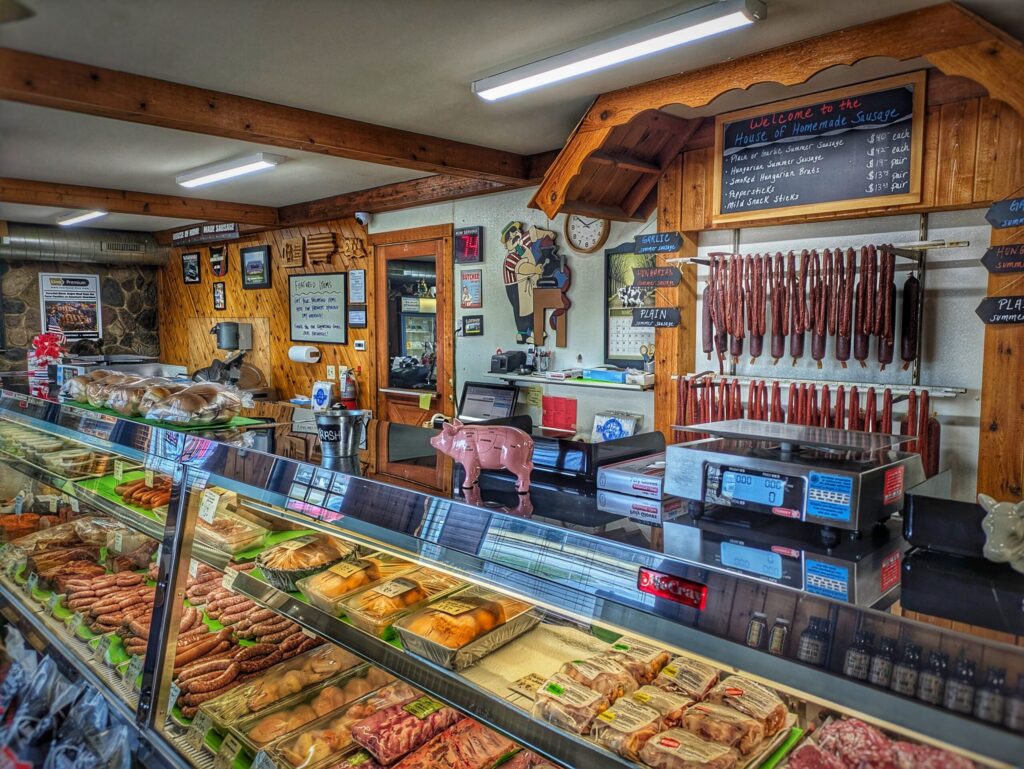
The journey of understanding Wisconsin’s rich sausage tradition began with a simple curiosity about landjäeger, a popular sausage in the region. Jesse Brookstein, originally from upstate New York, encountered this delicacy frequently upon moving to Wisconsin. “I started seeing landjäeger positioned all over bars, restaurants, breweries,” he shared with WPR’s “Wisconsin Today.” His intrigue led him on a quest to learn more, eventually inspiring him to pen a book on the subject.
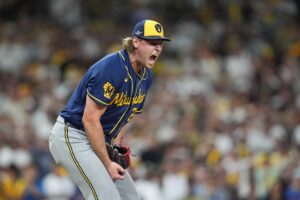
Initially focusing on landjäeger, Brookstein’s research expanded to encompass the broader history of sausage-making in Wisconsin, in collaboration with the Wisconsin Historical Society. This exploration revealed how deeply embedded sausage is in the state’s culture and economy. For instance, Cudahy, a city named after a meatpacking firm, and the Milwaukee Brewers’ famed racing sausages illustrate this connection.
Despite the significance of sausage in Wisconsin, Brookstein was surprised by the lack of comprehensive literature on the subject. “I was sure there would already have been a book out about the history of sausage,” he remarked, noting the abundance of material on Wisconsin’s beer and cheese. His findings underscored the untapped potential for documenting this culinary heritage.
The challenge in capturing the complete history of sausage stems partly from the secretive nature of sausage-makers. “The thing about sausage makers I found out is, they came to the States, largely a lot of Germans, and their only resume was the recipes they had in their head,” Brookstein explained. This secrecy meant many recipes were lost over time as they weren’t passed down.

Rob Ferrett: Let’s define our boundaries. What is sausage?
Jesse Brookstein: Sausage is any comminuted meat—ground, chopped, pounded—with at least one added ingredient, often just salt. This definition includes a variety of forms, from bratwurst to head cheese.
RF: The story of sausage is intertwined with the history of Wisconsin’s settlers, including Native Americans who made pemmican.
JB: Pemmican, a mix of pounded bison meat, rendered fat, and sweeteners, is a form of sausage and dates back to 4000 BCE.
RF: Immigrant groups, notably German-Americans, have significantly influenced Wisconsin’s sausage culture.
JB: While Germans played a major role, early meat barons in Wisconsin, such as Cudahy and Layton, were not of German descent. The state features a diverse array of sausages from various cultures, including Thai and Swedish varieties.

RF: Sausage-making is an art for many butchers, providing a canvas for creativity and experimentation.
JB: Sausage-makers like Louie’s Finer Meats in Cumberland create over 100 bratwurst varieties. They experiment with flavors like mac and cheese or General Tso’s chicken.
In Madison, Jenny Street Market even offers unique creations like candy corn sausages.
RF: What about vegan sausages?
JB: Wisconsin hosts a Vegan Sausage Fest in Madison. Despite some skepticism, history shows that non-meat sausages have roots in post-WWII Italy, where vegetables were used in place of meat. Cheese-based sausages are also popular in Europe, illustrating that sausage doesn’t have to be meat-based.