Washoe County Emergency Alerts: A Missed Broadcast Amidst the Hawk Fire
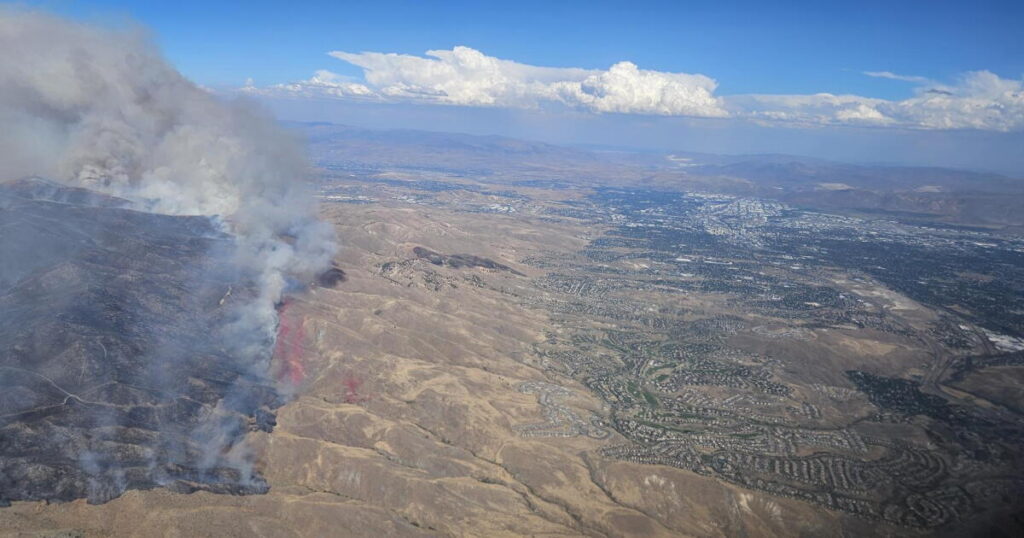
In the midst of the Hawk Fire on August 22, efforts were made by Washoe County’s Emergency Management to communicate vital alerts to the public. However, an oversight led to these crucial messages not reaching the airwaves as intended.
Kelly Echeverria, the Emergency Management Administrator, initiated the alerts, believing they were disseminated through various media channels, including social networks, cell phones, and broadcast stations. Yet, it was discovered by KUNR that the alerts never aired, highlighting the complexities and vulnerabilities within the emergency alert system.
“We thought we were in the clear, and that our messages were going out,” Echeverria stated. The error was only identified after KUNR noted the absence of alerts in their broadcast records for the Hawk Fire. This prompted Echeverria to seek clarification from Rave, the software platform used for public notifications.
Despite Rave’s assertion that the Emergency Alert System (EAS) option was not selected, Echeverria disputes this claim, maintaining that both she and her colleague did choose the EAS option. In pursuit of clarity, the county is requesting further verification from Rave and FEMA regarding the transmission records.
The EAS, managed by FEMA, is designed to relay emergency alerts through radio and TV. Its unmistakable signals are often characterized by distinct tones followed by computerized messages. However, the interface to utilize EAS is not provided by FEMA, necessitating the use of third-party services like Rave for dispatching alerts.
“Some places only have social media that they’re putting alerts out in. They don’t have an additional vendor that they pay to distribute alerts through other means,” explained Carson MacPherson-Krutsky from the University of Colorado, Boulder’s Natural Hazard Center.
MacPherson-Krutsky’s 2024 survey of Colorado counties revealed that financial constraints prevent some jurisdictions from acquiring services similar to Rave. Although the Hawk Fire incident is not widespread, issues with mobile alerts are not uncommon.
“You could just register landlines automatically, but now that we have cell phones, people have to actually physically sign up for these alerts,” she noted, citing that fewer than 40% of residents have registered for such notifications, according to the Colorado study.
Wireless Emergency Alerts, another FEMA-administered service, can be sent to any mobile device in a specific area but lack reliability. Former Nevada EAS Chair Adrienne Abbott pointed to inadequate implementation by service providers as a key challenge.
“We, in the EAS community, provide training for agencies to be able to use the cell phone alerts,” Abbott mentioned. “The industry has given us very, very little to work with.”
During emergencies, communication towers may become overwhelmed or exhibit preferential messaging to certain networks, leaving some residents uninformed. To address this, Echeverria advises residents to register for alerts on Washoe County’s website to ensure they receive future notifications.
“We will continue to use Rave, but what will change is how we approach it,” Echeverria affirmed. Meanwhile, MacPherson-Krutsky advocates for enhanced federal investment to rectify these systemic issues, emphasizing the critical nature of reliable alert systems in saving lives.