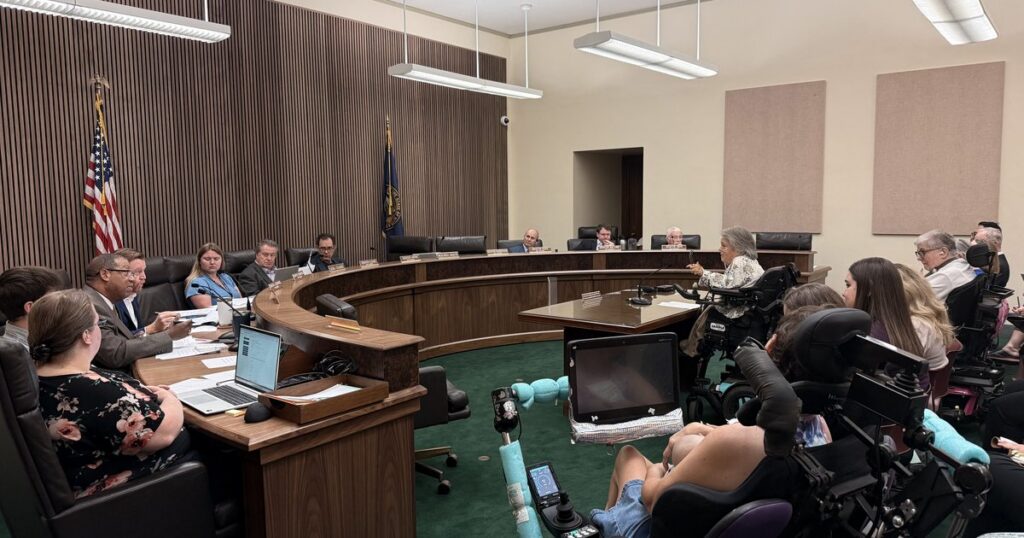
Concerns over the effectiveness and implementation of state programs for people with disabilities were at the forefront of recent legislative hearings. Stakeholders, including individuals with disabilities and their families, gathered to discuss the state’s efforts and shortfalls in providing necessary services.
State Programs Under Scrutiny
The hearings focused on the financing and operational aspects of Nebraska’s Olmstead Plan and interRAI assessments. These programs, managed by the Department of Health and Human Services (DHHS), aim to meet the diverse needs of the disability community. Despite their objectives, stakeholders argue that these programs are not fully delivering on their promises.
Advocate Kathy Hoell highlighted the state’s duty to ensure accessible services, stating, “Nebraska has a responsibility to make sure our state is constantly working to provide home and community-based services to our citizens, to those that currently have disabilities, and to those that may not have them yet, because the national average says one out of four people will become disabled in this country.”
Challenges in Implementation
Concerns were raised about the implementation of the Olmstead Plan, with reports of unresponsive staff and potential challenges in enforceability due to evolving federal guidelines. This plan, stemming from a pivotal U.S. Supreme Court case, obliges states to offer community-based services in areas like employment, housing, and education.
The legislative session that passed LB737 led to these hearings. Sponsored by Sen. Victor Rountree, this bill mandates an annual review of the Olmstead Plan by the Health and Human Services and Urban Affairs Committees, with findings reported by the end of the year.
Voices from the Advisory Committee
Members of the Nebraska Olmstead Advisory Committee, including Lindy Foley of the Nebraska Vocational Program, testified about the program’s positive impact. Foley noted significant success in job placements for people with disabilities, even in rural areas. However, she acknowledged that many families remain unaware of their children’s potential to work and transition into intensive care services.
Tobias Orr, from the Assistive Technology Partnership, discussed efforts to enhance accessible housing by engaging more contractors. Although 12 new contractors were added this year, only 35 out of 140 Section 811 housing vouchers have been distributed, indicating a gap in meeting housing needs for low-income individuals with disabilities.
Barriers to Accessible Transportation
Transportation challenges were also highlighted, with services like Lyft and Uber lacking accessible options. Hoell noted that transit services are costly and unreliable, with scheduling difficulties and extensive wait times being common issues. She shared that a ride from Lincoln to Omaha could be prohibitively expensive, costing hundreds of dollars.
“What’s important to realize is that disability does not discriminate,” Hoell emphasized. “Any person from any income, ethnicity or location can enter this minority group at any time.”
Federal Policy Concerns
Brad Meurrens from Disability Rights Nebraska expressed worries over weakening federal policies related to Olmstead Plans. A recent Department of Justice opinion challenges traditional interpretations of disability rights, potentially threatening these protections.
Meurrens expressed the importance of state-level plans as a safeguard, stating, “Rights have responsibilities. In order to exercise your rights, there is a responsibility for the state or the administration to provide the means, methods, and mechanisms to exercise these rights.” He also warned of the risk of involuntary institutionalization under new federal directives.
InterRAI Program Evaluation
The second hearing, conducted by the Health and Human Services Committee, evaluated the state’s interRAI program. This assessment tool, implemented by DHHS last year, aims to determine financial support levels for people with disabilities and their families, examining its effectiveness in assisting Nebraskans.