This coverage is made possible through a partnership between BPR and Grist, a nonprofit environmental media organization.
The French Broad River, a vital waterway in Woodfin, is once again the focal point of environmental efforts as a local PVC pipe manufacturer renews its commitment to address plastic pollution. IPEX has pledged $500,000 towards cleanup initiatives conducted by MountainTrue, an environmental nonprofit dedicated to removing debris from the river.
In conjunction with the funding, IPEX will collaborate with Woodfin officials to conduct an engineering study focused on flood preparedness. An additional study aims to trace the remaining plastic pollution up to the Tennessee border.
Jim McAllister, Woodfin’s mayor, emphasized the importance of maintaining a constructive relationship with IPEX, a key local employer. “This was a terribly unfortunate event, and it wasn’t just PVC pipe floating down the river. There were caskets, there were dumpsters, there were railroad cars,” McAllister explained in an interview with BPR. “So I’m proud of them stepping up and getting it together.”
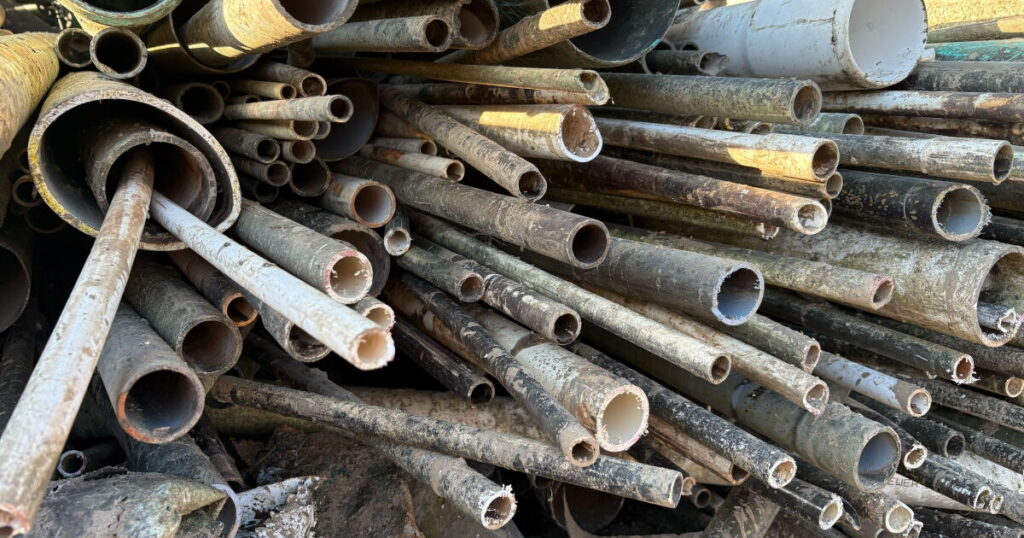
The catalyst for these efforts was the flooding of IPEX’s storage yard during Hurricane Helene in 2024, which resulted in vast quantities of plastic tubes being swept into the river. These tubes became entangled under bridges, within tree roots, and on the riverbed.
MountainTrue has been actively engaged in cleanup activities over the past two years, employing local teams to navigate the river in canoes and kayaks. They have successfully extracted nearly 6 million pounds of difficult-to-reach debris, including decomposing PVC pipes from IPEX.
“The longer it stays in there, the more it breaks down,” stated MountainTrue’s deputy director Gray Jernigan during an interview. “Plastic in the environment breaks down into smaller and smaller pieces, and the issue of microplastics is a real one that’s being studied more and more every day. So, all to say we just need to get it out as fast as we can.”
Jernigan acknowledged that IPEX’s funding follows a protracted campaign to address the lingering PVC pollution in the river. The nonprofit, alongside some Woodfin officials, had previously expressed concerns regarding the company’s delayed response to cleanup efforts downstream.
Anastasia Georgakakos, a spokesperson for IPEX, stated during a phone call with BPR that the company has been actively listening to MountainTrue’s findings and gathering its own data. “We understand that perception,” she remarked. “However, we didn’t abandon those recovery efforts and we’ve been working with MountainTrue over the last few months to try to understand and listen to them and what they’ve seen in the river as well as collecting our own information.”
Georgakakos further elaborated that IPEX is providing resources to MountainTrue, recognizing the nonprofit’s expertise in river cleanup operations.