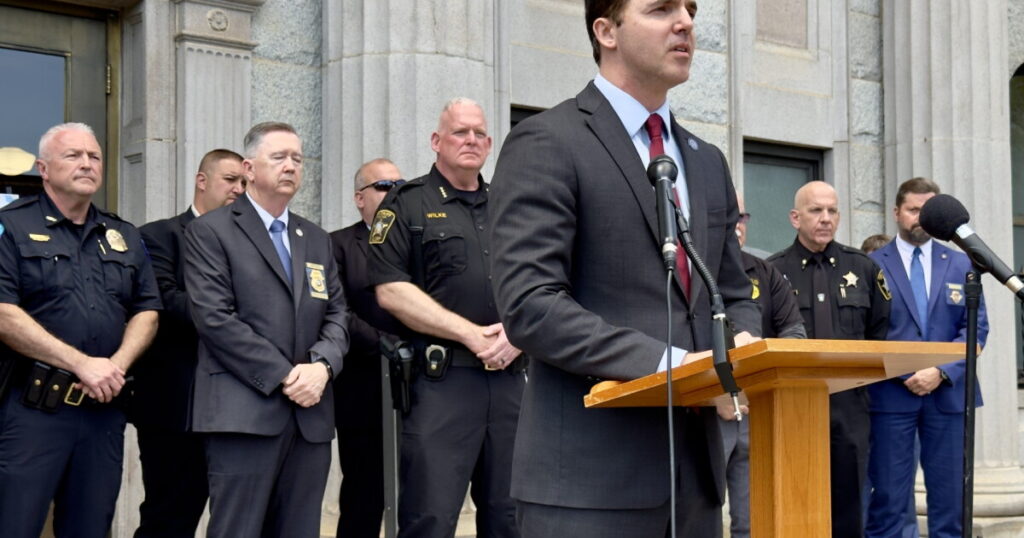
In a significant legal development, the U.S. Supreme Court has halted new mail-in voting restrictions backed by the Trump administration, drawing praise from North Carolina’s Attorney General Jeff Jackson. The proposed changes, deemed impractical by critics, were seen as potentially disruptive to the ongoing election process.
“We appreciate the Court recognizing the practical reality of the situation,” Jackson stated. “Voting has begun. You don’t change the rules in the middle of the election.”
Last month, a coalition of states, including North Carolina, initiated legal action against the U.S. Postal Service to contest the restrictions, which were outlined in a March executive order by President Trump. The order aimed to have states submit eligible voter lists to the federal government and restricted mail-in ballots to those on the list. It also proposed a new barcode system for ballot envelopes. Concerns about disenfranchisement were raised by a federal whistleblower, who warned that the new system might prevent many eligible voters from casting their ballots.
These states contended that the restrictions contravened the U.S. Constitution and federal law, arguing that there was insufficient time to implement the changes before the upcoming elections.
“If not stayed or preliminarily enjoined, the Rule will frustrate or outright prevent Plaintiff States from administering their mail voting programs in November and foreseeably disenfranchise voters who vote by mail,” the states argued in their complaint. “Indeed, this seems to be what the President prefers.”
The proposed restrictions were also met with opposition from voting rights organizations like the League of Women Voters. A federal judge in Massachusetts previously blocked these restrictions, a decision that the Trump administration appealed. Ultimately, the Supreme Court’s 7-to-2 ruling blocked the restrictions from affecting the upcoming midterm elections, though their future remains uncertain as legal proceedings continue, according to The Washington Post.
The executive order posed a particular challenge for North Carolina, the first state to issue mail-in ballots for this election on September 4, as per state officials. Jackson emphasized the logistical impossibility of implementing the changes in his statement about the court’s decision.
“It would have been impossible for the Postal Service to implement a whole new system in time for the election — especially since the new system doesn’t even exist yet,” Jackson noted. “As Justice Kavanaugh put it, ‘state and local officials do not have sufficient time to reasonably implement the rule before the elections.’”
In North Carolina, any registered voter can opt to vote absentee by mail without needing a specific reason. Requests can be made online, by mail, or in person until 5 p.m. on October 20, with ballots due by Election Day, November 3. More information is available here.
Historically, the majority of North Carolina voters have preferred early or in-person voting on Election Day. Mail-in voting accounted for only 5% of ballots in the 2024 and 2022 elections, though it spiked to 18% during the 2020 pandemic, as reported by the North Carolina State Board of Elections.