This coverage is made possible through a partnership between BPR and Grist, a nonprofit environmental media organization.
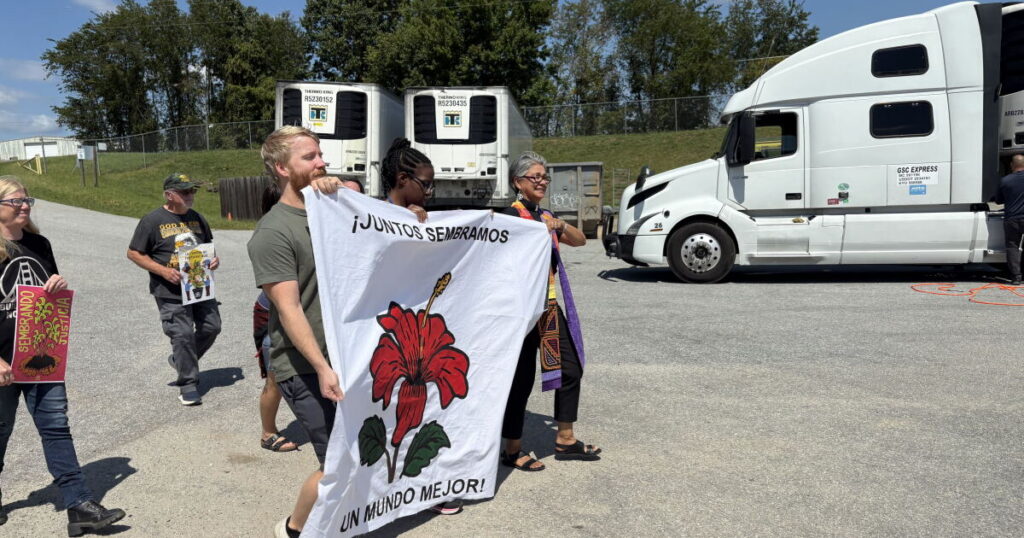
Under the intense sun of a post-Labor Day Tuesday, a group of activists made their way to Costa Farms’ nursery in Leicester, North Carolina. Known for being the world’s largest indoor plant grower, Costa Farms became the focal point of a campaign urging better protections for nursery workers against extreme heat.
At the forefront was Oscar Rozo, an Episcopal clergy member, who emphasized the community’s ties to the nursery industry. “We’re part of the community,” Rozo stated, addressing the Costa Farms’ management team present during the petition delivery.
Curiosity piqued the nursery workers as activists filled the hallways, though many maintained their distance from the unfolding event.
This initiative was part of a wider multi-state effort by WeCount, a labor and human rights group, targeting Costa Farms’ five U.S. nursery locations. Oscar Londoño, WeCount’s co-executive director, described the day as “historic” and just the beginning of their efforts.
Since 2021, WeCount has been a voice for outdoor workers facing extreme heat without adequate protection. Their efforts in South Florida to establish local heat standards were thwarted when Florida Governor Ron DeSantis enacted a law preventing local heat regulations, citing potential issues they might cause.
WeCount’s new campaign, Planting Justice, seeks to raise awareness about the human cost behind the plant industry. It calls for corporations like Costa Farms to engage in discussions about worker conditions.
This approach, labeled worker-driven social responsibility, draws inspiration from the Fair Food Program, which has successfully enhanced farmworker conditions through a collaborative framework. The program has achieved milestones such as access to electrolyte beverages, highlighting its efficacy.
Londoño remarked on the increasing severity of the heat crisis due to climate change, noting that “legislative avenues are more and more limited.”
As one of the deadliest forms of extreme weather, heat poses a significant threat to workers, particularly in agriculture. Despite efforts by labor groups to establish a federal heat standard, progress has been slow. Currently, agricultural workers, including those in nurseries, remain without federal collective bargaining rights and face a higher risk of heat-related fatalities.
Costa Farms, in a statement to Grist, highlighted its achievements in workplace safety. “We have a full-time, on-site nurse with a functional medical clinic,” said Ariana Cabrera de Oña, Costa Farms’ senior vice president. The company claims its heat safety measures align with OSHA’s proposed rules and include increased breaks and hydration during certain weather conditions.
The Planting Justice campaign seeks to have Costa Farms commit to a code of conduct developed by workers. This agreement demands education on heat illness, access to shade and water, and systems to manage heat stress.

Activists argue that the code of conduct would address real workplace concerns. Despite claims from Costa Farms, workers have reported water with unpleasant odors and mold in coolers, according to Londoño.
Alejandro Gonzalez, a worker from Guatemala, shared his experience at a Florida rally, noting temperatures soaring past 110 degrees Fahrenheit. “They don’t give us cold or clean water,” Gonzalez said. “They don’t provide any breaks or shade.”
A survey by WeCount revealed that 86% of nursery workers had faced dangerous incidents, with many denied breaks and time off. Workers dependent on H2-A visas or without documentation face vulnerabilities, relying heavily on their employers without federal labor protections.
WeCount’s efforts extend beyond Costa Farms, urging retailers like Home Depot and IKEA to source plants from growers adhering to worker-friendly practices.
Though asked to leave shortly after entering the Leicester office, Rozo and the activists ensured their petition was delivered before departing.