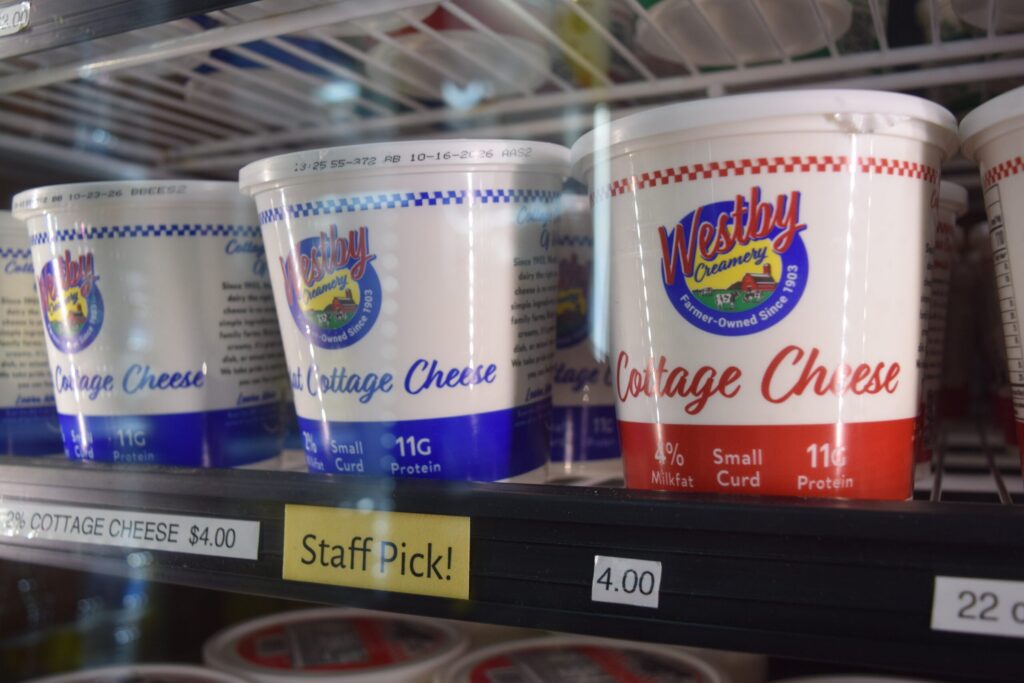
In the heart of Vernon County, a century-old cheese plant is experiencing a modern transformation. Westby Cooperative Creamery, a small-town staple, is embracing cutting-edge technology to meet the rising demand for cottage cheese.
The cooperative recently unveiled its $15 million modernization project, marked by a ribbon-cutting ceremony. This upgrade is set to significantly boost production capacity and product consistency through automation.
JD Greenwalt, the creamery’s CEO, emphasized the importance of keeping up with market demands. “If we can’t remain competitive, and we have to remain competitive in the market on cottage cheese, we’ll be pushed right out of the market,” Greenwalt stated.
The demand for cottage cheese in the U.S. has surged, driven by a growing interest in high-protein diets. According to the National Milk Producers Federation, retail sales have jumped by 40% from 2022 to 2025.
With this new technology, the creamery plans to introduce innovative products. “There’s been no innovation in cottage cheese,” Greenwalt acknowledged. “Once we bring up the capacity, then we can start innovating, putting it in different products: more fruit cups, more yogurt cups. You can use cottage cheese as a bread dough, as a pizza dough, put it in your eggs, put it in your pancakes.”

Traditionally, making cottage cheese involved labor-intensive methods with open-air vats. The new system automates the process, enhancing efficiency and capacity. Jon Fosse of Nordic Dairy Technology, the system’s developer, highlighted, “That’s very common in Europe. In the United States, this is the first.”
Despite automation, Greenwalt assured that no jobs would be lost. Employees are being retrained for roles in maintenance and warehousing, essential for increased production.
The ambitious project received backing through a $14.1 million loan from the U.S. Department of Agriculture Rural Development office. This investment represents a significant commitment from the cooperative, rooted in small farms with an average of 38 cows per herd.
Ben Klinkner, the cooperative’s board president, expressed optimism about the future. “We had faith that this project was going to propel our business into the future,” Klinkner said. “We had faith that there was going to be a legacy.”