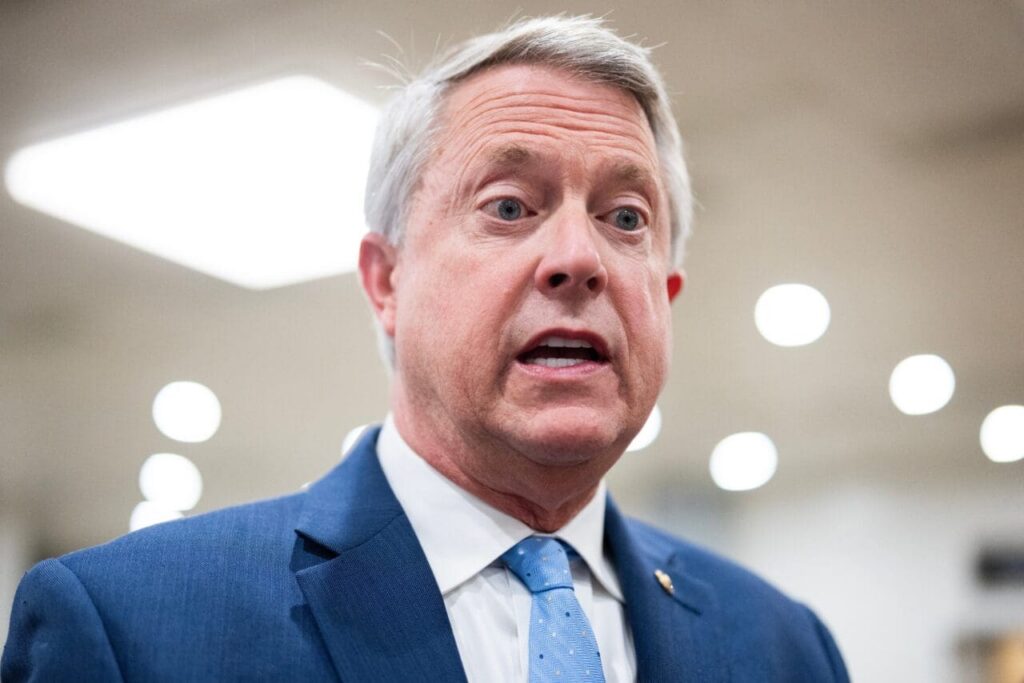
Senator Roger Marshall’s Controversial Stance on Epstein Case Files

Kansas Senator Roger Marshall, currently in a challenging reelection battle, initially opposed the release of Justice Department files tied to Jeffrey Epstein’s investigation. These files link Epstein to notable figures, including former President Donald Trump.
Epstein, who died by suicide in 2019 in a Manhattan detention center, faced federal charges for sex trafficking involving minors, some as young as 13. The controversy surrounding the files has heightened scrutiny on Marshall as he campaigns for a second term.
Back in September 2025, Marshall voted to shelve a bipartisan proposal within a defense bill aimed at mandating the release of these files, a motion that ultimately failed. At the time, then-Attorney General Pam Bondi, who initially supported transparency, reversed her stance, allegedly under pressure from Trump, as detailed in a report.
Marshall dismissed the amendment as a “political stunt” and expressed that the files were “not that interesting to me”, describing the push for release as part of a Democratic “psychosis”. Despite earlier resistance, Marshall did not resist when the House and Senate successfully passed a standalone bill to release the files in late 2025, reflecting widespread public support.
Financial contributions from Epstein associates to Marshall’s campaign have also drawn attention. In the previous year, Blackrock CEO Stephen A. Schwarzman and executive Joseph Baratta donated $17,500 and $8,500, respectively. Both men’s names appear in the Epstein files, 23 times for Schwarzman and twice for Baratta, though listing does not imply wrongdoing.
Marshall’s financial ties to individuals mentioned in the Epstein files extend to 2020, with $500 from lawyer Greg Ezring, appearing 35 times, and $11,400 from Joel Magerman of Bryant Park Capital, listed thrice in the documents.
Marshall’s legislative track record on issues related to sexual assault also faces scrutiny. In 2019, as a member of the House of Representatives, he voted against an amendment to the Violence Against Women Act that sought to enhance training for interviewing sexual assault survivors on campuses. He later opposed the Act’s reauthorization.
Further controversy arose when Marshall skipped a vote on restricting transactions related to human rights abuses and sex trafficking through the Export-Import Bank. Additionally, he confirmed several cabinet members facing sexual assault allegations, including Secretary of Defense Pete Hegseth and Health Secretary Robert F. Kennedy Jr.
Amidst this scrutiny, Marshall’s support for Todd Blanche as Attorney General faced opposition from Epstein survivors urging senators to vote against Blanche’s confirmation.