Indigenous Communities Challenge Data Center Expansion Amid Environmental Concerns
On a warm summer day in Reno, Nevada, the Truckee River flows swiftly past Chrissie Caughlin Park, originating from Tahoe and ending at Pyramid Lake. This lake is the home of the Pyramid Lake Paiute Tribe and lies at the heart of a heated debate concerning data centers and their environmental impact.
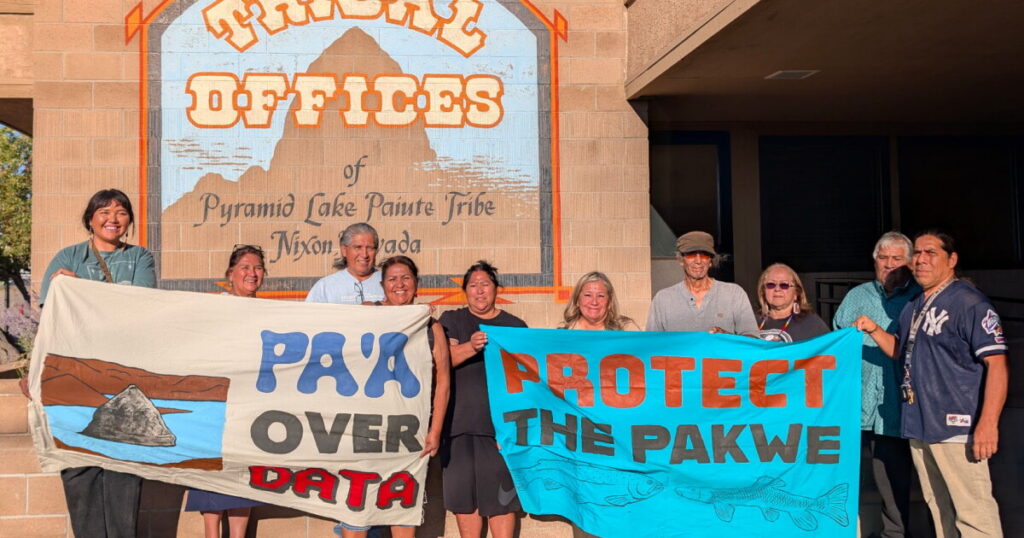
Autumn Harry, a member of the Pyramid Lake Paiute Tribe and co-founder of the Water Over Data Alliance (WODA), raises questions about the water consumption of data centers, particularly in Storey County, and its effects on endangered fish species in the region. “As more and more data centers get approved in the upper Truckee River — especially in Storey County — my big question is ‘where is that water coming from and how is that going to impact the endangered and threatened fish species that are within the lake?’” Harry stated.
Pyramid Lake is a crucial habitat for the threatened Lahontan Cutthroat Trout and endangered Cui-ui fish, both integral to the tribe’s cultural heritage. “Our people are known as the Cui-Ui Dicutta, or the Cui-ui eaters,” Harry explained. In 2025, Harry organized a data center literacy training that inspired the founding of WODA, an Indigenous-led initiative opposing data center developments in the Truckee River Watershed.
Highlighting historical water diversions, Harry referenced the early 1900s construction of Derby Dam, which redirected water away from her community, leading to devastating ecological consequences. “For me knowing that history of that water theft and how that led to an extinction level event within my homelands, that’s what I’m trying to prevent. I don’t want that to ever happen again. It should not ever happen again,” she said.
Pyramid Lake Paiute Tribal Chairman Steven Wadsworth emphasized the ongoing battle for water sovereignty to protect the tribe’s resources and way of life from rapid development. He criticized Nevada’s outdated laws, stating, “Nevada is very much the Wild Wild West. We do not have laws on the books or laws that are severely outdated by what — 150 years?”
Wadsworth expressed concerns about the infrastructure needed to power data centers, noting frequent power outages during summer afternoons. He stated, “If they’re going to be cooled by water, we don’t have the water to give up. If they’re going to be cooled by air, we don’t have the infrastructure, you know, the power lines to generate or use that kind of electricity for the area, especially with our rolling brownouts.”
The tribe successfully passed a measure to ban data centers on their reservation, and WODA is advocating for a broader prohibition throughout the Truckee River Watershed. They have been actively participating in Reno City Council meetings to demand tribal involvement in decision-making processes.
The Yerington Paiute and Walker River Paiute tribes also oppose the proposed Monarch data center in the Walker River Watershed, citing environmental and cultural concerns. Yerington Paiute Tribal chairman Ginny Hatch emphasized the importance of preserving traditional lands, stating, “We’re really worried about the resources, the impacts to the community and to the way of life. That’s what makes us the tribe is we have shared values, traditions and our culture.”
The opposition of Indigenous tribes to data center development extends beyond Nevada. The Seminole Nation in Oklahoma banned data centers in March, and the Fallon Paiute Shoshone Tribe followed suit in May. This resistance contrasts with federal efforts to expedite data center permits, as seen in a July executive order under the Trump administration and subsequent opportunities outlined by the U.S. Department of Energy’s blog post.
Harry remains steadfast in her commitment to preserving water resources, asserting that no financial gain can replace the cultural and ancestral connection to the land and water. “There’s no amount of money that will ever be worth that water and the link that we have to our ancestors when we’re at the water and we’re at the lake. So to me there’s no comparison. It’s not worth the risk. We have to do everything we can to be strong water protectors and make sure that our fish and our people are here for many, many generations to come,” she affirmed.