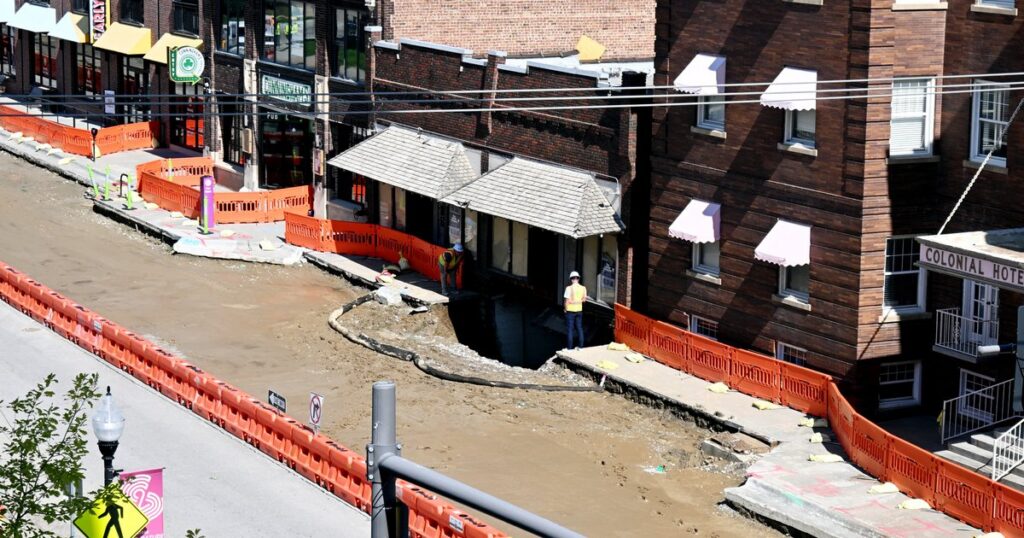
In recent months, Omaha has found itself in the spotlight due to a series of sinkholes that have swallowed vehicles and caused widespread concern. The phenomenon has sparked a discussion about the city’s geological underpinnings and the role of ongoing construction in these incidents. Nebraska State Geologist Matt Joeckel provides insight into the factors contributing to these collapses.
Geological Composition of Omaha
According to Joeckel, Omaha’s subsurface is predominantly made up of late Pleistocene-era loess, a type of soil rich in calcium that supports agriculture by retaining moisture and draining well. However, this loess is highly susceptible to erosion, especially when exposed to sudden water influxes, such as those from storm drains or failing infrastructure.
Linking Sinkholes and Construction
Addressing whether Omaha is experiencing an unusual increase in sinkholes, Joeckel suggests that the visibility of these incidents may be linked to the city’s large-scale construction projects. The internal erosion caused by events like water main bursts can lead to voids beneath the surface. Over time, as the ground beneath roads weakens, collapses can occur.
Construction vs. Infrastructure Failures
When asked about the role of construction in these incidents, Joeckel clarifies, “If active construction is going on, and something like a washout occurs, then you can be fairly sure that there is some kind of relationship.” However, many road collapses happen without construction activity, typically due to infrastructure failures such as water main breaks.
Common Misconceptions About Sinkholes
Joeckel addresses misconceptions about sinkholes, emphasizing that these are not the traditional sinkholes associated with the dissolution of bedrock. Instead, these events are related to the erosion and collapse of manmade structures, such as roads overlying voids.
Regional Comparisons and Future Outlook
While similar collapses occur in other regional cities like Kansas City and Des Moines, comparing these incidents is challenging due to differences in soil and geological conditions. Joeckel advises the public to remain vigilant, noting, “Any sort of strange collapse at the land’s surface could be suspicious, and probably should be investigated.”