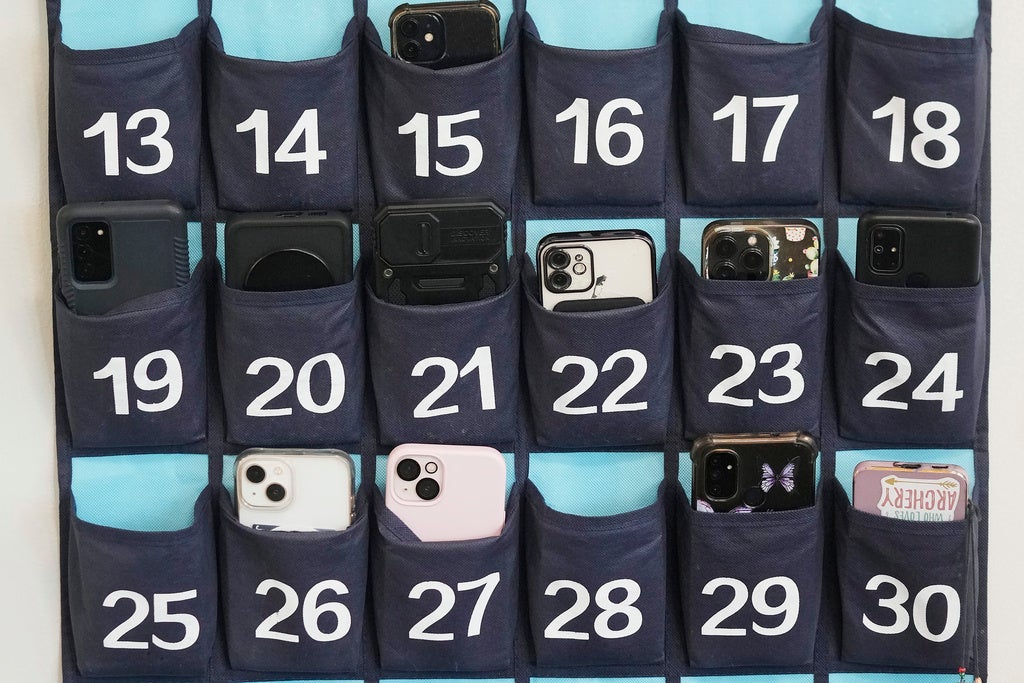
As Wisconsin students head back to school, they will encounter new restrictions on cell phone use during class. This change, effective since July 1, is part of a broader conversation about technology’s role in education.
While some parents appreciate the restrictions, others, like Jacqui Shore from Madison, believe they do not go far enough. Shore, a middle school librarian and co-founder of Parent Check on Tech, emphasizes “a healthy balance” in technology use in classrooms.
Established in May with around 30 members, Parent Check on Tech has grown to include about 200 individuals. The group advocates for traditional learning tools such as pencil, paper, and physical books over digital devices like Chromebooks.
Amy Martino, another co-founder, revealed plans for a petition targeting the Madison Metropolitan School District (MMSD). The petition suggests postponing the introduction of one-to-one Chromebooks until high school and keeping classrooms device-free until grade two. For grades three through eight, a shared Chromebook cart or computer lab is recommended.
An April report to the MMSD Board of Education highlights a gap between recommended screen time and actual usage. Young students, such as kindergarteners, are logging 9 to 15 minutes of screen time daily, despite recommendations for none. Similarly, middle and high school students exceed the advised 40 minutes, spending 2 hours and 90 minutes respectively on screens.
The report states, “Our goal is to ensure that technology is a high-impact, purposeful tool that truly enhances the educational experience for all learners, rather than allowing it to dominate or overshadow learning.”
Edell Fiedler, an MMSD spokesperson, agrees that limiting screen time is beneficial but believes technology remains essential for learning. Fiedler emphasizes the importance of using technology “purposefully, effectively and responsibly” to prepare students for future academic and career opportunities.
The district plans to update its technology strategy soon, with a draft expected by April 2027. Meanwhile, Shore argues that revisiting technology spending and usage might improve school environments significantly.
“Moving back to this analog default, I think it could improve the school climates in so many ways,” said Shore. “I just I hope it happens sooner than later.”
Concerns like those raised by Parent Check on Tech are echoed nationwide, with many parents worried about the impact of screen time on their children’s education. The American Academy of Pediatrics defines screen time as interaction with digital devices, including smartphones, tablets, and computers.
Research shows a link between excessive screen time and issues like mental health challenges, developmental delays, and decreased attention spans in children. Studies highlight these concerns, prompting groups like Schools Beyond Screens to advocate for student-centered technology use in classrooms, as seen in districts like Kohler, New Richmond, and Sparta.