Unexpected Migration Patterns of Mountain Trees
In a surprising twist to long-held scientific predictions, a recent global study reveals a shift in mountain tree migrations. Contrary to expectations that trees would predominantly move uphill in search of cooler climates, nearly one-third of the species are descending to lower elevations.
The implications of these movements are significant. The location where trees establish can influence forest fire behavior and water absorption, affecting downstream water supplies vital for communities, agriculture, and urban areas.
Why do some trees choose different directions in their migration? The answer appears linked to water management by the trees.
Researcher Tim Rademacher from the University of Vermont, a co-author of the study, explains that some tree species excel at rapid and efficient water movement, promoting growth. However, this efficiency comes with a vulnerability to drought conditions.
“That also makes them vulnerable to drought,” Rademacher stated. “And there’s kind of a trade-off, so a tree cannot be both; a tree cannot be really efficient and safe.” This understanding sheds light on why certain species are more inclined to ascend toward cooler areas, while others tolerate warming and move downhill.
The study utilized tree-ring records and climate data from tens of thousands of trees, alongside observations of over 100 mountain tree species’ range shifts. The findings indicate that water management strategies, rather than just warming rates, more accurately predict tree movement directions.
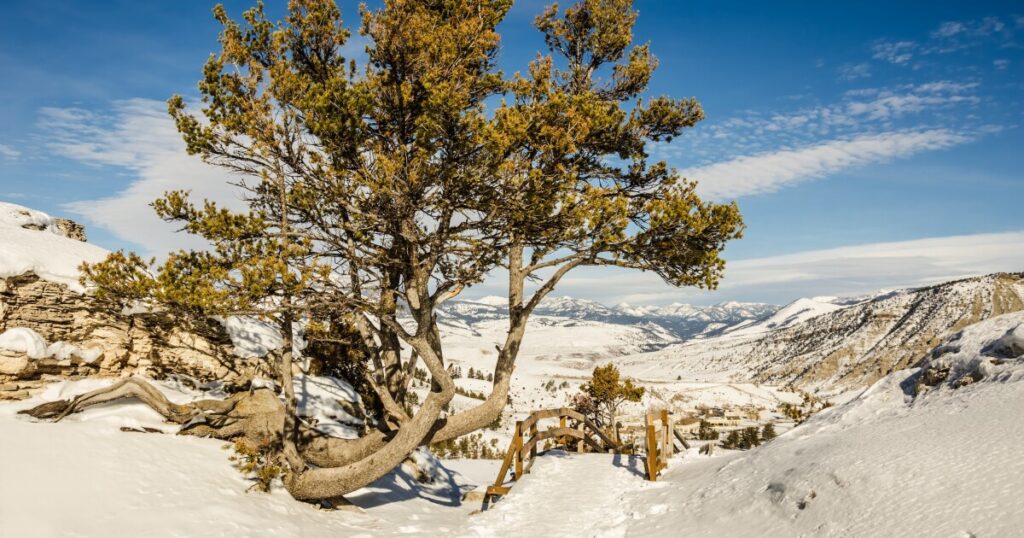
In the western regions, species like Douglas fir and ponderosa pine are migrating upward. Conversely, whitebark pines, already close to mountain summits, are descending.
These migration patterns present challenges for conservation efforts. Trees moving uphill may face habitat limitations near mountaintops, while those moving down have potentially more space to spread. Understanding these dynamics is crucial for managing future ecosystems and conservation strategies.
“Knowing which species are moving up, where there’s less space, versus which species are moving down, where there’s more space is really important when it comes to managing our expectations for future ecosystems and also trying to set conservation efforts,” Rademacher noted.
While the study doesn’t forecast specific changes for any individual Western forest, Rademacher emphasized that it offers valuable insights for predicting species vulnerability and adaptability in changing climates.
This article was produced by the Mountain West News Bureau, a collaboration among several public media outlets, including Boise State Public Radio and NPR, with funding from the Corporation for Public Broadcasting and Eric and Wendy Schmidt.