Wisconsin Governor Race Sees Data Center Debate Take Center Stage
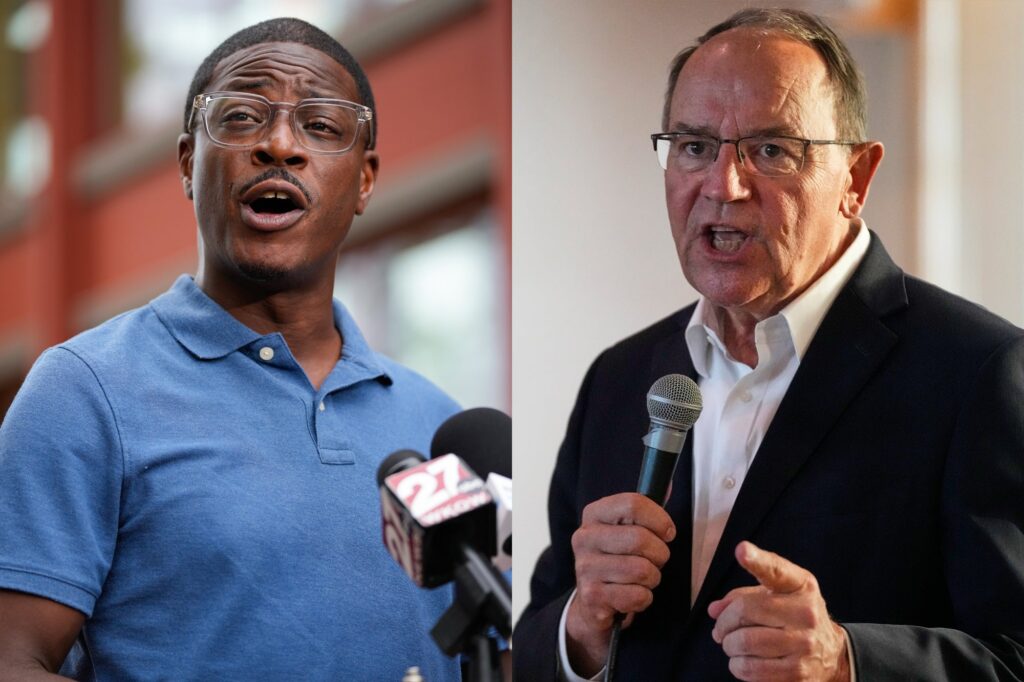
As the Wisconsin governor election campaign gains momentum, the debate over data centers has emerged as a focal issue. Republican Congressman Tom Tiffany’s recent campaign strategy involves portraying his Democratic rival, Milwaukee County Executive David Crowley, as overly supportive of data center development.
Tiffany’s campaign launched a television ad branding Crowley as “data center David Crowley.” The ad highlights a clip where Crowley suggests Wisconsin could be a global hub for AI and data.
Jonathan Fera, speaking for Crowley’s campaign, countered Tiffany’s claims, accusing him of distorting Crowley’s record due to an inability to justify his own alignment with Trump’s policies, which Fera claims have increased costs.
The debate intensifies as the Crowley campaign points out Tiffany’s past Congressional votes supporting data centers, suggesting inconsistency in his public stance.
Tiffany’s ad references a Milwaukee Journal Sentinel questionnaire where Crowley expressed caution over data center tax incentives, advocating for stringent reviews rather than outright rollbacks.
In contrast to state Rep. Francesca Hong’s call for a moratorium on data center construction during the Democratic primary, Crowley maintained a more moderate position. Nevertheless, he stressed the importance of holding data centers accountable for environmental impacts and infrastructure costs.
At a campaign stop in Oshkosh, Crowley emphasized the need for data centers to contribute positively to the community. “We have to hold these data centers accountable, making sure that they pay their way, pay for the infrastructure,” he stated.
Political analyst Barry Burden from the University of Wisconsin-Madison noted that Tiffany’s focus on this issue is an attempt to keep Crowley on the defensive. Burden highlighted that this is a relatively new topic for Wisconsin voters.
Following Crowley’s unexpected victory over Hong, Burden suggested that Tiffany’s campaign could be refining its message after potentially having prepared for a different opponent. Meanwhile, a Marquette Law School poll indicates widespread voter skepticism, with 70% believing data centers’ costs outweigh benefits.
Despite Tiffany’s traditionally pro-business stance, he advocates for ending state subsidies for data centers, citing concerns over their impact on farmland and utility costs. “If we pave over productive farmland and drive up demand on our electric grid, families will pay the price through higher food and utility costs,” he warned in a campaign release.

Wisconsin’s tax exemption for data centers, part of the 2023-25 state budget, allows certified developers to forgo sales and use taxes on purchases. This incentive could potentially cost the state over $2 billion, according to an estimate by the Legislative Fiscal Bureau.
While Crowley voiced criticism of these incentives during a town hall meeting, Tiffany continues to campaign on ending them, questioning Crowley’s commitment to such a proposal.

As the race progresses, Tiffany’s strategy of spotlighting the data center issue seeks to capture voter attention, despite its complexity, as Burden points out: “This is a very short clip that’s in the Tiffany ad that doesn’t reflect the full complexity of where Crowley is on data centers.”