This coverage is made possible through a partnership between BPR and Grist, a nonprofit environmental media organization.
A significant milestone has been reached for hikers and nature enthusiasts as a section of the famed Appalachian Trail reopens after a prolonged closure. Situated at the Tennessee-North Carolina border, the Iron Mountain Gap segment had been inaccessible due to damage from Hurricane Helene, which necessitated an extensive reroute and cleanup operation.
The hurricane’s impact was profound, with millions of trees toppled across North Carolina’s national forests. The devastation spanned 800,000 acres, including 187,000 acres on Forest Service lands. In response, the Forest Service initiated a 5.5-mile trail closure to facilitate salvage logging, a process sometimes debated for its use of heavy machinery to extract and sell downed trees. More information on this process can be found here.
“Iron Mountain Gap took a hard hit from Hurricane Helene. Downed trees blocked much of the Appalachian Trail, making it dangerous for visitors and raising the risk of wildfire for nearby homes and communities,” stated Jennifer Barnhart, district ranger on the Appalachian Ranger District of the Pisgah National Forest. She expressed relief and gratitude in welcoming hikers back to this particular stretch of the trail.
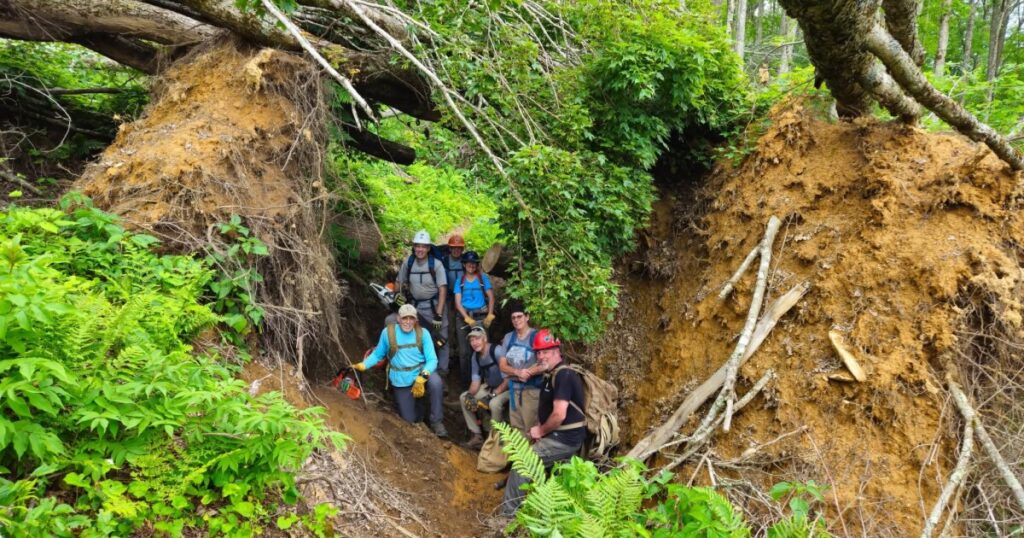
Despite the reopening, restoration efforts continue north of Iron Mountain Gap. For the time being, hikers must follow a detour along a dirt road that runs parallel to the Appalachian Trail from Iron Mountain Gap to Weedy Gap. The area remains overgrown, a result of two years without foot traffic, necessitating ongoing efforts by the Appalachian Trail Conservancy and volunteer groups such as the Tennessee Eastman Hiking and Canoeing Club.
Franklin Tate, southern regional director for the Appalachian Trail Conservancy, highlighted the dedication of volunteers who are working tirelessly to restore the trail. Although aesthetically pleasing, the trail still lacks the well-trodden appearance typical of a pathway frequented by thousands. “It’s really pretty. I mean it really looks nice,” Tate noted. “But in terms of the A.T. it doesn’t look like a trail that 10,000 hikers have been walking. So, next season when the thru-hikers come through, we’re excited to have them, kind of, get the trail packed back down, harden the tread.”
Tate also advised caution when crossing roads at Iron Mountain Gap, suggesting that hikers delay their trips until fall when the vegetation dies back, making the trail more navigable.
Climate change is cited as a contributing factor to the increased frequency of extreme weather events impacting trails. Heavy rains and storms have led to significant erosion and tree falls, especially in remote areas, necessitating extensive repair and maintenance efforts.