Asheville’s future workforce landscape is set to transform with A-B Tech securing a significant $29.2 million disaster recovery grant to establish a state-of-the-art manufacturing and training hub.
The envisioned WNC Futures Factory, a sprawling 70,000 square-foot center, aims to significantly boost the local economy. The project promises to generate thousands of jobs, attract new businesses, and inject over $359 million into the regional economy by the year 2035.
According to John Gossett, president of A-B Tech, the initiative is a pivotal opportunity to diversify the region’s economic reliance on tourism. “We know that we can’t depend only on one industry, tourism. We need to diversify our economy and the Futures Factory allows us to do that,” he remarked.
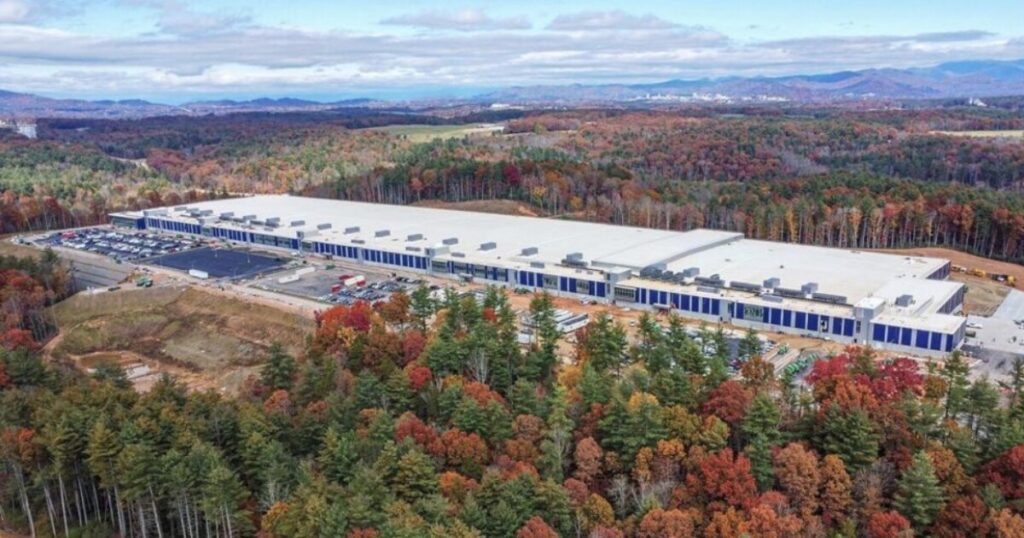
The facility is planned to rise on a 13-acre site at Biltmore Park West, where aerospace giant Pratt & Whitney also operates. Biltmore Farms has committed to donating this land, valued at $4.6 million in project documentation.
While A-B Tech will own the building, the management structure remains under discussion among its many partners, including a coalition of state universities, community colleges, and NCInnovation.
Funding for the project is further supported by Buncombe County, which is contributing $5 million from the Article 46 quarter-cent sales tax. This allocation was previously reserved for a smaller workforce center linked to Pratt & Whitney, which was never constructed. Details can be found here.
Gossett clarified that the Futures Factory will not feature a dedicated section for Pratt & Whitney. However, the aerospace manufacturer, along with other regional businesses, can lease space, access training, or collaborate with academic researchers.
The facility’s design includes approximately 52,000 square feet of industrial workspace, intended for research and development, testing, and small-scale production. Classrooms and offices will occupy the remaining space.
Clark Duncan, executive director of the Asheville-Buncombe Economic Development Coalition, emphasized the center’s role in bridging gaps in regional research capabilities. “In the absence of a research university in western North Carolina, we are instead innovating this hub,” he stated.
Western North Carolina hosts over 860 manufacturers, and Duncan is optimistic that the Futures Factory will help these enterprises adapt to technological advances like AI and automation.
The project’s impact narrative projects that the center will employ up to 50 individuals directly, create 1,100 additional manufacturing jobs, and add 2,747 total jobs in the region by 2035. These figures account for the indirect job creation stemming from business growth and increased expenditures.
Plans for the center include self-sustainability through research contracts, and fees from leasing laboratory, classroom, or demonstration spaces. However, the business model and fee structure are still being finalized.
Although initial project documents mentioned potential collaboration with the U.S. Department of Defense, this reference was omitted in later revisions. Despite this, Gossett indicated that the center might pursue grants from various sources, including the Defense Department, noting their interest in research on computer chips, supply chains, and manufacturing efficiency.
“This is not going to be a Futures Factory specifically to develop implements of war,” Gossett assured. “It is going to be a factory — or it’s going to be a think tank — to support our local manufacturers so they can become more efficient; they can become more effective; and they can hire more of our citizens.”
The next steps for A-B Tech include soliciting design bids for the facility and finalizing management details, equipment, and user fees.
This grant represents the largest portion of a $34.2 million package of federal disaster recovery funds allocated to North Carolina. Additional awards include $2.1 million for a sewer lift station in Murphy, $1.2 million for dam improvements at Western Carolina University, and $500,000 to support recovery efforts in Buncombe, Henderson, and Madison counties.