In a significant shift for Buncombe County taxpayers, county commissioners have decided to revert to previous property values while increasing the property tax rate by 42%. This change comes after a recent budget approval, highlighting tensions between local and state authorities over tax assessments.
The county, which had finalized new property appraisals earlier this year, will now base the year’s tax bills on values from its 2021 reappraisal. Consequently, the tax rate jumps from 43.2 cents to 61.54 cents per $100 of assessed property value, in order to meet the budgetary requirements.
This decision also accounts for a projected $1.8 million shortfall in public service utility tax revenue due to the return to older appraisals.
During a special session, commissioners expressed frustration over state lawmakers’ intervention, particularly Commissioner Parker Sloan, who criticized it as “a move that hurts everybody.” He questioned whether legislators understand the complexities of property taxes and local governance or are engaging in political maneuvers.
The criticism was in response to a new state mandate that temporarily prevents Buncombe from using 2026 appraised real estate values. Senate Bill 889 necessitated reopening the county’s $698 million budget after assessments had been mailed and new values used for budget planning.
Governor Josh Stein, during his Asheville visit this week, voiced his opposition to the law. “I think that as a state, we should be making it easier for local governments to deal with recovery instead of harder,” he stated to BPR.
An alternative was provided by Senate Bill 474, which permits the county to use 2026 values but with the condition of a revenue-neutral tax rate of 40 cents per $100, potentially cutting county revenue by $24.8 million. County Manager Avril Pinder warned this could lead to reductions in essential services like education, public safety, and human services.
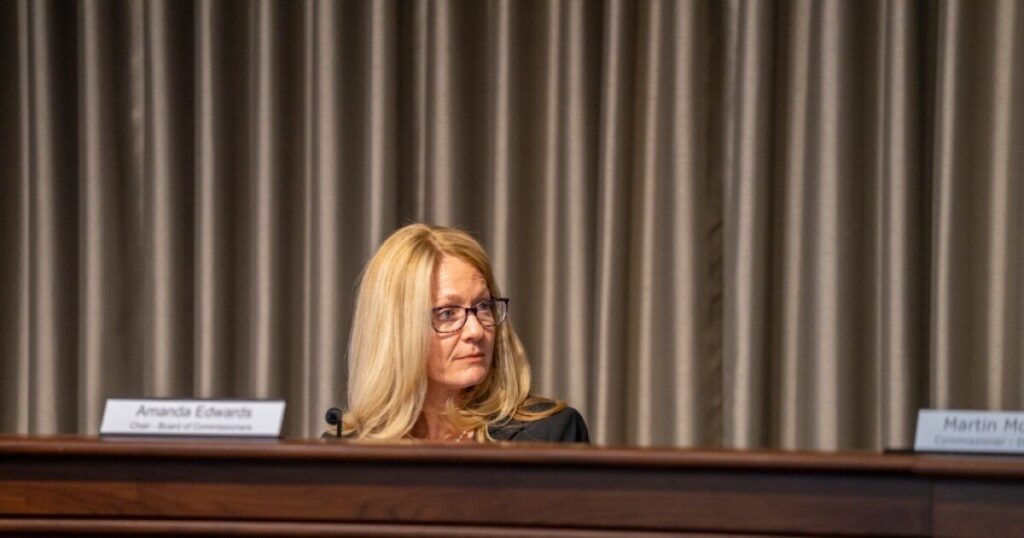
Board Chair Amanda Edwards felt the state’s actions “undermine” local efforts to establish a budget based on fair property valuations, a long-standing concern among residents. “And because the General Assembly continues to target Buncombe County, we are, yet again, being withheld from doing the right thing,” she remarked. “This was not something that we asked for.”
What does the new rate mean for your tax bill?
The tax rate increase does not imply a uniform 42% rise in every property owner’s tax bill. The actual impact depends on individual property value changes since the last reappraisal.
According to county estimates, homeowners with a 42% increase in appraisal value would see little change in their tax bill. Conversely, properties with minimal appreciation may incur higher taxes, while those with significant value jumps might experience a decrease.
Properties affected by Helene are exempt from using pre-storm valuations, clarified Eric Cregger, the county’s property assessor. Damaged properties will maintain their reduced value until repaired, ensuring fairness in taxation.
As Buncombe recalculates tax bills using older appraisals, delays in bill issuance are anticipated, according to Pinder. The appraisal office is already handling over 16,000 appeals for the 2026 values, which compounds the current workload.
“Staff is now focused on making sure we comply with whatever the law is, versus working on other work that could be done,” Pinder mentioned, highlighting the legislative impact on the appraisal office’s operations.
The changes will impact Asheville, Black Mountain, and other municipalities relying on Buncombe’s property valuations. Municipalities are projected to lose an additional $298,000 in public utility revenue due to the state’s value equalization.
Public service companies’ valuations, managed by the N.C. Department of Revenue, contribute to this loss. Asheville City Council will convene today to discuss adjustments to its budget and tax rates in light of these developments.