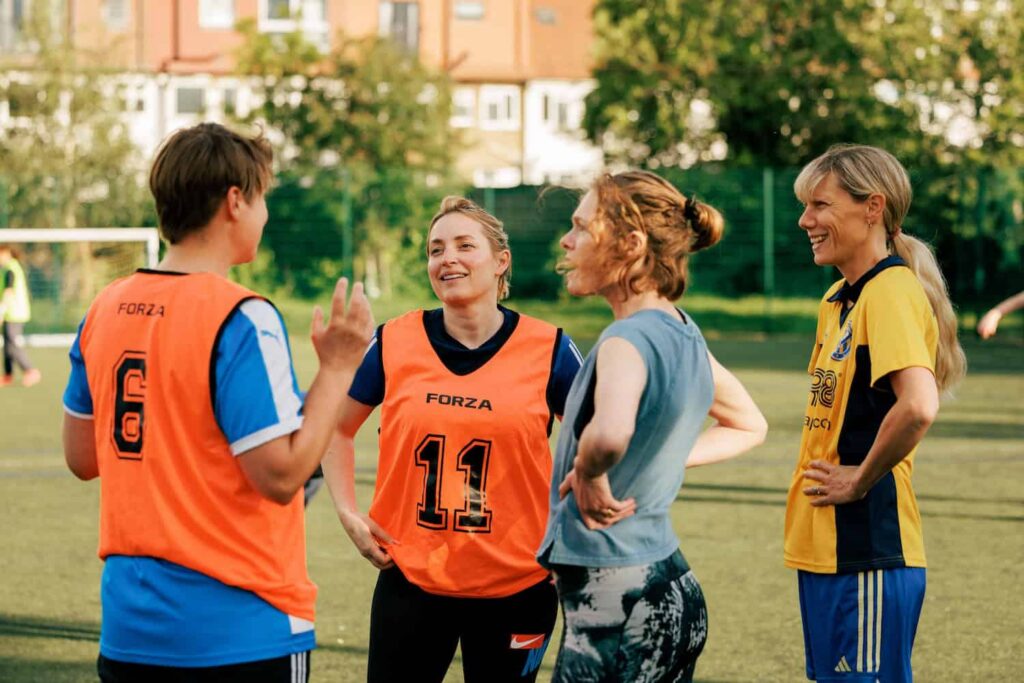
Women, disabled players, and minority groups are progressively making their mark in grassroots football, a domain they had been historically excluded from. This surge in participation is transforming the face of the sport, particularly in community-led clubs.
In Peckham Rye, south London, 22-year-old Farishta Karimi, who had never before kicked a football in her life, engages in a friendly game. Having grown up in conservative Afghanistan, Farishta’s football dreams were restrained, only to be realized after her migration to the UK. She now finds solace in the support and encouragement of her teammates, making football her newfound freedom.
Athenlay FC, Farishta’s club, has become a haven for those formerly denied access to football. Veronica Lenz, a teammate from Venezuela, overcame her initial fears to embrace the sport that defied societal norms in her homeland. Similarly, Sian Elliot, a 40-year-old football enthusiast, found her passion ignited after scoring goals during a parents vs kids game.
This trend of inclusivity in grassroots football is not limited to Athenlay FC. Across the country, marginalized groups are challenging the status quo, propelling the sport’s popularity. Faced with rising Premier League ticket prices and discriminatory incidents, fans are seeking solace in community-driven football. As Darren Bernstein from the Football Supporters Association points out, these grassroots communities provide a sense of belonging that transcends the sport itself.
Football has become more than just a game for players like Shadia Edwards-Dashti. Representing the Actonians, a west London team, Shadia is an embodiment of the change she wants to see in the world. For her, stepping onto the pitch is an assertion of her identity as a woman, an LGBT player, and an individual of Arab-Muslim descent.
The Football Association reports a nationwide increase of 19% in women’s participation in grassroots football over the past year. Simultaneously, the number of disabled players in FA-affiliated clubs has spiked by the same percentage. The founder of Redditch Borough FC, Julian Workman, credits this growth to the creation of safe, non-discriminatory environments that cater to these underrepresented groups.
Leicester Nirvana, a successful Midlands club, emerged from the Red Star youth group, a response to the rise of racially discriminatory attitudes in the 1970s. Its current community lead, Ivan Liburd, vouches for the club’s commitment to safeguarding young players from racial prejudice. This inclusive philosophy fosters potential in young players from ethnic minority communities, enhancing the momentum and visibility of marginalized groups in grassroots football.
Photography by Sam Bush.